The Cold War in Latin America and the Cuban Revolution
| Faculté | Lettres |
|---|---|
| Département | Département d’histoire générale |
| Professeur(s) | Aline Helg[1][2][3][4][5][6][7] |
| Cours | The United States and Latin America: late 18th and 20th centuries |
Lectures
- The Americas on the eve of independence
- The independence of the United States
- The U.S. Constitution and Early 19th Century Society
- The Haitian Revolution and its Impact in the Americas
- The independence of Latin American nations
- Latin America around 1850: societies, economies, policies
- The Northern and Southern United States circa 1850: immigration and slavery
- The American Civil War and Reconstruction: 1861 - 1877
- The (re)United States: 1877 - 1900
- Regimes of Order and Progress in Latin America: 1875 - 1910
- The Mexican Revolution: 1910 - 1940
- American society in the 1920s
- The Great Depression and the New Deal: 1929 - 1940
- From Big Stick Policy to Good Neighbor Policy
- Coups d'état and Latin American populisms
- The United States and World War II
- Latin America during the Second World War
- US Post-War Society: Cold War and the Society of Plenty
- The Cold War in Latin America and the Cuban Revolution
- The Civil Rights Movement in the United States
The Cold War was a period of intense geopolitical tensions and conflicts between the Western powers, led by the United States, and the Eastern powers, led by the Soviet Union, that lasted from the end of World War II until the early 1990s. In Latin America, the Cold War significantly impacted the region's politics and economics.
The Cuban Revolution, which took place in 1959 and was led by Fidel Castro, had a major impact on the region and was seen as a significant challenge to the United States' interests in the region. The revolution resulted in the establishment of a communist government in Cuba, which was seen as an extension of Soviet influence in the region. This led to increased tensions between the United States and Cuba and resulted in several efforts by the US government to overthrow the Cuban government, including the failed Bay of Pigs invasion in 1961.
As a result of the Cuban Revolution, the United States adopted a policy of intervention in Latin America to prevent the spread of communism in the region. This led to the US backing of authoritarian governments and supporting anti-communist rebels, such as the Contras in Nicaragua, and supporting military coups, such as the one in Chile in 1973. This intervention by the US further destabilized the region and led to widespread human rights abuses.
The Cold War in Latin America
The Democratic Wave and US Intervention (1944-1946)
During the period of 1944-1946, a democratic wave swept through Latin America, with several countries transitioning from authoritarian regimes to democratic governments. This was a response to the end of World War II, which saw a shift in global politics towards democracy and the desire of Latin American citizens for greater political freedom.
In 1944, a military coup in Guatemala led to the overthrow of the authoritarian government of Jorge Ubico, who had been in power since 1931. This led to establishing of a democratic government and paved the way for other countries in the region to follow suit. In 1945, Argentina held democratic elections, which saw Juan Peron, a military officer, elected as president. This marked the beginning of a period of democratic rule in Argentina, which lasted until Peron's overthrow in a military coup in 1955. In 1946, Brazil held its first democratic elections in over a decade, with the election of Eurico Gaspar Dutra as president. This marked the end of the Vargas dictatorship, which had been in power since 1930. Peru held democratic elections, and José Luis Bustamante y Rivero was elected as the president, whose government introduced labour reforms and nationalized some industries. Haiti was under the rule of President Élie Lescot, whose government was marked by corruption and human rights abuses. Venezuela experienced a brief period of democratic rule following a popular uprising against the military dictatorship of Isaías Medina Angarita in 1945, during which a coalition government implemented progressive policies and social programs. However, a military coup in 1948 led to the establishment of another dictatorship in the country.
These democratic transitions were seen as a positive development in the region, and the United States supported these changes, believing that democracy would help to promote stability and prevent the spread of communism. However, these transitions were not without challenges, and many of these new democracies were plagued by political instability and economic challenges in the following years.
In contrast to the democratic wave in several Latin American countries during 1944-1946, Cuba, Honduras, Nicaragua, El Salvador, and Paraguay continued to be ruled by dictators during this period. In Cuba, Fulgencio Batista was in power, who had initially served as the country's elected president but later seized control through a military coup. Honduras was under the dictatorship of Tiburcio Carías Andino, who had been in power since 1933 and governed with an iron fist. Similarly, Anastasio Somoza Garcia ruled Nicaragua since 1937 as a dictator, with his family continuing to hold power for several decades. El Salvador was ruled by General Maximiliano Hernández Martínez, who had been in power since 1931 and was known for his brutal suppression of political opposition. Finally, Paraguay was under the dictatorship of Higinio Morínigo, who had come to power through a military coup in 1940 and governed as an authoritarian ruler. These countries remained under the control of these dictators, while others in the region moved towards democratic governments.
In general, during the democratic wave in Latin America in 1944-1946, urban middle classes projected reformist parties into power and often won with the support of communist and socialist parties. These reformist parties aimed to implement progressive policies such as land reforms, labor reforms, and social programs to address social and economic inequality. The urban middle classes supported these parties because they were seeking political and economic modernization, and these parties promised to deliver it. Meanwhile, communist and socialist parties supported these reformist parties because they shared their social and economic justice vision. However, it is important to note that the support of communist and socialist parties for these reformist parties was often a cause for concern for the United States, which feared the spread of communism in the region. This fear led to U.S. intervention in several Latin American countries post-World War II.
With the end of World War II, Latin America saw a resumption of industrialization as countries sought to modernize their economies and catch up with the developed nations of Europe and North America. The emergence of new industries, infrastructure development, and a growing urban middle class characterized this period of economic growth. However, the entry of the United States into the Cold War in the late 1940s and the subsequent global struggle between the United States and the Soviet Union had significant repercussions for Latin America.
As the United States sought to counter the spread of communism in the region, it often supported authoritarian regimes that were hostile to democratic principles and civil liberties. This led to a long period of loss of democracy in many Latin American countries and the emergence of military dictatorships. Human rights abuses, repression of political opposition, and a focus on military build-up often characterized these regimes.
During this period, the United States provided significant military and economic assistance to these regimes, often at the expense of democratic values and human rights. The Cold War policies of the United States in Latin America had long-lasting effects on the region, as they contributed to the erosion of democratic institutions and the perpetuation of inequality and social conflict. Only in the 1980s and 1990s did Latin America begin to transition towards democracy, as military dictatorships were replaced by elected governments and civil society began to demand greater accountability and political representation.
The Impact of the Cold War (1947)
In 1947, the opening that Latin America had experienced in the aftermath of World War II was halted by the entry of the United States into the Cold War, which led to a reinforcement of military power in the region. The United States pursued an anti-Soviet policy and sought to impose it on other American nations in its dominated inter-American meetings. As a result, it obtained the signature of the treaty of Rio, which established a system of mutual assistance and declared that an armed attack or threat against any American nation would be considered an attack against all of them.[8][9]
This treaty, which was signed by most Latin American countries, was aimed at containing the perceived threat of communist expansion in the region. It established a framework for military cooperation among the signatory countries, with the United States playing a leading role in providing military assistance and training to the armed forces of these countries. The treaty also justified for the United States to intervene in the affairs of Latin American countries to protect its perceived security interests.
The entry of the United States into the Cold War and its reinforcement of military power in Latin America had significant consequences for the region. It further eroded democratic institutions as military regimes became more entrenched and human rights abuses increased. The United States' pursuit of its Cold War policy often came at the expense of democratic values and civil liberties in the region. It would take many years for Latin America to recover from this political turmoil and repression period.
During the Cold War, the United States saw itself as being under attack from the Soviet Union and communist ideology. In this context, the U.S. government viewed Latin America as a region that was vulnerable to communist influence and saw the spread of communism in the region as a threat to its own security. As a result, the United States sought to rally Latin American nations to its side in the struggle against communism. The U.S. government used various means to try to convince Latin American countries to follow it in this struggle. It provided military and economic assistance to regimes it deemed friendly to its interests and actively worked to overthrow governments it saw as communist or sympathetic to communism. In addition, the United States used propaganda to promote its vision of the world and to demonize communism and its supporters. Many Latin American nations felt pressure to align themselves with the United States in the Cold War struggle, even if they did not fully share its views or interests. Some countries, such as Cuba and Nicaragua, rejected the U.S. vision of the world and pursued policies that were explicitly anti-American. However, most countries in the region were caught in the middle, trying to balance their desire to maintain their independence and sovereignty with the pressure to align themselves with the United States in the struggle against communism. This dynamic had significant consequences for Latin America, contributing to the erosion of democratic institutions and the perpetuation of social conflict and inequality. The United States' efforts to rally Latin American nations to its side in the Cold War struggle often came at the expense of democratic values and human rights. The region would take many years to recover from this period of political turmoil and repression.
The Organization of American States (OAS) has its headquarters in the Pan American Union building, which is located in Washington D.C. The building was completed in 1910 and served as the headquarters of the International Union of American Republics, the predecessor to the OAS. Today, the building serves as the main administrative center for the OAS, which is the oldest regional organization in the world. The OAS was founded in 1948 to promote democracy, human rights, and economic development in the Americas. It has 35 member states from North, Central, and South America, and the Caribbean.
The Organization of American States (OAS) was indeed created in 1948 as a regional organization that aimed to promote cooperation and solidarity among the nations of the Americas. However, while the principle of non-interference and non-intervention is indeed stipulated in the OAS charter, the reality is that the United States has often dominated the organization. Throughout the Cold War, the United States used the OAS as a tool to advance its interests in the region, often at the expense of the sovereignty and independence of other member states. As you mentioned, the OAS passed a resolution in 1962 that declared that communism was incompatible with democracy, effectively giving the United States and other member states a pretext to intervene in the internal affairs of other countries that were perceived as being sympathetic to communism. Moreover, the United States has traditionally held significant influence within the OAS, both because of its economic and military power in the region, as well as the fact that the organization is headquartered in Washington D.C. This has often led to accusations that the OAS is biased in favor of the United States and that it has been used to further U.S. interests in the region. Despite these criticisms, the OAS has also played a role in promoting democracy and human rights in the Americas and has been instrumental in mediating conflicts between member states. In recent years, the organization has sought to reassert its independence and to promote a more balanced approach to regional issues. However, the history of U.S. dominance over the OAS remains a point of contention in the region.
In the 1960s, the United States viewed Latin America as a potential battleground in the global struggle against communism. It was concerned about the possibility of Soviet expansion in the region. This view was influenced by several factors, including the Cuban Revolution of 1959, which brought a socialist government to power just 90 miles from U.S. shores. As you mentioned, the Rio Treaty of 1947 stipulated that any threat to a member state's security or territorial integrity in the Americas would be considered a threat to all. This meant that if a country in the region were to come under attack or face a threat from an external power, the United States would be obliged to come to its defense. This provision was seen as a way to deter aggression from outside the region and to promote regional solidarity in the face of common threats. However, as the Cold War progressed, the United States began to interpret this provision more broadly, arguing that any internal threat to a member state's security, such as the spread of communism, also threatened the United States. This interpretation gave the U.S. a pretext to intervene in the internal affairs of other countries in the region, often with little regard for their sovereignty or independence. In this context, the U.S. became increasingly involved in supporting the region's anti-communist forces, including military aid and training, covert operations, and direct intervention in conflicts. This led to several controversial and sometimes bloody interventions, including in Guatemala, Nicaragua, and Chile, among others.
The Monroe Doctrine, which President James Monroe first articulated in 1823, declared that the United States would oppose any attempts by European powers to colonize or interfere in the affairs of the nations of the Western Hemisphere. Over time, the doctrine came to be seen as a justification for U.S. intervention in Latin America, particularly during the Cold War. The U.S. Congress voted to provide military assistance to Latin American countries during this period, often through economic and military aid packages. These funds were intended to help strengthen these countries' military capacity and deter Soviet influence in the region. However, they were also used to purchase American-made weapons and military equipment, which boosted the U.S. defense industry. This military aid often came with strings attached, as the U.S. sought to promote its own interests and values in the region. This included efforts to promote democracy, human rights, and opposition to left-wing movements and governments. In some cases, the military aid provided by the U.S. was used to prop up repressive and authoritarian regimes, leading to human rights abuses and political repression in countries across the region.
The military aid provided by the United States to Latin American countries often took the form of economic and military assistance packages. This assistance was intended to help these countries strengthen their military capacity and enhance their ability to defend against external and internal threats. However, a significant portion of this assistance was also used to purchase American-made weapons and military equipment, which boosted the U.S. defense industry. This was seen as a way to promote American interests and values, while also strengthening the military capabilities of U.S. allies in the region. The sale of weapons and military equipment to Latin American countries was an important source of revenue for the U.S. defense industry, and it helped to cement the U.S. as a major player in the global arms trade. At the same time, it also deepened the region's dependence on the U.S. for military and security support. It also contributed to the proliferation of weapons in the region, which in turn fueled conflicts and instability in many countries.
Along with providing military aid and selling American-made weapons, the United States also implemented a range of training programs and counter-insurgency initiatives in Latin America during the Cold War. One such program was the School of the Americas, which was founded in 1946 and based in Fort Benning, Georgia. The school trained Latin American military personnel in counter-insurgency tactics, including torture and assassination techniques. Many of the School of the Americas graduates went on to become leaders of military regimes in Latin America, and some were later implicated in human rights abuses and atrocities. Other U.S.-sponsored training programs and initiatives included the Green Berets, sent to Latin America to train local forces in counter-insurgency tactics, and the Alliance for Progress, a U.S. economic aid program designed to promote economic and social development in the region. These programs were part of a broader effort by the United States to counter Soviet influence in the region and to promote its own interests and values. However, they were also criticized for their role in supporting repressive and authoritarian regimes and contributing to human rights abuses and political repression in many countries.
As the communist threat in the region grew, the U.S. government became increasingly focused on promoting and consolidating anti-communist regimes, often at the expense of democracy and human rights. This led to the support of a number of authoritarian and repressive regimes in the region, many of which were responsible for egregious human rights violations and political repression. The U.S. government provided military and economic aid to these regimes and often turned a blind eye to their abuses in the name of fighting communism and promoting U.S. interests. The U.S. also actively worked to undermine and overthrow democratically-elected governments that were seen as sympathetic to communist or socialist ideologies, such as the case of Guatemala in 1954 and Chile in 1973. While the U.S. claimed to promote democracy and freedom in the region, its actions often had the opposite effect, contributing to the erosion of democratic institutions and the rise of authoritarianism in many countries. It wasn't until the end of the Cold War and the collapse of the Soviet Union that the U.S. began to shift its approach and prioritize support for democratic governance and human rights in the region.
During the Cold War, the U.S. government believed that authoritarian and repressive regimes were more effective at combating communism than democratic ones. It often supported such regimes in the region for this reason. The logic was that to prevent the spread of communism, the U.S. needed to support governments that could provide stability and security, and that were willing to use force to suppress communist movements and their sympathizers. This often meant supporting military juntas and other authoritarian regimes that were willing to use violence and repression to maintain power. However, this strategy came at a significant cost to human rights and democracy in the region, as many of these regimes engaged in gross human rights violations and political repression. Moreover, the strategy ultimately proved to be ineffective in preventing the spread of communism, and in many cases contributed to the rise of communist and socialist movements by fueling popular resentment against U.S.-backed regimes. It wasn't until the end of the Cold War and the collapse of the Soviet Union that the U.S. began to shift its approach and prioritize support for democratic governance and human rights in the region.
The Anti-Democratic Wave (1947 onwards)
In the aftermath of World War II, there was a shift towards authoritarianism and anti-democratic practices in many Latin American countries, as ruling elites sought to consolidate their power and suppress opposition groups, including the middle class. This was partly fueled by the Cold War and the U.S. government's support for anti-communist regimes in the region, which often came at the expense of democratic governance and human rights. Many Latin American countries were caught up in this dynamic, and the ruling elites took advantage of the perceived threat of communism to justify their crackdown on opposition groups and dissenting voices. As a result, many countries in the region saw a rise in authoritarianism, with military juntas and other repressive regimes coming to power and engaging in widespread human rights abuses. This anti-democratic wave persisted for decades until the end of the Cold War and the subsequent shift towards democracy and human rights in the region.

In the aftermath of World War II and the beginning of the Cold War, several uprisings and political crises in Latin America resulted in the establishment of authoritarian regimes in several countries. In Ecuador, for example, a military coup in 1944 overthrew the government and established a junta. In Peru, several coups and political crises in the late 1940s and early 1950s ultimately led to the establishment of military rule in 1968. In Venezuela, a coup in 1948 led to the establishment of a military dictatorship, which lasted until 1958. In addition to these countries, uprisings and political crises in Argentina and Guatemala led to the establishment of dictatorships. In Argentina, a military coup in 1943 led to the establishment of a military dictatorship, which lasted until 1946. This was followed by several periods of political instability, including the "Dirty War" in the 1970s and early 1980s. In Guatemala, a coup in 1954 overthrew the democratically elected government and led to the establishment of a military dictatorship that lasted until 1985. These dictatorships were often characterized by repression, human rights abuses, and the suppression of political opposition. They were supported by the United States, which saw them as bulwarks against communism in the region. However, they ultimately proved to be unsustainable, and many Latin American countries have since transitioned to democratic governance.
In Colombia, the period from 1946 to 1954 was marked by a civil war known as "La Violencia" (The Violence), which was triggered by political violence between the Liberal and Conservative parties. The fascist right-wing played a significant role in the conflict, with conservative forces carrying out massacres and other violent acts against the liberal opposition. The conservative government that came to power in 1946 did little to address the violence and instead fueled the conflict by arming conservative paramilitary groups. The civil war led to the deaths of at least 250,000 people and significantly impacted Colombian society and politics for years to come.
In some countries in Latin America during the Cold War period, authoritarian leaders established dynasties, often with the support of the United States. For example, Fulgencio Batista ruled Cuba as a dictator from 1934 to 1940 and again from 1952 to 1959, with the support of the United States. In Haiti, the Duvalier family, led by father-and-son dictators François and Jean-Claude Duvalier, ruled the country for more than 30 years from 1957 to 1986. In Nicaragua, the Somoza family, led by Anastasio Somoza García and his two sons, controlled the country for more than 40 years, from 1936 to 1979, with the support of the United States.
Uruguay is often cited as a country that maintained a stable and functioning democracy during the Cold War, despite the many challenges and pressures other Latin American countries face. In 1942, Uruguay became the first country in Latin America to establish a welfare state, and it had a long-standing tradition of democracy and respect for human rights. During the Cold War, Uruguay held regular elections and a multiparty political system. However, it faced political and economic challenges during this time, including political polarization, social unrest, and economic stagnation. In the 1970s, Uruguay experienced a period of authoritarianism, marked by human rights violations and repression of political dissent. However, democratic government was restored in 1985, and since then Uruguay has remained a stable democracy with a strong commitment to human rights and social justice.
While Uruguay did remain a democracy during the Cold War period, it's important to note that other countries in Latin America also maintained democratic governments, at least for a period of time. For example, Costa Rica had a long-standing tradition of democracy, and during the Cold War period, it could maintain a stable democratic government. Chile also had a relatively stable democratic government for much of the Cold War period, although it faced significant challenges and ultimately experienced a military coup in 1973. Other countries such as Mexico, Brazil, and Venezuela also had periods of democratic government during this time, although political instability and challenges to democratic governance often marked these.
The Three Elements of the Anti-Communist Crusade in Latin America
The "anti-democratic crusade" that took place in Latin America in the 1950s had three main elements:
- The first was the elimination of communist parties by making them illegal, effectively reducing their membership from an estimated 400,000 in 1947 to half that number by 1952.
- The second element was the eviction of communists from trade unions brought under state control. The US government placed AFL trade unionists in all its embassies to create anti-communist unions in the Americas.
- The third element was the diplomatic exclusion and severing of diplomatic relations with the USSR in all the Americas.
These measures were designed to suppress the influence of communism in Latin America and prevent the spread of Soviet influence in the region.
The case of Guatemala


In Guatemala, a reformist and nationalist government led by President Jacobo Árbenz was elected in 1951. Árbenz implemented land reforms that aimed to expropriate unused land owned by large landowners and distribute it to landless peasants. This policy was seen as a threat by the United States, which was concerned about the influence of communism in the region and the potential loss of American business interests in Guatemala. In 1954, the United States orchestrated a coup against Árbenz and installed a military dictatorship that would rule Guatemala for decades. The CIA supported and trained Guatemalan exiles and mercenaries to carry out the coup. The coup was successful, and Árbenz was forced to resign and flee the country. This episode highlights the United States' willingness to intervene in Latin American politics to protect American business interests and fight communism, even if it means overthrowing a democratically elected government. It also illustrates the use of covert operations and military force to achieve these goals.
Guatemala is a relatively small country in Central America, with a population of around 16 million people today. However, in the 1950s, the population was just over 3 million, with the majority being indigenous Mayans who lived in poverty and had limited access to education or healthcare. The Guatemalan economy at that time was heavily dependent on the export of coffee and bananas, and the United Fruit Company, an American corporation with close ties to the US government, owned a significant portion of the land.
Juan Jose Arevalo was elected president of Guatemala in 1944 after a popular uprising known as the "October Revolution" overthrew the military dictatorship. He was the first democratically elected president in Guatemala's history, and he initiated a series of progressive reforms, including a new labour code, social security, and land reform. His presidency was followed by that of Jacobo Arbenz, who continued the reforms and implemented a land reform program that expropriated unused land owned by the United Fruit Company and distributed it to landless peasants. This was seen as a threat to the interests of the United States, which had a stake in the company, and the Eisenhower administration authorized a covert operation to overthrow the government.
The government of President Arevalo adopted a new constitution inspired by that of Mexico, which guaranteed a wide range of civil and political rights, and a modern labour code that provided for collective bargaining, an eight-hour workday, and other protections for workers. The government also launched a major literacy campaign to educate the country's largely illiterate population.
Arbenz was elected president in 1951, and his main goal was to transform Guatemala into a modern capitalist state, free from the control of foreign interests. He wanted to promote land reform, nationalize the unused lands owned by the United Fruit Company and other foreign corporations, and distribute them to landless peasants. This would have threatened the economic interests of the United States and the wealthy landowners in Guatemala who were connected to the ruling oligarchy.
The agrarian reform in Guatemala, enacted under President Jacobo Arbenz, aimed to redistribute land from large, uncultivated plantations to landless peasants and small farmers. The reform was seen as a way to address widespread poverty and inequality in the country, where just 2% of the population owned 70% of the land. The law allowed for the expropriation of unused land from large landowners with compensation based on the declared value of the property for tax purposes. The land was then distributed to landless peasants and small farmers, with the goal of increasing agricultural productivity and creating a more equitable distribution of land. The agrarian reform was met with fierce opposition from the United Fruit Company, which had extensive land holdings in Guatemala and stood to lose significant amounts of land. The company lobbied the US government to take action against the Arbenz government, claiming that the agrarian reform was communist-inspired and a threat to US interests in the region.[10]
In 1954, after 13 years of dictatorship, Juan Jose Arevalo was elected president of Guatemala with a program of democratization and modernization of the country. The country adopted a new constitution and modern labour code, and a literacy campaign was carried out. Succeeding Arevalo, Jacobo Arbenz, who was from the center-left, aimed to make Guatemala an independent state with a capitalist economy. He implemented an agrarian reform promulgated in 1952, which allowed the expropriation of uncultivated land from large plantations with compensation from the government. Within 18 months, 700,000 hectares were distributed to 18,000 families. However, the United Fruit Company, which owned huge tracts of land, opposed the reform since 85% of its land was uncultivated and reserved for its future expansion.

The Guatemalan government offered $627,000 in compensation to the United Fruit Company for expropriating their uncultivated land as part of the agrarian reform. However, there was opposition from both Guatemalans and the United States, with accusations of communism being made.[11][12]
In response to the Guatemalan government's agrarian reform and expropriation of land from the United Fruit Company, the United States government acted on behalf of the company. It demanded 25 times the proposed compensation, accusing Arbenz of being a communist. The accusations of communism were a convenient pretext for the US government to intervene and protect the interests of the United Fruit Company. The CIA was authorized to provide arms and training to the Guatemalan army, which US agents had already infiltrated. The stage was set for a coup d'état against Arbenz.
The US officials saw the spread of communism as a domino effect, where one country falling to communism would lead to the fall of others in the region. They feared that if Guatemala fell to communism, it would encourage other leftist movements in the region, and ultimately lead to the fall of other governments. The Panama Canal would be threatened as well. This was part of the broader strategy of containment of communism in the region, which the US had pursued since World War II's end.
In 1954, the United States asked the OAS for a military intervention in Guatemala, but the request was refused. Despite this, the CIA still planned and executed an attack on Guatemala from Honduras, while Guatemalan exiles organized a coup d'état. The Guatemalan military was quickly defeated, and Arbenz resigned from office. Following the coup, a series of repressive military governments were put in place with the support of the United States, leading to decades of political violence and repression in the country.[13][14][15][16]
After the military intervention, Arbenz was forced to resign and went into exile. However, before leaving, he publicly accused the United Fruit Company and Washington of orchestrating anti-Yankee demonstrations throughout Latin America. Arbenz's fall began a period of instability and violence in Guatemala that would last for decades.
After Arbenz's forced resignation, the US government claimed victory against communism and replaced his government with a military dictatorship. The new regime cancelled the expropriations, destroyed trade unions, and arrested suspected communists. The regime also banned Victor Hugo's Les Misérables, and around 18,000 people were executed. The United Fruit Company was left free to continue its operations in Guatemala.[17]
Bolivia is an interesting case of a country trying to implement social and economic reforms for the benefit of its people during the Cold War period. In 1952, a revolutionary movement led by miners and peasants overthrew the military dictatorship. It established a democratic government, the Revolutionary Nationalist Movement (MNR), which embarked on a social and economic reform program. The MNR government nationalized Bolivia's tin mines, which had been controlled by foreign companies. It used the profits from the mines to fund social programs, such as land reform, education, and healthcare. The government also granted citizenship and voting rights to indigenous people, who had previously been excluded from political participation. These reforms were not without challenges, however. The nationalization of the mines led to a conflict with the United States, which had invested heavily in the mines. The MNR government faced opposition from conservative forces within Bolivia who were hostile to the reforms. Despite these challenges, the MNR government continued implementing its reform program, known as the National Revolution. The reforms were popular among Bolivia's poor and working-class majority, but they also faced resistance from the country's wealthy and powerful elite. Ultimately, the National Revolution was only partially successful, and Bolivia's history in the second half of the 20th century is marked by political instability and social conflict. Nevertheless, the attempt to implement social and economic reforms in the face of entrenched power structures and external pressures is an important and inspiring example of democratic struggle in Latin America.
The Cuban Revolution
Prelude to the Revolution: Cuba under Batista

The Cuban Revolution was a political upheaval that took place in Cuba between 1953 and 1959, led by Fidel Castro and his revolutionary army. The revolution resulted in the overthrow of the US-backed dictator Fulgencio Batista and the establishment of a socialist government in Cuba.
The roots of the revolution can be traced back to the early 20th century when Cuba was under the control of the United States. In 1952, when it became clear that there would be free and fair elections in Cuba, Batista, a former army sergeant, staged a coup d'etat to seize power and prevent the elections from taking place. Batista had previously served as Cuba's president from 1940 to 1944 and had been a prominent military figure. After seizing power, Batista quickly consolidated his control over the government and established a dictatorship. He suppressed political dissent, censored the press, and used violent methods to maintain his grip on power. Batista's regime was marked by corruption and brutality, and he became increasingly unpopular among the Cuban people. Despite this, Batista retained the support of the United States government, which saw him as a bulwark against communism in Latin America.
In the years leading up to the Cuban Revolution, the Cuban economy was heavily dependent on American corporations and the political relationship between Cuba and the US was deeply intertwined. American businesses had invested heavily in Cuba, particularly in the sugar industry, and the US government had supported the Batista regime. However, the opposition to Batista was not limited to Catholic parties and direct action groups. There were a wide range of political groups and organizations that opposed Batista's dictatorship, including liberal and leftist parties, labor unions, and student groups.
One of the key figures in the opposition to Batista was Fidel Castro, who had been involved in left-wing politics since the 1940s and had been imprisoned after a failed attempt to overthrow Batista in 1953. After his release from prison, Castro went into exile in Mexico, where he formed the 26th of July Movement, which launched a guerrilla war against Batista's regime. The 26th of July Movement was just one of many opposition groups that were active in Cuba at the time. Other notable groups included the Orthodox Party, led by Eduardo Chibas, which advocated for clean government and democratic reforms, and the Revolutionary Directorate, a student group that carried out direct actions against the Batista regime.
In the end, the opposition to Batista was able to unite around the common goal of overthrowing the dictatorship, and the Cuban Revolution succeeded in toppling Batista's government in 1959. The revolution brought about significant changes in Cuban society, including the nationalization of industries and land, the establishment of a socialist government, and the close relationship between Cuba and the Soviet Union.
The US government provided economic and military support to Batista, and American businesses invested heavily in Cuba. However, the US support for Batista was deeply unpopular among the Cuban people, who saw the US as supporting a brutal dictator who was oppressing them. As the Cuban Revolution gained strength in the late 1950s, the US tried to undermine the revolution and even attempted to assassinate Fidel Castro. However, these efforts were unsuccessful, and in 1959, Batista was overthrown by the revolutionary forces led by Castro.
Castro, a young lawyer, had been involved in politics since the 1940s and had become increasingly disillusioned with the Batista regime. In 1953, he led a failed attack on the Moncada Barracks, an event that is considered the beginning of the Cuban Revolution. Following his capture and imprisonment, Castro was released as part of a general amnesty in 1955 and went into exile in Mexico, where he continued to plan his revolution. In Mexico, he met Che Guevara, an Argentine revolutionary, and together they formed a guerrilla army to invade Cuba.
On December 2, 1956, Castro and his army landed in Cuba, but their initial attack was unsuccessful, and most of the rebels were killed or captured. However, Castro and a small group managed to retreat to the Sierra Maestra mountains, where they regrouped and began a guerrilla war against Batista's forces. Over the next two years, Castro's guerrilla army grew in strength and support from the Cuban people, who were disillusioned with Batista's corrupt and repressive regime. The US government, which had supported Batista, tried to undermine the revolution and even attempted to assassinate Castro.
Despite the US efforts, on January 1, 1959, Batista fled Cuba, and Castro's revolutionary army entered Havana and declared victory. The revolution brought about significant changes in Cuban society, including the nationalization of industries and land, the establishment of a socialist government, and the close relationship between Cuba and the Soviet Union.
First Steps of the Revolution
When Fidel Castro arrived in Cuba with his brother Raul and Che Guevara in December 1956, they were initially met with scepticism and disbelief by many Cubans who did not believe that a small group of rebels could successfully overthrow the Batista regime. Castro and his followers went into hiding in the Sierra Maestra mountains, where they were protected by local peasants who supported their cause. Over time, Castro and his followers built up their forces through guerrilla warfare tactics and by winning the support of local communities.
At the same time, there were also urban movements in Cuba actively opposing the Batista regime through protests, strikes, and other forms of civil disobedience. These movements played an important role in weakening the regime and raising public awareness of the need for change in Cuba. However, the guerrilla warfare tactics employed by Castro and his followers ultimately proved decisive in toppling the Batista regime. The rebels launched surprise attacks on Batista's forces and disrupted the regime's control over the countryside. As the rebellion gained momentum, more and more Cubans rallied to their cause, and by 1959, the Batista regime had been overthrown.

Guerrilla warfare tactics employed by Fidel Castro and his followers began to have a greater impact on the Batista regime in 1958. By this time, the rebels had been able to build up their forces and establish a more effective military structure, which allowed them to launch larger-scale attacks on Batista's forces. The United States had initially supported Batista's regime and provided weapons and other forms of aid to his government. However, as the Cuban Revolution gained momentum and the Batista regime became increasingly brutal in repressing opposition forces, the US began to distance itself from Batista. In March 1958, the US suspended arms shipments to Cuba, citing concerns about human rights abuses by Batista's government. This decision significantly impacted the balance of power in the conflict, as it deprived the regime of critical military supplies. At the same time, the guerrilla forces under Castro's leadership were able to continue to grow and expand their control over territory in Cuba. By late 1958, the rebels had launched a series of successful military campaigns that had severely weakened Batista's forces. The combination of the rebels' military success and the withdrawal of US support for Batista ultimately led to the downfall of the regime. On January 1, 1959, Batista fled Cuba, and the rebels led by Fidel Castro declared victory in the Cuban Revolution.
While it's true that not all rebels who fought under Castro's leadership were Marxist, Castro himself was a committed Marxist-Leninist who sought to establish a socialist government in Cuba. Castro's ideology was influenced by several factors, including his experiences as a student activist in Havana in the 1940s and 1950s, his studies of Marxist theory, and his admiration for the Soviet Union and its leader, Joseph Stalin. In the years leading up to the Cuban Revolution, Castro and his followers developed a clear political program that called for the establishment of a socialist state in Cuba, with an emphasis on land reform, workers' rights, and the nationalization of key industries. After the overthrow of Batista's regime, Castro and his allies quickly moved to implement their socialist program, nationalizing key industries and redistributing land to peasants. Cuba also developed close ties with the Soviet Union, which provided economic and military support to the Cuban government. Over time, Castro's political program evolved, and he became increasingly identified with Marxist-Leninist ideology. In 1965, he declared that the Cuban Revolution was a socialist revolution. He developed a close relationship with the Soviet Union, becoming one of the leading figures in the international communist movement.
When the rebels led by Fidel Castro declared victory in the Cuban Revolution in January 1959, they did not have a fully developed plan of government in place. However, they did have some general ideas and principles they aimed to implement in the new government. Some of these ideas included achieving national independence from the United States, employing the large number of unemployed Cubans, improving living conditions in rural areas, and expanding access to education and healthcare. In the early months of the new government, Castro and his allies worked to implement these ideas through a series of policy initiatives. For example, they began a program of land reform, which involved expropriating large estates and distributing the land to small farmers and peasants. They also launched a campaign to improve healthcare and education, with a particular focus on rural areas where these services were often lacking. At the same time, the new government faced several challenges and obstacles, including resistance from powerful interests in Cuba and the United States. Over time, Castro and his allies continued to refine their political program, with a growing emphasis on Marxist-Leninist ideology and establishing a socialist state in Cuba.
The initial program of the Cuban Revolution did not necessarily involve a fully developed communist agenda, and it was still viewed with suspicion by the United States and other Western powers, who saw it as a threat to their interests in the region. The United States had long dominated economic and political affairs in Cuba, and the new government's emphasis on national sovereignty and independence represented a direct challenge to this hegemony. Moreover, the US government was deeply suspicious of any regional political movements that could potentially align themselves with the Soviet Union or other communist countries. As the Cuban Revolution continued to develop, the government's political program became increasingly influenced by Marxist-Leninist ideology, with a growing emphasis on socialism and establishing a planned economy. This, in turn, further heightened tensions with the United States, which saw Cuba as a strategic outpost in the Cold War. The US government's efforts to undermine the Cuban Revolution were part of a broader pattern of intervention and interference in the affairs of Latin American countries during the Cold War era. This interference was often motivated less by concerns about communism than by a desire to maintain US economic and political dominance in the region.
Fidel Castro and his followers were keenly aware of the threats posed by the United States and other outside forces. They took steps to protect the revolution from external interference. This included measures such as building up the military, establishing close ties with the Soviet Union, and promoting a strong sense of nationalism and anti-imperialism among the Cuban people. At the same time, the Cuban government under Castro did not tolerate dissent or opposition within the country and was unwilling to share power with other political groups. In the revolution's early years, there were periodic purges of suspected counter-revolutionaries, and the government took a hard line against perceived threats to its authority. Part of the reason for this approach was the sense of urgency and crisis that characterized the revolution's early years. The government saw itself as engaged in a life-and-death struggle for the revolution's survival and believed that any challenges to its authority could potentially derail the entire project. Over time, as the revolution became more firmly established and the threat of external intervention receded somewhat, the government did become somewhat more tolerant of dissent and opposition. However, the legacy of the revolution's early years, with its emphasis on centralized power and a single-party state, continued to shape the political landscape of Cuba for many years to come.
The Cuban government under Fidel Castro sought to build coalitions of support to advance its political program and gain popular legitimacy. In the early years of the revolution, a broad-based coalition of political forces supported the government's goals of social justice, national independence, and anti-imperialism. However, as time passed, this coalition began to fracture, and there were struggles for control of power within the government. Fidel Castro and his supporters maintained a dominant position through a combination of tactics, including building a cult of personality around Castro himself, purging dissidents and potential rivals, and mobilizing the masses to support his government. Critics of the Cuban government argue that this emphasis on centralized control and a single-party state ultimately undermined the democratic potential of the revolution and stifled political pluralism and dissent. Supporters of the revolution, on the other hand, argue that the government's emphasis on social justice and national sovereignty represented a genuine alternative to the domination of Western powers in the region, and that the government's approach to political organization was necessary given the ongoing threats to the revolution from external forces.
Fidel Castro and his government did choose to align themselves with the Communist Party of Cuba (PCC), which had a long history of opposition to Batista's dictatorship and was one of the few political organizations in Cuba that was able to maintain a degree of independence from Washington. While Castro himself was not a communist, he recognized the organizational and political advantages that the PCC could offer, particularly in terms of its ability to mobilize support among the working classes and rural peasants. The PCC also had a well-developed infrastructure of local organizations and a committed activist base, making it a valuable ally for the government. Over time, the government's relationship with the PCC deepened, and the party came to play an increasingly central role in Cuban politics. By the late 1960s, the government had formally adopted a Marxist-Leninist ideology, and the PCC had become the country's sole legal, political party. While some critics argue that the government's embrace of communism represented a betrayal of the original ideals of the revolution, others argue that it was a pragmatic decision that allowed the government to consolidate its power and resist external pressures from the United States and other Western powers.
Fidel Castro's triumphant march from Santiago de Cuba to Havana in January 1959 was a key moment in mobilising the Cuban population behind the revolution. As Castro and his followers made their way across the island, they were greeted by crowds of supporters who saw them as heroes and liberators. The march also allowed Castro to rally support for his government's program and build popular legitimacy. He made speeches and held public meetings along the way, where he outlined his vision for a new Cuba based on social justice, national sovereignty, and anti-imperialism. In the following months, the government continued to build on this momentum by mobilizing the masses through various means, including mass rallies, grassroots organizing, and the promotion of a cult of personality around Castro himself. These efforts successfully generated broad-based support for the government, particularly among working-class and rural populations who had been historically marginalized under Batista's dictatorship.
Creation or Restructuring of Mass Organizations (1959-1961)
After the revolution's triumph in 1959, Fidel Castro and his government used various forms of media to disseminate their revolutionary message and mobilize the Cuban population behind their cause. Television and radio were particularly important in this regard. Through his regular speeches and appearances on television and radio, Fidel Castro presented himself as a charismatic leader who was committed to serving the interests of the Cuban people. He appealed to their patriotism, sense of national pride, and desire for a better life, and he framed his government's revolutionary program as a means to achieve these goals. Castro's populist style of leadership and his use of media were key factors in his ability to mobilize popular support and create a sense of national unity in the aftermath of the revolution. By presenting himself as a champion of the people and a defender of Cuban sovereignty, he could tap into deep-seated popular sentiments and rally the population behind his government's cause.
In the early years of the revolution, Fidel Castro and his government worked to create and restructure a range of mass organizations, intending to mobilize the Cuban population behind their revolutionary program and consolidate their hold on power. Many of these mass organizations were established with the assistance of the Communist Party, which played an important role in providing organizational support and political guidance. Some organisations that existed before the revolution, such as the Federation of University Students and the Federation of Cuban Workers, were also brought under government control and incorporated into the new mass organization structure. These mass organizations included groups such as the Committees for the Defense of the Revolution (CDRs), established in 1960 to promote social and political vigilance and combat counterrevolutionary activities. Other organizations included the National Association of Small Farmers (ANAP), the Federation of Cuban Women (FMC), and the Union of Young Communists (UJC), among others. By creating these mass organizations, Castro and his government established a powerful network of grassroots support and mobilization, which helped strengthen their control over Cuban society and promote their revolutionary program.

"Long Live Socialism" CDR billboard in countryside on the way from Havana to Pinar del Río.


The Committees for the Defense of the Revolution (CDRs) were one of the most important mass organizations established by the Castro government in the early years of the revolution. The CDRs were created in 1960, and they quickly grew to become a powerful network of local organizations that served as the eyes and ears of the government at the grassroots level. The mission of the CDRs was to identify and eliminate counterrevolutionary activities and to promote the government's social and health policies at the local level. The CDRs were also responsible for organizing neighbourhood watch programs, distributing government propaganda, and mobilizing support for government initiatives.
Membership in the CDRs was open to all adults, and the government strongly encouraged participation. By the early 1960s, most adults in Cuba were members of the CDRs, which served as a powerful tool for the government to mobilize popular support and to maintain control over Cuban society. However, the CDRs were also criticized by some as a tool of repression and surveillance, and they remain a controversial aspect of the Cuban revolutionary experience.
The Committees for the Defense of the Revolution (CDRs) had a vast manpower in the early years of the Cuban Revolution. According to some estimates, by the early 1960s, the CDRs had over 2 million members, roughly one-third of Cuba's entire population at the time. The CDRs were organized at the grassroots level, with local committees in every neighbourhood, workplace, and school. The members of the CDRs were typically volunteers committed to the revolutionary cause and willing to work for the benefit of their communities.
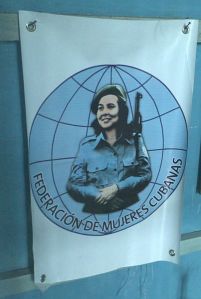
The Federation of Cuban Women (FMC) was created in August 1960 to mobilize women in support of the revolution and to integrate them into the political and social life of the country. The FMC played an important role in promoting gender equality and women's rights in Cuba and in mobilizing women to participate in revolutionary activities and government programs. The Association of Revolutionary Youth (AJR) was also created in 1960, to mobilize young people to support the revolution and promote their participation in political and social activities. The AJR played a key role in promoting literacy campaigns and mobilizing young people to participate in defence of the revolution. The National Association of Small Farmers (ANAP) was created in 1961 to organize and mobilize small farmers to support the revolution. The ANAP aimed to promote agrarian reform and improve the conditions of small farmers, traditionally marginalized and exploited by large landowners. The ANAP played a key role in promoting agricultural cooperatives and mobilizing small farmers to participate in the revolutionary process.
After the Cuban Revolution, Fidel Castro and his close associates consolidated political power and eliminated opposition through various means, including arrests, imprisonment, and executions. Many who had initially supported the revolution but had differing opinions were pushed aside or forced to leave the country. The Communist Party, which had played a key role in the revolution, was also strengthened and became the dominant political force in the country. Castro's government implemented socialist policies and nationalized many industries and businesses, further consolidating control over the economy and society.
After consolidating power, Castro's government implemented policies that led to the concentration of power in the hands of a small group of people, including himself and his family. The government suppressed dissent, restricted freedom of speech and assembly, and controlled the media and religious institutions. The political system became more authoritarian, with decisions made by a small group of people rather than through democratic processes. While the government implemented socialist policies, it was not a true socialist state, as it did not fully implement the ideals of worker control over the means of production. Instead, it maintained tight control over the economy and society.
Diplomacy and Economic Reforms
After the Cuban Revolution, the government led by Fidel Castro sought to establish diplomatic and economic relations with non-aligned and socialist countries. One of the key figures in this effort was Ernesto "Che" Guevara, who traveled extensively throughout Asia, Africa, and Latin America to establish ties with these countries.
Guevara believed that the Cuban Revolution could only succeed if it spread to other countries and inspired similar movements for social and economic justice. He also saw Cuba's relationship with the United States as a major obstacle to the country's development, and sought to break this dependence by forging ties with other nations. In addition to diplomatic efforts, the Cuban government also implemented a series of economic reforms aimed at reducing the country's reliance on the United States. These reforms included the nationalization of foreign-owned industries, the establishment of state-run enterprises, and the collectivization of agriculture. However, these policies also had their drawbacks, including a decline in productivity, shortages of essential goods, and a lack of incentives for workers. Over time, the Cuban government would continue to experiment with different economic models, including a period of liberalization in the 1990s and a recent shift back towards state control under the leadership of Raul Castro.
In May 1959, the Cuban government implemented an agrarian reform that expropriated all properties of more than 40 hectares and redistributed them to cooperatives. Foreigners were forbidden to acquire new land as part of this reform. The agrarian reform was a major initiative of the new government and aimed to redistribute land to peasants and small farmers, breaking up the large landholdings that had dominated Cuban agriculture for decades. The government also nationalized a range of industries and began to implement economic policies that favored state control over the economy. These policies were aimed at reducing the influence of foreign companies in Cuba and increasing the government's control over the country's resources.
In 1960, the Cuban government under Fidel Castro began to nationalize private businesses, both Cuban-owned and foreign-owned. This included industries such as oil, electricity, sugar, transportation, and small businesses. The process of nationalization continued over the years, and by 1968, nearly all private businesses in Cuba had been taken over by the state.
Social Reforms
The literacy campaign was one of the most significant social reforms launched by the Cuban government. It was launched in 1961, and over the course of one year, more than 700,000 Cubans, mostly young people, volunteered to go to the countryside to teach illiterate peasants to read and write. By the end of the campaign, the illiteracy rate had dropped from around 23% to less than 4%. In addition to the literacy campaign, the government also implemented other social reforms, such as improving working conditions, raising wages, and lowering rents.
The first years of the Cuban Revolution brought about significant social and economic changes in Cuba. The revolutionary government launched various social programs aimed at improving the living conditions of the Cuban people, such as the literacy campaign and the housing reform. In addition, the government implemented policies to address issues of poverty and inequality, including land reform, increased wages, and rent reductions.
The nationalization of private industry and foreign-owned property also aimed to redistribute wealth and resources to benefit the Cuban people. These policies led to a fundamental transformation of Cuban society, with some positive outcomes for the population. However, they also resulted in tensions with the United States, which opposed the Cuban government's socialist agenda and perceived the nationalization of American property as a threat to American interests in the region.
Attempts by the United States to Suppress the Revolution

the United States had supported the Batista regime in Cuba for years prior to the revolution, providing military and economic aid to his government. However, after the fall of Batista and the rise of Castro, the U.S. government became increasingly concerned about the revolutionary government's alignment with the Soviet Union and the spread of communism in the region.
In an effort to suppress the revolution, the U.S. government implemented a trade embargo on Cuba in 1960, which prohibited most U.S. exports to Cuba and severely limited the country's access to international markets. The U.S. also provided military and financial support to anti-Castro groups in Cuba, such as the Bay of Pigs invasion in 1961, which was a failed attempt to overthrow the Castro government. Additionally, the U.S. government attempted to isolate Cuba diplomatically, pressuring other countries in the region and beyond to cut ties with the Cuban government. This included the expulsion of Cuba from the Organization of American States in 1962.
The victory of Fidel Castro's revolution in Cuba strained the relationship between the United States and Cuba, as well as between the United States and the Soviet Union. The U.S. government saw the new Cuban government as a threat to its interests in the region, and the Eisenhower administration began working to undermine the Castro government.
The land reform in Cuba had significant consequences for the United States, particularly for American businesses that owned large tracts of land in Cuba, such as the United Fruit Company. The expropriation of these lands without compensation to the American owners caused a great deal of anger and resentment in the US government and among American business interests. The United Fruit Company, an American corporation, owned a significant amount of land in Cuba before the land reform was implemented by the Cuban government. The nationalization of their property in Cuba was a major blow to their business interests, and they lobbied the U.S. government to take action against the Cuban revolution. The United States government, influenced by the United Fruit Company and other corporate interests, enacted policies to undermine the Cuban revolution and support counter-revolutionary forces.
Furthermore, the US government saw the Cuban revolution as a threat to its interests in the region, as Cuba was now aligning itself with the Soviet Union and other socialist countries. The US began to impose economic sanctions on Cuba, including an embargo on trade, and began to explore ways to overthrow the Castro government. This culminated in the failed Bay of Pigs invasion in 1961, which was followed by a series of attempts to assassinate Castro.
In 1960, tensions between the US and Cuba began to rise, and the CIA started plotting to overthrow or assassinate Fidel Castro. In April 1961, the CIA launched the Bay of Pigs invasion, which was an attempt to overthrow the Cuban government by a group of Cuban exiles trained and supported by the US. However, the invasion failed, and this led to a strengthening of the relationship between Cuba and the Soviet Union, which would eventually lead to the Cuban Missile Crisis in 1962.

As Cuba became increasingly isolated from the United States and the Western world, the Cuban revolutionaries turned to the Soviet Union for economic and political support. In February 1960, Soviet Premier Nikita Khrushchev sent a delegation to Havana to establish diplomatic relations with the new Cuban government. In May 1960, the Soviet Union agreed to provide Cuba with economic assistance, including oil, and to purchase Cuban sugar and other goods. This marked the beginning of a close relationship between Cuba and the Soviet Union that would last until the collapse of the Soviet Union in 1991. In response to the nationalization of American-owned properties in Cuba, the US government imposed a trade embargo on Cuba in October 1960, which prohibited all trade between the two countries except for non-subsidized food and medicine. The embargo was later strengthened with the 1962 Foreign Assistance Act, which expanded the embargo to include almost all trade with Cuba, and the Cuban Assets Control Regulations, which froze Cuban assets in the US. The embargo is still in effect today, although some restrictions have been eased in recent years.
In January 1961, the United States broke off diplomatic relations with Cuba, following the nationalization of US-owned properties by the Cuban government. The US embassy in Havana was closed, and Cuba's embassy in Washington DC was also closed. The two countries have not had formal diplomatic relations since then, although there have been attempts to improve relations at various times.
Despite being initially hesitant about the Bay of Pigs invasion plan inherited from the previous Eisenhower administration, President Kennedy ultimately approved the operation. The invasion was launched in April 1961, but it quickly became clear that the Cuban forces were much stronger than expected and the operation failed. The United States suffered a major embarrassment, and Cuba's relationship with the Soviet Union deepened as a result.[18][19][20][21][22][23] After the failed Bay of Pigs invasion, Fidel Castro's regime arrested around 100,000 people, including suspected opponents and dissidents, as part of a crackdown on anti-government activities. The failed invasion also led to a further deterioration in relations between Cuba and the United States.
Fidel Castro played a central role in the Cuban Missile Crisis of 1962. At the time, the Soviet Union was facing a significant military disadvantage vis-a-vis the United States, which had a significant nuclear arsenal and was positioned to launch nuclear attacks against the USSR. In order to redress this balance, the Soviet Union decided to install nuclear missiles in Cuba, which was located just 90 miles from the coast of Florida and would therefore allow the USSR to launch nuclear attacks against the United States in the event of a conflict.
Castro was initially ambivalent about the idea of installing Soviet missiles in Cuba, and did not seem to appreciate the seriousness of the situation. However, as the crisis escalated and tensions mounted, he began to see the missiles as a way to deter the United States from attacking Cuba and to strengthen the relationship between Cuba and the Soviet Union. When President John F. Kennedy discovered the presence of Soviet missiles in Cuba, he ordered a naval blockade of the island in order to prevent the delivery of further missiles. This put Castro in a difficult position, as he did not want to back down and remove the missiles, but he also did not want to escalate the conflict further and risk a military confrontation with the United States.
Ultimately, it was the Soviet Union that decided to remove the missiles, after negotiating a deal with the United States in which the U.S. promised not to invade Cuba and to remove missiles that it had stationed in Turkey. Castro was not directly involved in the negotiations, and it is not clear what his position was on the resolution of the crisis. However, the crisis had significant implications for Cuba, as it further solidified the relationship between Cuba and the Soviet Union and made it clear that the United States was prepared to take aggressive action against Cuba if it felt that its national security interests were threatened. This led to increased political repression and censorship within Cuba, as Castro sought to maintain control over the population and prevent any dissent or opposition.
In 1965, Castro declared that the Cuban revolution was a Marxist-Leninist revolution and that Cuba was a socialist state. This declaration marked a turning point in the revolution, as Cuba began to align itself more closely with the Soviet Union and other socialist states, and to adopt socialist policies and practices.
Conclusion: The Cold War Legacy in Latin America and Cuba
The Cuban Revolution led by Fidel Castro was a significant event in the history of Latin America and the world. Castro, who rose to power in 1959, led a socialist revolution that transformed the country's political, social, and economic landscape. The revolution brought about major changes, including land reform, nationalization of private enterprises, and the implementation of social welfare programs. However, the revolution also saw the concentration of political power in the hands of Castro and his associates, the suppression of political dissent, and the elimination of free press and civil liberties. The United States, which had previously supported the Cuban government, turned against Castro and imposed an economic embargo that is still in effect today.
Castro's alignment with the Soviet Union during the Cold War further fueled tensions with the United States, culminating in the Cuban Missile Crisis in 1962. Despite the risks, Castro was willing to allow the installation of Soviet nuclear missiles on Cuban soil, which brought the world to the brink of nuclear war. In the end, the Cuban Revolution and its aftermath had far-reaching implications for Latin America and the world. While it brought about social reforms and a sense of national identity, it also reinforced authoritarian tendencies and resulted in long-term economic hardship for the Cuban people.
The Cold War had a significant impact on Latin America, as the United States and the Soviet Union vied for influence and control in the region. Many authoritarian regimes, often supported by the United States, came to power in Latin America during the Cold War era. These regimes were often characterized by human rights abuses, political repression, and economic inequality. The fall of the Soviet Union in 1989 marked the end of the Cold War, and brought significant changes to Latin America. Many countries in the region began to transition towards democracy and adopted more open and market-oriented economic policies. However, the legacy of the Cold War and its impact on Latin America continues to be felt today.
Annexes
- Bay of Pigs: Invasion and Aftermath – slideshow by Life magazine
References
- ↑ Aline Helg - UNIGE
- ↑ Aline Helg - Academia.edu
- ↑ Aline Helg - Wikipedia
- ↑ Aline Helg - Afrocubaweb.com
- ↑ Aline Helg - Researchgate.net
- ↑ Aline Helg - Cairn.info
- ↑ Aline Helg - Google Scholar
- ↑ The treaty text hosted by the Organization of American States
- ↑ GENERAL INFORMATION OF THE TREATY: B-29
- ↑ Paterson, Thomas G. et al (2009) ; American Foreign Relations: A History, Volume 2: Since 1895, Cengage Learning, ISBN 0547225695, p. 304
- ↑ Holly, Susan K., and David S. Patterson. Foreign Relations of the United States, 1952-1954. U.S. G.P.O., 2003. url: https://books.google.fr/books?id=jY89Lqr5QnYC&lpg=PA106&dq=guatemala%20psywar&pg=PA106#v=onepage&q=guatemala%20psywar&f=false
- ↑ Immerman, Richard H. The CIA in Guatemala: the Foreign Policy of Intervention. University of Texas, 1982. url: https://books.google.fr/books?id=erAkfz6c9HoC&lpg=PA113&dq=guatemala%20psywar%20bernays&pg=PA113#v=onepage&q&f=false
- ↑ http://www.coha.org/NEW_PRESS_RELEASES/Matt%20Ward/MW_Appendix_A.htm
- ↑ AA, teleSUR -. “Invasión De EE.UU. En Guatemala, Causas y Consecuencias.” TeleSUR, TeleSUR, 27 June 2019, www.telesurtv.net/news/golpe-estado-guatemala-eeuu-20180627-0007.html.
- ↑ Jiménez, Hugo Murillo. “LA INTERVENCION NORTEAMERICANA EN GUATEMALA EN 1954. DOS INTERPRETACIONES RECIENTES.” Anuario De Estudios Centroamericanos, vol. 11, no. 2, 1985, pp. 149–155., www.jstor.org/stable/40682697.
- ↑ Chúa, Luis Morales. “El Papel De Guatemala En Asambleas De La OEA.” Prensa Libre, 25 Aug. 2017, www.prensalibre.com/opinion/el-papel-de-guatemalaen-asambleas-de-la-oea/.
- ↑ Le Livre noir de la CIA: Les archives dévoilées, Yvonnick Denoël
- ↑ Kornbluh, Peter. 1998. Bay of Pigs Declassified: The Secret CIA Report on the Invasion of Cuba. The New Press ISBN 1-56584-494-7 ISBN 978-1-56584-494-0
- ↑ Terrorismo "made in U.S.A." en el continente americano; una enciclopedia básica
- ↑ Higgins, Trumbull. 1987, 2008. The Perfect Failure: Kennedy, Eisenhower, and the CIA at the Bay of Pigs. Norton ISBN 0-393-30563-5, 978-0-393-30563-0
- ↑ Hunt, E. Howard. 1973. Give Us This Day. Arlington House ISBN 978-0-87000-228-1
- ↑ Johnson, Haynes. 1964, 1974. The Bay of Pigs: The Leaders' Story of Brigade 2506. W.W. Norton & Co ISBN 0-393-04263-4
- ↑ Jones, Howard. 2008. Bay of Pigs (Pivotal Moments in American History). OUP US ISBN 0-19-517383-X, 978-0-19-517383-3