« The United States and World War II » : différence entre les versions
Aucun résumé des modifications |
Aucun résumé des modifications |
||
| (6 versions intermédiaires par le même utilisateur non affichées) | |||
| Ligne 1 : | Ligne 1 : | ||
''Based on a lecture by Aline Helg''<ref>[https://www.unige.ch/lettres/istge/unites/hco/anciens-collaborateurs/helg/ Aline Helg] - [https://www.unige.ch/ UNIGE]</ref><ref>[https://unige.academia.edu/AlineHelg Aline Helg] - [https://www.academia.edu/ Academia.edu]</ref><ref>[https://fr.wikipedia.org/wiki/Aline_Helg Aline Helg] - Wikipedia</ref><ref>[http://www.afrocubaweb.com/helg.htm Aline Helg] - [http://www.afrocubaweb.com/ Afrocubaweb.com]</ref><ref>[https://www.researchgate.net/profile/Aline_Helg Aline Helg] - [https://www.researchgate.net/profile/Aline_Helg Researchgate.net]</ref><ref>[https://www.cairn.info/publications-de-Aline-Helg--670782.htm Aline Helg] - [https://www.cairn.info Cairn.info]</ref><ref>[https://scholar.google.fr/citations?user=h3hUuPgAAAAJ&hl=en&oi=ao Aline Helg] - [https://scholar.google.fr/schhp?hl=en Google Scholar]</ref> | ''Based on a lecture by Aline Helg''<ref>[https://www.unige.ch/lettres/istge/unites/hco/anciens-collaborateurs/helg/ Aline Helg] - [https://www.unige.ch/ UNIGE]</ref><ref>[https://unige.academia.edu/AlineHelg Aline Helg] - [https://www.academia.edu/ Academia.edu]</ref><ref>[https://fr.wikipedia.org/wiki/Aline_Helg Aline Helg] - Wikipedia</ref><ref>[http://www.afrocubaweb.com/helg.htm Aline Helg] - [http://www.afrocubaweb.com/ Afrocubaweb.com]</ref><ref>[https://www.researchgate.net/profile/Aline_Helg Aline Helg] - [https://www.researchgate.net/profile/Aline_Helg Researchgate.net]</ref><ref>[https://www.cairn.info/publications-de-Aline-Helg--670782.htm Aline Helg] - [https://www.cairn.info Cairn.info]</ref><ref>[https://scholar.google.fr/citations?user=h3hUuPgAAAAJ&hl=en&oi=ao Aline Helg] - [https://scholar.google.fr/schhp?hl=en Google Scholar]</ref> | ||
{{Translations | {{Translations | ||
| fr = Les États-Unis face à la Deuxième guerre mondiale | | fr = Les États-Unis face à la Deuxième guerre mondiale | ||
| Ligne 72 : | Ligne 73 : | ||
==Impact and legacy of the war== | ==Impact and legacy of the war== | ||
The Second World War, sparked by the expansionist aggression of the Axis powers, notably Nazi Germany, Japan and Italy, proved to be a conflict of unprecedented scale and intensity. The brutality of the conflict and the immense loss of life were exacerbated by the use of modern military tactics and weapons, as well as by acts of genocide and crimes against humanity, tragically epitomised by the Holocaust. War has transformed the world in profound and lasting ways. Borders, economies and societies were reshaped, and the conflict laid the foundations for a new world order. The creation of the United Nations in 1945, with the mission of promoting international peace and security, symbolises this drive towards cooperation and multilateralism. In Europe, the war left a continent ravaged, divided and in need of reconstruction. The Marshall Plan, initiated by the United States, was crucial in helping Europe rise from the rubble, while strengthening American influence. In Asia, the fallout from the war redefined power relations and precipitated a series of conflicts and tensions that continue to this day. The Cold War, a direct consequence of the Second World War, saw the United States and the Soviet Union, former allies, transformed into ideological and military adversaries, ushering in an era of bipolar confrontation that lasted for decades. The post-Second World War world was marked by a nuclear arms race, decolonisation, civil rights movements and a rapid transformation of the economy and technology. So while the war itself was a cataclysm of destruction and tragedy, its repercussions also shaped the political, social and economic structures that continue to influence the contemporary world. | |||
The global conflict, the second in the space of a few decades, left Europe in ruins. Entire cities were devastated, economies shattered, and societies reeling from trauma and loss. Millions were killed, others became refugees, and the shadow of genocide and war atrocities hung over the continent. The reconstruction of post-war Europe was a monumental undertaking. The Marshall Plan, a massive aid programme initiated by the United States, was vital in stimulating economic recovery. This financial and technical support not only helped rebuild devastated nations, but also served as a strategic tool to contain Soviet influence, heralding the start of the Cold War. Politically, the map of Europe was redrawn. Nations were reconfigured, political regimes transformed, and the weakened and exhausted European colonial empires began to break up, giving rise to independence movements in the colonies. The creation of the United Nations, and later the European Economic Community, the forerunner of the European Union, symbolised efforts to forge a new political and economic architecture based on cooperation, stability and peace. Despite the remarkable reconstruction and revitalisation of Europe in the decades that followed, the scars of war remain. Memorials, cemeteries and museums across the continent bear eloquent testimony to the losses suffered and the lessons learned. Narratives of the war, passed down from one generation to the next, continue to influence Europe's identity, politics and international relations. | |||
The Second World War marked a period of transformation for the United States. While the country had locked itself into a policy of non-intervention at the start of the war, the attack on Pearl Harbor in 1941 galvanised the nation, marking its dramatic entry into the conflict. The American economy, stagnant in the remnants of the Great Depression, was revitalised by the massive war effort. Rapid industrialisation and economic mobilisation not only strengthened military capabilities but also ushered in an era of prosperity and economic growth. On the domestic front, the war brought about profound social changes. Women, entering the workforce in unprecedented numbers, broke down traditional barriers, ushering in a new era of emancipation and economic participation. Minorities, although still facing segregation and discrimination, saw their civil rights and social status rise. The effect of the war on US foreign policy and international stature was monumental. The Allied victory and the decisive contribution of the United States cemented its role as a global superpower. In the post-war period, the US played a central role in the creation of the UN, the launch of the Marshall Plan for the reconstruction of Europe and the establishment of a new architecture for global security and trade. The war also left an indelible mark on the American national psyche. The baby boom generation, born into the euphoria of victory and post-war prosperity, inherited a world shaped by conflict and burdened with the responsibilities and opportunities inherent in America's new global position. | |||
The Second World War marked a period of transformation for the United States. While the country had locked itself into a policy of non-intervention at the start of the war, the attack on Pearl Harbor in 1941 galvanised the nation, marking its dramatic entry into the conflict. The American economy, stagnant in the remnants of the Great Depression, was revitalised by the massive war effort. Rapid industrialisation and economic mobilisation not only strengthened military capabilities but also ushered in an era of prosperity and economic growth. On the domestic front, the war brought about profound social changes. Women, entering the workforce in unprecedented numbers, broke down traditional barriers, ushering in a new era of emancipation and economic participation. Minorities, although still facing segregation and discrimination, saw their civil rights and social status rise. The effect of the war on US foreign policy and international stature was monumental. The Allied victory and the decisive contribution of the United States cemented its role as a global superpower. In the post-war period, the US played a central role in the creation of the UN, the launch of the Marshall Plan for the reconstruction of Europe and the establishment of a new architecture for global security and trade. The war also left an indelible mark on the American national psyche. The baby-boom generation, born into the euphoria of victory and post-war prosperity, inherited a world shaped by conflict and burdened with the responsibilities and opportunities inherent in America's new global position. | |||
= | =The United States during the War= | ||
== | ==Political and institutional stability contrasting with economic expansion== | ||
[[Fichier:Bundesarchiv Bild 183-29645-0001, Potsdamer Konferenz, Stalin, Truman, Churchill.jpg|thumb|alt=Trois hommes en costume debout devant plusieurs personnes à l’arrière-plan|Joseph | [[Fichier:Bundesarchiv Bild 183-29645-0001, Potsdamer Konferenz, Stalin, Truman, Churchill.jpg|thumb|alt=Trois hommes en costume debout devant plusieurs personnes à l’arrière-plan|Joseph Stalin, Harry S. Truman and Winston Churchill in Potsdam in July 1945.]] | ||
The Second World War marked a period of transformation for the United States. While the country had locked itself into a policy of non-intervention at the start of the war, the attack on Pearl Harbor in 1941 galvanised the nation, marking its dramatic entry into the conflict. The American economy, stagnant in the remnants of the Great Depression, was revitalised by the massive war effort. Rapid industrialisation and economic mobilisation not only strengthened military capabilities but also ushered in an era of prosperity and economic growth. On the domestic front, the war brought about profound social changes. Women, entering the workforce in unprecedented numbers, broke down traditional barriers, ushering in a new era of emancipation and economic participation. Minorities, although still facing segregation and discrimination, saw their civil rights and social status rise. The effect of the war on US foreign policy and international stature was monumental. The Allied victory and the decisive contribution of the United States cemented its role as a global superpower. In the post-war period, the US played a central role in the creation of the UN, the launch of the Marshall Plan for the reconstruction of Europe and the establishment of a new architecture for global security and trade. The war also left an indelible mark on the American national psyche. The baby boom generation, born into the euphoria of victory and post-war prosperity, inherited a world shaped by conflict and burdened with the responsibilities and opportunities inherent in America's new global position. | |||
While American factories were firing on all cylinders to support the war effort, the country's social dynamics were also in flux. Women, for example, joined the workforce in unprecedented numbers to fill the void left by men away fighting, laying the foundations for the gender equality movements that were to follow. The Second World War also marked a turning point in the struggle for civil rights. Ethnic minorities, despite persistent discrimination, played a crucial role in the war industries and the military. African-Americans, in particular, used their military service to demand equal civil rights, ushering in a new era in the struggle for racial equality. On the economic front, rapid growth and subsequent prosperity helped consolidate the American middle class. The expansion of industry, technology and research and development, stimulated by the war effort, made the United States a world leader in innovation and production. In terms of innovation, the war propelled advances in fields such as aeronautics, communications, medicine and atomic energy. These innovations not only translated into military superiority, but also transformed civilian life in the decades that followed. The combination of economic growth, technological innovation and social change helped shape the United States as a global superpower in the post-war order. With a robust economy, advanced technology and growing political influence, the United States was well positioned to play a leading role in shaping the post-war world. | |||
The Second World War was not only a catalyst for America's economic renaissance, it also profoundly transformed society and repositioned the country on the world stage. While the nation was mired in the throes of the Great Depression, the massive war effort spurred an unprecedented industrial mobilisation. Factories, which had previously been silent, buzzed with activity, marking not only the end of economic stagnation, but also the dawn of an era of innovation and prosperity. This economic revitalisation was accompanied by a surge of optimism and confidence that permeated the nation. The population, once marked by poverty and unemployment, now found itself at the heart of a booming economy. This not only improved living standards, but also stimulated upward social mobility and consolidated the middle class, a pillar of American stability and prosperity in the post-war years. The transformation was not limited to the US. With Europe and Asia rebuilding, the United States, largely untouched by the ravages of war at home, established itself as the bastion of the global economy. The US dollar became the world's reserve currency, and with the implementation of the Marshall Plan, Washington played a pivotal role in European reconstruction, strengthening its political and economic influence on a global scale. The war also shaped American leadership in the new international architecture. The country was a key player in the founding of the United Nations and helped establish the rules and norms that continue to guide international relations. | |||
The economic boom of the Second World War transcended mere expansion; it marked a structural metamorphosis of the American economy. Although the New Deal programmes laid the foundations for recovery from the Great Depression, it was the mobilisation for war that triggered an explosion in production and employment. The economy was reconfigured from a nation struggling with unemployment and stagnation to an industrial and technological giant. The intensification of war production not only reduced unemployment to negligible levels, but also stimulated economic innovation and diversification. The aeronautical, naval and manufacturing industries were transformed by rapid technological innovation, and the emphasis on research and development paved the way for the golden age of American innovation. American workers, both men and women, were mobilised in unprecedented numbers. Women, in particular, stormed into the workforce, replacing men who had gone off to fight and expanding the role of women in the economy and society. This prefigured the movements for gender equality and women's emancipation of the following decades. The government, playing a central role, orchestrated this transformation. State interventionism, characterised by massive investment and strict regulation, guided the war economy. It also laid the foundations for a renewed social pact and a mixed economy in the post-war period. At the end of the war, the United States stood as an undisputed superpower, with a robust and diversified economy. Unemployment, which had been a persistent scourge during the Great Depression, had become a distant memory. The country was poised to enter an era of unprecedented prosperity, marked by growth, innovation and the assertion of its global leadership. The economic boom of the Second World War was not simply a recovery; it represented a reshaping and expansion that redefined the trajectory of the United States and the world for generations to come. | |||
The Second World War catalysed an unprecedented economic boom in the United States, driven primarily by increased production in the arms industry. The US government pumped huge amounts of investment into the sector, leading to a rapid expansion of defence-related businesses. Companies such as General Electric and Boeing experienced explosive growth, fuelled by lucrative defence contracts. However, the economic impact of the war went beyond the military industry. The economic momentum spread throughout American society, transforming the country's socio-economic structure. The prosperity generated by military spending had a trickle-down effect, revitalising various sectors of the economy. The population's purchasing power increased, wages rose and unemployment, a lingering shadow of the Great Depression, was virtually eradicated. Socially, the effects of the war were equally transformative. Women joined the workforce in record numbers, filling jobs traditionally reserved for men and ushering in a new era of female participation in the economy. Minorities, long marginalised, also found opportunities in the war economy. Technologically, the war was a crucible of innovation. Industries adapted and evolved, adopting new technologies and production methodologies. This not only increased efficiency and productivity, but also paved the way for American technological ascendancy in the decades that followed. This flurry of economic activity and innovation propelled the United States onto the world stage. America emerged from the war not only richer and more prosperous, but also armed with new confidence and influence. The country, once mired in the economic difficulties of the Great Depression, rose to become the pillar of the post-war global economic order, a transformation that continues to resonate throughout history. | |||
During the Second World War, the United States experienced a wave of internal migration on an unprecedented scale. More than 20 million Americans, driven by the search for proliferating economic opportunities, moved to industrial centres and regions housing military installations. This mass migration exceeded the mobility of the previous decade, reflecting the intensity of the war effort and the economic expansion that accompanied it. Metropolises and industrial areas became magnets for those seeking to escape poverty and economic uncertainty. Regions that were once economic frontiers were transformed into hubs of prosperity, work and innovation. Factories buzzed with activity day and night, cities grew and national demographics were reimagined. California serves as an emblematic example of this transformation. With its military bases and defence factories, the state attracted an influx of workers and their families. Cities like Los Angeles and San Francisco experienced explosive population growth, and with it cultural and economic diversification. California became not only a bastion of the defence industry, but also a crucible of innovation and creativity, planting the seeds for its future rise as a world leader in fields such as technology, film and finance. Migration during the war also exacerbated and exposed existing social tensions. African-American workers from the rural South, for example, moved to the industrial cities of the North and West, ushering in the Great Migration. While they sought economic opportunities, they also faced segregation and discrimination, underlining the ongoing struggle for civil rights that would culminate in the following years. | |||
The Second World War marked a crossroads in American history, where economic recovery and mass migration combined to reshape the national landscape. As industrial production soared to meet the demands of the war effort, factories and workshops filled with workers, signalling the end of the Great Depression. Unemployment, which had plagued the country for a decade, receded in the face of unprecedented demand for labour. This economic boom was amplified by the migration of millions of Americans. Previously neglected or underdeveloped regions were transformed into centres of economic activity. Individuals and families seeking opportunity uprooted their lives to seize the promise of prosperity that the war, paradoxical as it may seem, had made possible. The growth of industrial towns and production centres also catalysed social and cultural transformations. Communities became more diverse, ideas and cultures blended, and a new, more complex and nuanced American identity began to emerge. Places like Detroit, Los Angeles and Chicago were transformed, taking on the multicultural character that defines them today. War was also a vector for innovation. The need to produce weapons and equipment more efficiently led to technological advances and improvements in production processes. The American economy modernised and diversified, laying the foundations for the country's industrial and technological supremacy in the decades to come. | |||
During the 1940s, the Second World War gave rise to a particular migration dynamic in the United States. There was a massive movement of people from rural areas to urban and coastal centres, fuelled by the attraction of industrial jobs linked to the war effort and the desire for a better life. Rural areas, particularly those in the central states, felt the impact of this displacement. The flight of labour left farming communities facing a critical shortage of workers, jeopardising not only farm productivity but also the local economy. In response to this crisis, the Selective Service Act exempted farm workers from military service, a crucial measure for maintaining national food production. However, this exemption was not a complete solution. Instead, it accelerated the adoption of innovative agricultural technologies and more efficient working methods to compensate for the labour shortage. The country saw an increase in agricultural mechanisation, marking the beginning of a profound transformation in American agriculture. The displacement of the population also had significant social and economic implications. The rapidly expanding coastal and urban cities became centres of innovation and cultural diversity. The new arrivals, bringing with them a wealth of perspectives and experiences, have helped to shape the changing identity of these metropolises. In the wake of these migrations, social tensions have also been exacerbated. Competition for jobs and resources, the blending of cultures and the challenges of integration have created friction. These challenges, however, have also paved the way for a more integrated and diverse America. | |||
== | ==The federal state: a greater presence and role== | ||
[[Image:US-WarProductionBoard-Seal.png|thumb|right|100px]] | [[Image:US-WarProductionBoard-Seal.png|thumb|right|100px]] | ||
During the Second World War, the increased role of the federal government led to a significant transformation in the structure and function of the American state. Financing and coordinating the war effort required a centralisation and expansion of government powers that realigned the traditional balance between the states and the federal government. The unprecedented economic mobilisation, characterised by massive investment in war industries and the introduction of new taxes and obligations, not only stimulated the economy but also ushered in an era in which the federal government would play a more omnipresent role. This new paradigm affected not only the economy, but also the social and political life of Americans. The benefits provided to military families and veterans, as well as the expansion of health care and education programmes, set a precedent of government responsibility and commitment to the well-being of its citizens. This has transformed the public perception of the state, not just as regulator and legislator, but also as a direct provider of services and support. The war also raised complex questions about civil rights and individual freedoms. As the government expanded and the nation united to support the war effort, debates emerged about how to reconcile national security and individual liberties, a delicate balance that continues to be a central concern in American politics. At the end of the war, the legacy of this government expansion endured. State interventionism during the war laid the foundations for post-war policies and the emergence of the modern welfare state. The programmes and initiatives launched during this period provided the basis for the structure of public policy and government intervention that developed and expanded over the following decades. | |||
President Roosevelt's decision to create the War Production Board was a milestone in the transition of the American economy from civilian to military production. The efficiency with which this transformation was carried out testifies to the flexibility and adaptability of American industry. In a short space of time, factories that had previously produced consumer goods were converted to meet the urgent needs of the war effort, producing everything from munitions to aircraft. The WPB was instrumental in this transition. It was not just a coordinator, but also an arbiter, allocating raw materials, setting priorities and ensuring that industry was aligned with the strategic objectives of the war. This level of control and coordination was unprecedented and demonstrated the extent to which the government could be involved in the direct management of the economy. The process also revealed a symbiotic dynamic between government and industry. Industry benefited from lucrative contracts and the assurance that their products had a market, while the government benefited from rapid and efficient production to support troops in combat. This marked a significant departure from the more laissez-faire approach that had previously characterised government-industry relations. It also had an impact on the workforce. With the rapid increase in production came a demand for workers. Millions of Americans, including unprecedented numbers of women and minorities, joined the workforce, changing the demographics of work in the United States and laying the groundwork for the struggles for civil rights and gender equality that would follow in the decades to come.<gallery mode="packed" widths="200" heights="200"> | |||
Fichier:Attendance Flag Presentation to Dept. 2 Jan. 5, 1943 - NARA - 533861.tif| | Fichier:Attendance Flag Presentation to Dept. 2 Jan. 5, 1943 - NARA - 533861.tif|Trophy celebrating the productivity of the "Department 2" team, awarded on 5 January 1943 by the War Production Committee.''e''<ref>.Photo : Office for Emergency Management. War Production Board du fonds historique de la National Archives and Records Administration (NARA).</ref> | ||
Fichier:Save Rubber - NARA - 533943.jpg | Fichier:Save Rubber - NARA - 533943.jpg|Poster inviting the public to preserve rubber stocks by taking public transport or carpooling rather than driving alone to avoid wearing out their tyres. Source: National Archives and Records Administration (NARA). | ||
</gallery> | </gallery> | ||
The creation of the War Production Board and the prioritisation of large companies in the award of contracts was largely a strategic necessity. In the context of war, it was imperative to optimise and accelerate production to meet the pressing demands of the war effort. Large companies, with their substantial resources and extensive production capacity, were particularly well placed to achieve this. However, this approach also had repercussions on the country's economic landscape. The prioritisation of large companies reinforced their dominance in the industrial sector. With privileged access to government contracts and raw materials, these companies prospered, while many smaller companies struggled to survive in an environment where resources were scarce and competition fierce. This industrial consolidation reinforced a trend towards centralisation and concentration of capital and production that had begun long before the war. While small businesses were often left behind, large companies extended their reach, gaining influence and economic power. This dynamic helped shape the post-war American economic landscape and had lasting implications for the balance of economic power in the country. This concentration of production also led to changes in the workforce and the structure of work. With the expansion of large companies came increased demand for labour, but also increased mechanisation and standardisation of work. Trade unions and labour movements responded by organising and demanding rights and protections for workers, ushering in an era of more complex and often contentious industrial relations. | |||
During the Second World War, the need for rapid and effective technological innovation led to unprecedented collaboration between the federal government and universities. Institutions such as MIT, Harvard and the University of California played a central role in carrying out crucial research, including the development of radar technology, weapons systems and, of course, the atomic bomb. The Manhattan Project, the secret programme to develop the atomic bomb, is perhaps the best known of these efforts. Funded and supported by the federal government, the project brought together some of the brightest minds of the time, although Albert Einstein, one of the world's most renowned physicists, was excluded. His political and ideological affiliations caused concern, reflecting the tensions and mistrust of the time. This partnership between government and universities during the war had lasting repercussions. Not only did it demonstrate the power of collaboration between these institutions, but it also laid the foundations for the model of government-funded research and innovation that characterised the post-war period in the United States. Many of the technological innovations and scientific advances of the following decades can be directly attributed to this intensified collaboration and significant government investment in research and development. | |||
== | ==The marked rise of the industrial sector and major trade unions== | ||
During the Second World War, the American economy underwent major transformations, one notable change being the prolific rise of trade unions. As the demand for industrial labour flourished, the influence and power of the unionised workforce expanded dramatically. Iconic organisations such as the AFL (American Federation of Labor) and the CIO (Congress of Industrial Organizations) gained massive membership, fuelled by an unprecedented increase in the number of industrial workers. This was largely due to the imperative need for a strong, committed workforce to power the American war effort. With industrial production in overdrive, it was imperative that workers not only meet the demands of production, but also do so under conditions that would not undermine their morale or efficiency. This opened up an avenue for the unions to argue for improved wages and safer working conditions, exploiting the opportunity to strengthen their institutional hold. Unionisation was not simply a reactive response to the war effort. It represented a turning point in the American socio-political landscape, where workers, armed with greater solidarity and visibility, could negotiate with renewed vigour and confidence. They were no longer peripheral figures in the economy; they were now central players whose voices and needs had to be respected. | |||
The massive influx of union memberships and their growing power within American society were not simply isolated economic or social phenomena; they were deeply rooted in the political fabric of the country. The clearest evidence of this integration can be seen in the spectacular re-election of Franklin D. Roosevelt to a fourth term, an unprecedented milestone in American political history. At that time, trade union momentum and support were inescapable forces, shaping policy and influencing elections. Roosevelt, with his New Deal policies and initiatives to help the nation recover from the Great Depression, already had a natural affinity with the working class. However, the expansion of trade unions during the war amplified this relationship. Organised and mobilised workers supported the President en masse, strengthening his position and consolidating his leadership at a time when the nation was engaged in a decisive global conflict. However, this exceptional extension of Roosevelt's term also raised concerns and debates about the concentration of executive power. In response, Republicans, seeking to balance and limit presidential power, passed the 22nd Amendment, introducing a two-term limit for future presidents, ensuring that Roosevelt's extended tenure would remain a historical anomaly. This meant that the emergence of the unions and their growing influence were not transitory events; they had a lasting impact on the structure and nature of American politics. The period marked a conjuncture where workers' voices were not only audible but powerful, capable of shaping the destiny of national leaders and influencing the trajectory of the nation at a critical moment in its history. It was a time when the American political landscape was intrinsically linked to the rise of organised labour, and its influence was felt far beyond the factories and workshops to permeate the corridors of power in Washington. | |||
The post-war period saw a significant rise in opposition to the growing influence of trade unions. In 1948, Congress, now under the control of Republicans and conservative Democrats, became a bastion of resistance against union power. This marked a period when workers' rights and union influence were systematically attacked and weakened by legislation. The most notorious embodiment of this legislative counter-offensive was the Taft-Hartley Act of 1947. This piece of legislation restricted the power and influence of trade unions, outlawing specific practices and allowing right-to-work laws to be passed by states, thereby eroding the requirement for union membership as a precondition for employment. These anti-union movements occurred in the broader context of political change, exemplified by the adoption of the 22nd Amendment to the US Constitution. After the prolonged reign of Franklin D. Roosevelt, conservative political forces, alarmed by the centralisation of power, worked to introduce formal limits on the presidential term of office, restricting it to two terms. This constitutional amendment, like the Taft-Hartley Act, was symptomatic of an era of conservative reaction. The political and social gains of previous years, often associated with the influence of trade unions and Roosevelt's progressive policies, were now being challenged and reassessed in a Congress dominated by political forces determined to re-establish and assert conservative principles in American governance and economics. | |||
== | ==The emergence of mechanised farming giants== | ||
The evolution of the American agricultural landscape during this period was characterised by the growing predominance of large mechanised farms, stimulated by the financial support of banks and insurance companies. These large entities began to dominate the industry, threatening the very existence of small family farms. Faced with agricultural mechanisation and consolidation, these small farms had neither the financial capacity nor the technological resources to compete effectively. The economic viability of traditional family farming was seriously compromised, leading to a significant decline in the sector. As a result, a large number of small farmers, faced with declining economic prospects and the inability to maintain their livelihoods, were forced to migrate. This has fuelled widespread migration to urban areas where the promise of jobs and wider economic opportunities lay. Rising unemployment and insecurity in rural areas, coupled with the loss of land ownership, accelerated this demographic movement. Cities, with their expanding industries and growing employment opportunities, became magnets for those seeking to escape the economic challenges of rural life. | |||
Small family farms, once the mainstay of the American agricultural economy, faced formidable competition from large mechanised farming companies during the Second World War. The latter, endowed with abundant financial and technological resources, prospered in the context of the increased demand for food resulting from the global conflict. Their ability to rapidly increase production and diversify operations gave them a significant competitive advantage. Small farms, on the other hand, have been marginalised. Limited in their resources and access to technology, they were unable to adapt quickly to changing market requirements. Many found themselves in a precarious economic situation, and the sale or closure of their farms became an inevitable outcome for many of them. This transformation of the agricultural economy precipitated a massive rural exodus. Small farmers, as well as rural workers, left their land and communities for urban centres, driven by the promise of more stable jobs and a better life. American cities have witnessed rapid population growth, fuelled by this wave of new arrivals seeking to rebuild their lives in an urban environment. The concentration of agricultural ownership and production in the hands of large corporations ushered in a new era in American agriculture. Industrialisation and mechanisation became the norm, marking a definitive move away from the traditional family farming that had dominated for generations. The impact of this development extended far beyond the agricultural industry. It has influenced urban development, population distribution and the country's socio-economic dynamics. The effects of this transition are still being felt today, as the agri-food industry continues to be dominated by large-scale companies, and issues of food security, sustainability and economic justice remain at the heart of public debate. | |||
== | == The inevitable rise of national debt == | ||
To finance the war effort, the US federal government deployed a multi-polar strategy aimed at mobilising considerable financial resources. The sale of war bonds to the public was a key element of this initiative. These financial instruments, backed by the government's promise to repay with interest at maturity, raised crucial funds. However, it also led to a significant increase in the national debt. The massive borrowing was not without consequences. Although necessary to finance the war, it laid the foundations for future fiscal and economic challenges. Debt management became a constant preoccupation, influencing US fiscal and budgetary policy for decades. | |||
At the same time, increased government control over the economy during this period was a clear indication of the changing role of the state. Direct intervention in key sectors, rationing, price and wage controls, and regulation of industries were necessary to support the war effort, but also opened up a prolonged debate about the level of government intervention in the economy. The war indelibly altered the relationship between the state, the economy and society. In the post-war period, discussions about the appropriate balance between government intervention and economic freedom took on central importance. Questions around the size and role of government, budget deficits, the national debt and fiscal responsibility have remained enduring themes of discord and American political debate. The debt accumulated during the war has had a profound and lasting impact, shaping US fiscal, economic and social policy for generations to come. It has also influenced attitudes towards saving, investment and consumption, prompting the country to navigate carefully between economic growth and fiscal stability in the context of a rapidly changing world. | |||
The exponential increase in the US national debt between 1941 and 1945 is a direct reflection of the intensity and global reach of the Second World War. The need to increase war production, finance troops and provide international support led the government to adopt exceptional measures to mobilise financial resources. The main strategy for raising these crucial funds was the sale of war bonds. These bonds, sold to the American public, businesses and even government institutions, provided direct funding for the war effort. It was a direct appeal to national solidarity, with each purchase seen as a concrete contribution to the Allied victory. However, this rapid expansion of debt also had consequences. It reflected the monumental financial cost of the war, but also embodied the country's total commitment to the conflict. The burden of this debt, although heavy, was seen as necessary, and repayment was seen as a challenge for the post-war period. The size of the debt also reflected the transition from a peacetime economy to a hyperactive wartime economy. The country underwent rapid industrialisation and a massive expansion of production to meet the needs of the war. Every dollar borrowed contributed to the production of weapons, vehicles, ships and aircraft, as well as supporting the millions of soldiers deployed abroad.[[File:Federal Debt Held by the Public 1790-2013.png|thumb|425px|center|US federal debt held by the public as a percentage of GDP, from 1790 to 2013, projected to 2038.]] | |||
= | =Major societal transformations brought about by the war= | ||
== | ==The changing face of the industrial working class== | ||
The post-Second World War period, often referred to as the "economic boom" or "golden age of capitalism", marked an era of unprecedented prosperity in the United States. It was characterised by rapid economic growth, industrial expansion, rising household incomes and significant development of the middle classes. The post-war economic boom was fuelled by several factors. The first was the vast demobilisation and industrial conversion programme, which transformed the war economy into a dynamic peace economy. Millions of veterans returned home ready to start a new life, fuelling demand for consumer goods, housing and services. The second was the accumulation of savings during the war. Wartime restrictions and rationing limited consumption, meaning that many Americans accumulated substantial savings. With the end of the war, they were ready to spend, stimulating demand and economic growth. Strong demand for consumer goods and full employment created a virtuous circle of growth. Wages rose, consumer confidence was high, and the technological innovations introduced during the war found new applications in the civilian economy. Against this backdrop, industrial workers experienced a significant improvement in their economic and political power. With wages rising faster than prices, purchasing power increased, leading to a better quality of life, greater consumption and upward social mobility. Trade unions, stronger and more influential than ever, are playing a crucial role in negotiating wages and working conditions, setting new standards for pay and benefits. This is contributing to a general sense of prosperity and progress, where every worker can aspire to a better life. However, this period of rapid growth is not without its challenges. Inflation, managing rapid population and urban growth, and the need for increased education and training for a growing population and a changing economy are just some of the challenges the US faces in its rise to global economic superpower. | |||
The Second World War catalysed a profound structural upheaval in the American economy. The unprecedented demand for the production of war material stimulated rapid industrial growth, marking an acceleration in America's transition from an agrarian economy to an industrial power. Industrial workers found themselves at the centre of this transformation. Factories were operating around the clock, and a workforce that had been affected by the Great Depression was suddenly in demand. Wages rose, and with them the economic power and standard of living of industrial workers. Men and women, including those who had been excluded from economic opportunities before the war, found employment and stability in the war industries. Meanwhile, agriculture, although playing a vital role in feeding the nation and supporting the war effort, was undergoing structural change. Small farmers, faced with the challenges of modernisation and mechanisation, saw their influence diminish. The war accelerated the trend towards agricultural consolidation, with technology and mechanisation making large farms more efficient and economically viable. This gap between agriculture and industry is reflected in socio-demographic dynamics. A massive migration to the cities is underway. Workers are seeking jobs in factories and urban centres are prospering. Small towns and rural communities face challenges in maintaining their populations and economies. The post-war American economy is thus characterised by industrial expansion, the relative decline of agriculture and increased social and economic mobility. Industrial workers, with their greater economic security and opportunities, were the protagonists of this new era of prosperity. At the same time, the nation as a whole is struggling to balance the needs and opportunities of the agricultural and industrial sectors, while navigating a rapidly changing economic landscape. War, with its demands and challenges, acts as an accelerator of economic and social change. Not only did it shape the trajectory of economic growth, it also altered economic power structures, strengthening the role of industrial workers and transforming the agricultural landscape. These changes, imprinted on America's economic and social structure, will continue to influence the nation's development for decades to come. | |||
== | == The economic and social emancipation of women in the era of the war economy == | ||
[[File:Victory job (AWM ARTV00332).jpg|thumb|In many nations women were encouraged to join female branches of the armed forces or participate in industrial or farm work.]] | [[File:Victory job (AWM ARTV00332).jpg|thumb|In many nations women were encouraged to join female branches of the armed forces or participate in industrial or farm work.]] | ||
The massive involvement of women in the workforce during the Second World War was a transformational phenomenon. With large numbers of men sent to the front, women were called upon to fill the gaps left in the war industries and other key sectors of the economy. It was a time when gender stereotypes were tested, and in many cases, redefined. "Rosie the Riveter became the emblem of the working woman, embodying the courage, determination and skill of the millions of women who took jobs in munitions factories, shipyards and aircraft factories. They were not just secretaries or nurses, but workers, mechanics and engineers. The American employment landscape was revolutionised. This sudden influx of women into traditionally male roles had a double impact. Economically, it boosted productivity, helping the United States to meet the enormous demands of the war effort. Socially, it shook power structures and gender expectations, planting the seeds for future feminist movements. Women, having demonstrated their skills and effectiveness in jobs once reserved for men, were no longer prepared to be confined to menial roles. Although many were encouraged to return to domestic lives after the war, the legacy of their contribution remained. The war years also brought unique challenges. As women juggled increased responsibilities, they also faced gender prejudice and persistent discrimination in the workplace. However, their invaluable contribution to the war effort helped cement the idea that women could and should have a meaningful place in the country's economic and social landscape. | |||
The Second World War played a crucial role in reconfiguring the social and economic status of women, particularly white and African-American women. This period of conflict created an environment conducive to the reassessment of traditional roles and opened unexpected doors for women's participation in the workforce. For white women, industrial expansion and the increased need for labour offered unprecedented employment opportunities in sectors previously dominated by men. This has highlighted their potential as a skilled and resilient workforce, undermining pre-existing gender stereotypes. African-American women, faced with the double discrimination of race and gender, also saw opportunities open up during this period. Although still facing segregation and discrimination, many managed to secure jobs in the defence industry and other sectors crucial to the war effort. It was a time when, despite the obstacles, black women were able to take significant steps towards economic autonomy. The momentum gained during these years had a lasting impact. For white women, increased participation in employment initiated a cultural transformation, challenging traditional domestic norms and sowing the seeds of the second feminist wave of the 1960s. For African-American women, the war not only offered a degree of economic autonomy but also strengthened their voice in the civil rights movement. Confronted with the glaring contradiction between the ideals of freedom and democracy championed abroad and the reality of segregation and discrimination at home, black women were among the leading figures demanding equality and justice. | |||
The Second World War was a pivotal moment in the redefinition of the role of women in American society and beyond. The traditional boundaries of gender roles were blurred, offering women an unprecedented opportunity to take on jobs and roles that had previously been the prerogative of men. The notion that women were limited to domestic roles or certain professions deemed 'feminine' was challenged when millions of women joined the workforce to fill the void left by men leaving for the front. These women were not just confined to clerical jobs or caring professions, but also engaged in physically and technically demanding work. The cultural icon of "Rosie the Riveter" embodies this transformation. She became a powerful symbol of the hard-working woman who contributed directly to the war effort, breaking down existing stereotypes and challenging established gender norms. Women proved that they were capable of working as hard and efficiently as men, helping to change public perceptions of what women could achieve professionally. The diversity of women who joined the workforce during this period was also significant. Women of all ages, marital status and origins took part in this mass migration to industrial jobs. Married women, mothers and even grandmothers became an integral part of the workforce. This period of rapid change also posed new challenges. While women faced changing expectations at work, they also faced pressure to maintain their traditional roles at home. The issue of childcare and running the home in the absence of men raised important questions about the social structure and supports needed to enable women to work effectively. | |||
The mass entry of women into the workforce during the Second World War catalysed a profound transformation of social norms and expectations. The change in gender roles was not just an economic phenomenon, but also a social and cultural upheaval that reshaped the contours of professional and personal opportunities for women. Women, having proved their competence and effectiveness in a variety of jobs and sectors, began to demand greater fairness and equality in all aspects of public and private life. The challenge to traditional gender norms broadened the horizons for future generations of women, prompting a reassessment of predefined social roles. In the following decades, the gains made during the war period fuelled feminist movements that fought for equal rights, pay equity, and increased representation in political, economic and social spheres. The legal restrictions and institutional barriers that had historically limited opportunities for women were gradually dismantled. However, the road to equality was far from linear. After the war, there was considerable pressure for women to return to their traditional roles in the home. The nuclear family ideals of the 1950s, centred around the household with the husband at work and the wife at home, were in part a reaction to the breakdown of traditional norms during the war. Yet women's participation in the war effort had planted irreversible seeds of change. Women had experienced a level of autonomy and economic participation that would shape the aspirations and expectations of future generations. The civil rights and feminist movements of the 1960s and 1970s built on these initial changes, propelling gender equality issues to the forefront of national and international discourse. | |||
The Second World War was a turning point for African-American women, providing opportunities that transcended their traditionally limited and often subordinate roles. Although these women faced specific challenges linked to double discrimination based on gender and race, they were able to navigate the complex context of the time. The increased demand for labour during the war opened new doors for women of all ethnic origins. Although often confined to lower-skilled and lower-paid jobs than their white male counterparts, black women nonetheless benefited from social and economic progress. The Great Migration movement, in which millions of African-Americans moved from the rural South to the industrial cities of the North and West, accelerated during this period. African-American women joined the industrial workforce in increasing numbers, contributing significantly to the war effort and to crucial industries. These opportunities for employment and economic emancipation also helped to strengthen the civil rights movement. Women's leadership and participation were crucial in the struggle for racial equality and social justice that gained momentum in the following years. However, the gains were mixed. African-American women still faced pronounced racial and gender prejudices and were often relegated to subordinate positions, despite their skills and contributions. These experiences, however, provided the foundation for continued struggles for equality and justice. African-American women, armed with the experience gained and skills developed during the war, continued to play a vital role in the movements for civil rights, gender equality and social justice in the second half of the twentieth century. The seeds sown during this tumultuous period germinated into robust movements that transformed American society, even as the struggles for equality and justice continue to this day. | |||
This momentum of empowerment for African-American women was also a crucial step in the broader trajectory of the women's and civil rights movements in the United States. As African-American women became more actively engaged in the workforce, they also faced the persistent challenges of discrimination and segregation. Nevertheless, the collective experience of economic and social emancipation has served as a catalyst for the more vigorous expression of demands for social justice, equality and respect for human rights. Within their communities and beyond, African-American women began to exercise remarkable leadership. Iconic figures such as Rosa Parks, who became a symbolic figure of the civil rights movement, and other lesser-known but equally determined women, helped shape a national narrative of resistance, resilience and reform. The post-war period was marked by a series of progressive struggles and successes for civil rights and social justice. Improved economic conditions for African-American women were intrinsically linked to these advances. The ability to wield greater economic power facilitated increased participation in social and political movements, highlighting the intersectionality of oppressions based on race, gender and class. The legacy of that era lives on today, and the contributions of African-American women to the social and economic transformation of the United States are increasingly recognised and celebrated. The persistent challenges of discrimination and inequality are also met with the vigour and resilience inherited from the pioneers and activists of that crucial era in American history. | |||
The aeronautical industry was a fertile ground for observing the dynamic evolution of the role of women in the labour sector during the Second World War. The shortage of male labour due to the mass enrolment of men in the army opened up opportunities for women in fields that had previously been inaccessible. In the aviation industry, women were employed in significant numbers to fill the gap left by men who had left to fight. They have held a variety of positions, from office jobs to production roles on assembly lines, where they have contributed to the manufacture of aircraft and aircraft parts. The iconic image of "Rosie the Riveter" grew out of this period and became a symbol of the transformative role of women in industry. She embodied the strong, determined working woman who played a crucial role in the war effort by taking on difficult tasks and demonstrating women's ability to excel in traditionally male occupations. This change in work dynamics was not only a practical necessity to maintain production during wartime, but also initiated a societal debate on gender roles and women's capabilities. Although the integration of women into these jobs was initially seen as temporary, it highlighted gender inequality and fuelled the women's rights movement. | |||
The Second World War was a decisive moment for the perception and role of women in American society and the economy. Before the war, the social structure was largely dominated by strict Victorian norms that delineated and prescribed the specific roles women were expected to play, mainly centred around the home and the family. The workplace, particularly in sectors such as industry, was considered the domain of men. However, the war changed this significantly. With large numbers of men leaving for the front, women were called upon to fill the gap in the workforce, taking up positions in industries that had previously been inaccessible to them. Women proved that they could do the job as effectively as men, challenging existing gender stereotypes. Public recognition of women's contribution to the war effort was also amplified by government propaganda campaigns. Posters, films and newspaper articles portrayed women as heroic figures essential to the Allied victory, changing the public perception of women at work. This change helped trigger a reassessment of traditional gender roles. After the war, although many women were encouraged to return to their domestic roles to make way for men returning from the front, the impact of their contribution during the war could not be ignored. The experience of women at work during the Second World War laid the foundations for the feminist movements and struggles for gender equality that would emerge with force in the 1960s and beyond. Women had undeniably demonstrated their competence, efficiency and importance in the workforce, sowing the seeds for the social and cultural changes to come. | |||
Although the Second World War marked a turning point for women in the workforce, issues such as the gender pay gap and the lack of support for women workers who are also mothers remain. The gender pay gap remains a complex issue, resulting from a combination of factors such as direct discrimination, career choices, differences in education and experience, and family responsibilities which often weigh more heavily on women. Initiatives to address this problem include fair pay legislation, transparent recruitment and promotion practices, and efforts to change attitudes and cultural stereotypes about women's work. Workplace support for working mothers is another area where improvements are needed. The availability of company crèches, greater flexibility in working hours, and generous and inclusive parental leave policies are crucial steps in helping women balance their careers with family responsibilities. Despite these challenges, it is important to recognise the progress that has been made. Women's participation in the workforce, in politics and in other areas of society has increased. Increasingly, gender issues are recognised as crucial not only to women's rights, but to overall economic and social development. | |||
The return of the soldiers at the end of the Second World War was a period of significant adjustment. Women had acquired greater autonomy and independence during the war, having taken charge not only of their families but also of jobs that had traditionally been the preserve of men. This transformation gave women new confidence and a new perspective on their roles within the family and society. At the end of the war, men returning home were often faced with a transformed domestic and social landscape. Their wives, sisters and mothers had taken on new responsibilities, and many were reluctant to return to previous norms that limited their opportunities and autonomy. Tensions emerged as men and women negotiated these new dynamics. Many men expected to return to their previous roles as the family's main providers and decision-makers, while many women were reluctant to give up the autonomy and independence they had acquired. These negotiations paved the way for changes in social and cultural attitudes over the following decades. The 1950s saw a reassertion of traditional gender roles in many aspects of American society, but the seeds of change had been planted. The following decades were marked by civil rights movements, women's rights and other social reforms that gradually dismantled legal and cultural barriers to gender equality. Wartime women, having tasted greater independence and demonstrated their ability to take on traditionally male roles, were key players in these movements. | |||
== | == The awakening and mobilisation of African-Americans == | ||
[[File:332ndFighterBriefing1945.jpg|thumb|right|150px|The 332nd Fighter Group attends a briefing in Italy in 1945.]] | [[File:332ndFighterBriefing1945.jpg|thumb|right|150px|The 332nd Fighter Group attends a briefing in Italy in 1945.]] | ||
The Second World War was a critical period in the history of African Americans and a catalyst for the civil rights movement that followed. The active participation of African Americans in the war effort not only transformed their own lives, but also society's perception of them. During the war, African Americans served with distinction in all branches of the armed forces, although they were often relegated to support roles and subjected to rigid segregation. Despite these challenges, they demonstrated their patriotism and competence, challenging existing racial stereotypes. The Great Migration, in which millions of African Americans moved from the segregated rural South to the industrial cities of the North and West, was another transformative consequence of the war. These migrants sought jobs in the booming war industry and hoped to escape Jim Crow oppression in the South. This migration had lasting consequences. Not only did it create new African-American communities in cities such as Chicago, Detroit and New York, it also transformed the political, economic and cultural landscape of America. With a new concentration of population and increased economic power, African-Americans were better placed to advocate for their civil and social rights. The glaring contradiction between America's struggle for freedom abroad and the denial of fundamental rights to a significant part of its population at home did not escape national attention. African-American leaders, such as A. Philip Randolph, used this contradiction to pressure the government to end discrimination in the defence industry and the armed forces, laying the foundations for the civil rights movement of the 1950s and 1960s. | |||
The migration of African Americans to the North and West during the Second World War is often referred to as the Second Great Migration. These individuals were driven by the search for jobs in the war industry and to escape the injustices of segregation in the South. Although their departure symbolised an escape from the rigours of segregation and economic oppression, the challenges they faced in the North were not insignificant. In the cities of the North and West, African Americans were often met with economic competition and social resistance. Institutionalised racism was not exclusive to the South, and many migrants faced discrimination in employment, housing and de facto segregation in Northern cities. Race riots and tensions between black and white workers also erupted in some cities, exacerbated by competition for jobs and limited resources. In the military context, although the US Army was segregated, the war provided opportunities for African Americans to prove their patriotism and value as soldiers. The Tuskegee Airmen, a famous group of African-American fighter pilots, for example, demonstrated exceptional skill and courage, helping to challenge racial stereotypes and advocate for the integration of the armed forces, which would finally come to fruition in 1948 with Truman's Executive Order 9981. Although the Second World War provided opportunities and helped to initiate important changes in the struggle for civil rights, African Americans continued to struggle against discrimination and inequality long after the war ended. It was not until the 1950s and 1960s, with the emergence of the civil rights movement, that significant progress was made in achieving legal and social equality for African Americans. The active role of African-Americans in the war and subsequent migration paved the way for a heightened awareness of racial inequalities and sowed the seeds for a broader mobilisation for civil rights and social justice in the decades that followed. | |||
The contradiction between the democratic ideals promoted by the United States on the world stage and the reality of discrimination and racial segregation within the country was glaring. This contrast was not only embarrassing, but deeply problematic, calling into question the moral legitimacy of the country in its fight against the authoritarian regimes of the Axis powers. The distinguished service of African-American soldiers during the war, despite segregation and discrimination, highlighted the injustice of these practices. African-Americans fought bravely for freedom and democracy abroad, while being denied these same fundamental rights on their own soil. The Tuskegee Airmen, soldiers of the 92nd Infantry Division, and other African-American units proved their valor and skill in battle, dismantling the racial stereotypes prevalent at the time. The post-war period saw a significant increase in calls for civic justice and racial equality. African-American veterans of the Second World War returned to a country where they were still considered second-class citizens, fuelling their desire for change and equality. Figures like Medgar Evers, a veteran of the Second World War, became key players in the civil rights movement. Segregation in the army became increasingly untenable and incongruous with the values that the United States claimed to uphold. Growing public and political pressure finally led to the desegregation of the armed forces in 1948 by President Harry S. Truman, who signed Executive Order 9981, ending segregation in the military services and establishing equal treatment and opportunity for all soldiers, regardless of race or ethnic origin. This marked an important step towards the recognition of civil rights and equality for all Americans and foreshadowed the broader civil rights struggles that were to dominate American social and political discourse in the 1950s and 1960s. The contradiction between domestic segregation and democratic ideals was a powerful force for change and social reform in the country. | |||
The contradiction between the patriotic service demanded of African-Americans and the limited civil rights granted to them on their own soil was a blatant hypocrisy. The United States fighting for freedom and democracy abroad, while allowing segregation and racial discrimination within its borders, provided an opportunity for enemies, including the Nazi regime, to criticise and challenge the morality and integrity of the United States on the world stage. The Soldiers' Voting Act of 1942 represented a step forward, albeit a small one, in recognising the voting rights of African-Americans, particularly those serving their country overseas. It highlighted the injustice of denying civil rights to those who risked their lives to defend democracy. This paradox of American democracy - advocating freedom and equality while denying these rights to a significant portion of its population - fuelled the momentum of the post-war civil rights movement. African-American soldiers are returning home more determined than ever to fight for equal rights and justice, not only as citizens but as veterans who have proven their worth and commitment to their nation. This domestic and international pressure helped expose and challenge segregation and racial discrimination in the United States, pushing the country towards important legislative and social reforms that eventually led to major advances in achieving racial equality and civil rights for all citizens in the decades that followed. The struggle, however, was not over, and the quest for equality, justice and civil rights would continue to shape American history well beyond the period of the Second World War. | |||
The active participation of African-Americans in the Second World War was an important catalyst for the civil rights movement that followed. The war experience exposed the glaring contradictions between American ideals of freedom and justice and the reality of racial discrimination and segregation in the United States. African-American soldiers who had fought for freedom and democracy abroad returned home more determined to claim these same rights for themselves, their families and their communities. This stimulated a new era of activism and protest, with iconic figures and emerging organisations committed to challenging and dismantling the structures of segregation and oppression. The discrimination and racism that African Americans faced, even while serving their country, made inequalities more visible and urgent, both for those directly affected and for the nation as a whole. The stories of injustice suffered by those who had served in uniform, in particular, made the fight for civil rights not only a matter of social justice but also a moral and ethical imperative. In the post-war years, demonstrations, campaigns of civil disobedience and legal efforts to end segregation and promote equality grew in intensity. Events such as the Brown v. Board of Education case, the Montgomery Bus Boycott, and the emergence of leaders such as Martin Luther King Jr. were crucial milestones in the struggle for civil rights, a struggle that was influenced and informed by the experiences and injustices of the Second World War period. | |||
The exodus of African Americans from the rural South to the industrial centres of the North and West, known as the Great Migration, marked a historic turning point in the social and cultural landscape of the United States. This mass migration not only redefined the country's demographic dynamics, it also had a profound impact on America's social, economic and political dynamics. African-Americans integrated into urban centres and formed strong communities. This integration has fostered a sense of community identity and solidarity, strengthening their ability to organise and campaign for their rights. Cultural evolution has been marked by a flourishing of African-American music, literature and the arts, thanks in part to the new freedom and economic opportunities in the cities of the North. New migrants gained access to better-paid industrial jobs, increasing their economic power and living standards. A significant number of African-Americans were able to enter the middle class, changing social perceptions and economic expectations within the community. Politically, the concentration of African-Americans in northern cities increased their influence. They became an important voting bloc that politicians could no longer ignore, playing a key role in the passage of pro-civil rights legislation in the 1960s. However, despite these advances, African-Americans faced persistent racism and discrimination, even in the North. Racial tensions sometimes led to riots and conflict, and economic and social disparities remained a persistent problem. The collective experience of African Americans during and after the Second World War laid the foundations for the civil rights movements of the 1950s and 1960s. African Americans' contributions to the war, coupled with the manifest inequalities they still faced, brought home to the nation the urgent need for reform and equality, playing a central role in the subsequent transformation of American society towards equality and justice for all. | |||
The Second World War catalysed the civil rights movement in the United States, despite the challenges and conflicts that arose during this period. African-American soldiers who had fought for freedom and democracy abroad returned home more determined than ever to win those same rights for themselves and their fellow citizens. This aspiration was exacerbated by the glaring inconsistency between the ideals of democracy for which they were fighting and the reality of segregation and racial discrimination they experienced on a daily basis. The impact of the war on the fight for equal rights was multi-faceted. International exposure of racial injustices in the United States, the active participation of African-Americans in the war effort, and pressure from civil rights leaders converged to push for progressive legislative and social reforms. Pressure for equal rights was increased by African-American soldiers who, having risked their lives for the country, were increasingly unwilling to accept second-class citizen status. Measures such as the ban on segregation in military transportation and recreation facilities and the Soldiers' Voting Act laid the groundwork for the broader mobilisation for civil rights in the 1950s and 1960s. These initial, albeit limited, advances symbolised breaches in the wall of institutionalised segregation and inspired renewed confidence and determination among African Americans and their allies. The convergence of these factors led to campaigns of civil disobedience, demonstrations and legal battles that eventually led to the passage of the Civil Rights Act of 1964, a legislative milestone that outlawed discrimination based on race, colour, religion, sex or national origin. So while the war was marked by tension and conflict, it also served as a catalyst for profound social and legislative change, steering the nation towards a trajectory of inclusion, equality and justice. | |||
It is clear that this conflict was a crucial period of confrontation and change, when the intrinsic and systemic inequalities in the United States were highlighted on the world stage. It is interesting to note the poignant irony of fighting fascism abroad while perpetuating oppressive systems at home. African Americans and women played vital roles in the war effort, contributing to an Allied victory while highlighting their personal struggles for equality and justice. This paradox exacerbated existing tensions and led to deep national introspection. In France, the German occupation was a period of suffering and resilience, and the liberation was a moment of joy and national renewal. The presence of African-American soldiers, who fought bravely for the liberation of France, cast a positive light on them and helped to change perceptions. Exposure to other cultures and contexts also played a significant role in this evolution. Soldiers and workers who ventured beyond the borders of their country or state were exposed to perspectives and experiences that challenged and broadened their views of the world and themselves. This played a crucial role in shaping the social movements that followed, where previously marginalised groups were inspired and equipped to demand fuller equality and justice. In this way, the Second World War was not only a battle between nations, but also a period of profound inner transformation. The inherent contradictions of American democracy, juxtaposed with the global struggle against totalitarianism, paved the way for an era of contestation, reform and renewal, where the ideals of freedom and equality were deeply examined and ardently pursued. | |||
== The Braceros agreement and its impact on the employment landscape == | |||
The Bracero Agreement, implemented during the Second World War, was a pragmatic response to the shortage of agricultural labour in the United States. With so many Americans leaving to fight overseas, the country's fields and farms were in danger of being left uncultivated, jeopardising the national food supply in the middle of the war. Mexico, a neighbour to the south with an abundance of labour, was seen as a practical solution to this problem. Mexican workers, known as "Braceros", were hired to work in often difficult conditions and faced discrimination and exploitation. Promises of fair wages and good working conditions were often more theoretical than real, and Braceros often found themselves in precarious situations. Their presence in the United States was not just a question of labour and economics, but also had profound social and cultural implications. Despite the difficult conditions, many Mexican workers seized the opportunity to seek a better life for themselves and their families. This led to significant migration from Mexico to the United States, a phenomenon that continued long after the end of the war and the expiry of the Bracero agreement. The discrimination and prejudice faced by Mexican workers and their families was reflected in the inequitable treatment of existing Mexican-American communities. Their economic contributions were often invisible in public discourse, while cultural stereotypes and prejudices persisted. | |||
The history of Mexican immigration to the United States is marked by fluctuations linked to the economic, political and social conditions of both countries. In the late nineteenth and early twentieth centuries, the attraction of employment opportunities in the agricultural, mining and construction sectors in the United States led to a significant increase in immigration from Mexico. The American Southwest, in particular, became a place of settlement for many Mexican immigrants, where they made a significant contribution to the region's economic growth. However, the Great Depression radically changed the landscape. The economic collapse that followed the stock market crash of 1929 not only hampered employment opportunities for Americans, but also severely affected Mexican immigrants. With rising unemployment and limited resources, immigrants, particularly those of Mexican origin, were often stigmatised and marginalised. This period was marked by an aggressive repatriation policy, where thousands of Mexicans and Mexican-Americans were sent back to Mexico, often regardless of their citizenship status. The Second World War signalled a radical change in this trend. With American men fighting overseas, there was a labour shortage at home. The Bracero Agreement was born out of this need. This programme facilitated the temporary entry of Mexican farm workers to fill the gap, marking another important chapter in the history of Mexican immigration to the United States. Although this agreement offered economic opportunities, it was also marred by abuse and exploitation. Workers were often subjected to precarious working and living conditions, a problem exacerbated by the lack of adequate protections and rights. | |||
The context of the decades surrounding the Great Depression and the Second World War was crucial in shaping policies and attitudes towards Mexican workers in the United States. The Great Depression was a period of deep economic uncertainty, where labour shortages and limited resources exacerbated social tensions. Mexican workers, among other immigrant groups, were particularly hard hit. In an effort to "preserve" jobs and resources for US citizens, massive deportation policies were implemented, forcing many Mexican workers and their families to return to Mexico, often regardless of their citizenship or residency status. The Second World War, however, reversed this trend. With large numbers of American men leaving to fight overseas, the country faced a critical labour shortage, particularly in key sectors such as agriculture and industry. The Bracero agreement between the United States and Mexico was born out of this need. It allowed Mexican workers to come to the US to work on a temporary basis to fill the gaps left by men in combat. However, although the Bracero agreement opened up economic opportunities for many Mexican workers, it was far from perfect. Workers were often subjected to difficult working conditions and inadequate pay, and there was limited protection of their rights and welfare. Despite these challenges, the agreement was a significant milestone in the history of US-Mexico relations and paved the way for future discussions and reforms regarding immigration and the treatment of immigrant workers. This period illustrated the duality of attitudes towards Mexican workers - on the one hand they were needed to support the US economy, but on the other they faced discrimination and inadequate protection of their rights. This highlighted issues that continue to be relevant in discussions about immigration and work in the United States today. | |||
The situation of Mexican-Americans during this period reflects a complex challenge in the American racial and social context. Although the Second World War highlighted the need for Mexican labour in the United States - as evidenced by the Bracero Agreement - it did not lead to any significant improvement in the rights or living conditions of Mexican-Americans. They were often relegated to lower-skilled jobs, were discriminated against, and their communities suffered neglect and segregation. This period was also characterised by a contradictory dynamic. On the one hand, the context of war stimulated the American economy and created employment opportunities for various groups, including Mexican-Americans. On the other hand, persistent discrimination and racial inequality continue to limit their access to opportunities and equal rights. Compared to African-Americans, who, despite their own struggles and persistent inequalities, are beginning to see growing momentum in the civil rights movement, Mexican-Americans have yet to form a unified coalition or organised movement to fight for their rights. African-Americans had iconic leaders and organisations, such as the NAACP, that catalysed awareness and action for civil rights. For Mexican-Americans, the political and social awakening developed further in the following decades. This culminated in the Chicano movement of the 1960s and 1970s, where issues of identity, civil rights and equality were brought to the fore nationally and internationally. | |||
== Internment of Japanese-Americans in concentration camps == | |||
The internment of Japanese-Americans during the Second World War is a dark chapter in the history of the United States, illustrating the power of fear and racism, exacerbated by a global conflict. Executive Order 9066 implemented a policy based on mistrust and suspicion of Japanese-Americans, regardless of their loyalty to the United States. This policy was both a reaction to the attack on Pearl Harbor and a manifestation of existing racial prejudice. Japanese-Americans, even those born and raised in the United States, were often regarded as "enemy aliens". This act of mass internment affected American citizens, depriving them of their civil rights, property and dignity, based solely on their ancestry. These actions were not only unjustified but, as history would prove, widely recognised as such. Subsequent investigations revealed that there was no credible evidence of treason or hostile behaviour on the part of Japanese-Americans that would justify such a measure. In 1988, the Civil Liberties Act was a remedial, if belated, act, officially recognising the injustice of internment. The official apology and financial compensation to survivors was a formal recognition of the injustice committed by the federal government. The story of the internment of Japanese-Americans serves as a reminder of the potential dangers of suspending civil rights in response to fear and national panic. It also underscores the importance of protecting the rights of all citizens, regardless of ethnic or national origin, particularly in times of crisis when those rights may be most vulnerable. | |||
The decision to relocate and intern Japanese Americans during the Second World War was fuelled by a combination of factors, including fear, panic and racial prejudice exacerbated by the attack on Pearl Harbor. The swift and often ill-considered reactions to this surprising attack led to extreme measures, based not on concrete evidence of treason or domestic threat, but rather on mistrust and suspicion. The internment of Japanese-Americans is a tragic example of what can happen when fear and racism prevail over the principles of justice and civil rights. Many of those affected were American citizens born in the United States, who had no ties to Japanese imperialist forces, and who considered America their home. It was not until decades later that the profound injustice of these actions was officially recognised. The federal government's admission of error and compensation for the living victims were important steps in acknowledging the injustice and attempting to repair, to some extent, the damage done. However, it also serves as a solemn reminder of the dangers inherent in abandoning the fundamental principles of justice and equality at a time of national crisis. | |||
The decision to relocate and intern Japanese Americans became one of the most egregious violations of civil rights in the history of the United States. This decision was based on the unfounded collective assumption that these individuals, because of their cultural heritage, were automatically suspect and likely to plot against the United States. It was a reaction steeped in xenophobia and fear, exacerbated by the attack on Pearl Harbor, rather than a rational and balanced assessment of the real threat. People of Japanese origin, whether born in the United States or in Japan, were dispossessed of their property, their livelihoods and their fundamental rights. They were forced to live in precarious conditions, crammed into remote internment camps with little access to basic necessities. This caused devastating trauma and loss that had a lasting impact on generations of Japanese Americans. Later, the nation was forced to confront this grave injustice. The U.S. government, under President Ronald Reagan, issued a formal apology and reparations to survivors of internment. This was an important step towards reconciliation and recognition of the harm done, although the irreversible damage done can never be fully repaired. The internment of Japanese-Americans highlights the dangers inherent in abandoning the principles of justice, fairness and civil rights during periods of national panic and fear. It is a solemn reminder of the need to act with prudence and respect for the rights of every individual, even in times of crisis, and of the continuing responsibility to protect and defend the fundamental rights and freedoms that define the nation... | |||
The confiscation of the property and financial resources of Japanese Americans during their internment is an often underestimated aspect of this dark period in American history. Those affected not only lost their freedom and dignity, but also their economic stability and livelihoods. They were forced to leave their homes, often with only what they could carry, and their possessions were either confiscated or left at the mercy of those who chose to profit from them. This economic and financial loss had profound repercussions, destabilising entire families and communities. Post-war integration was made all the more difficult by the fact that they often had nowhere to return to, and had to rebuild their lives from scratch in a country that had unjustly despised and impoverished them. Recovering property and financial assets was a long and complex process. Even after internment ended, discrimination and prejudice persisted, complicating recovery efforts. The legacy of this economic loss lives on in subsequent generations, adding a financial component to the psychological and emotional suffering inflicted. Official recognition of this injustice, and the reparations and apologies that followed decades later, were a step towards healing, but they could not fully repair the harm done. This episode highlights the importance of preserving civil rights and individual freedoms, even in times of crisis, and of acknowledging and addressing historical injustices to foster reconciliation and equality in a diverse and pluralistic society. | |||
<gallery mode="packed" widths="100" heights="100"> | Recognition of the injustice suffered by Japanese Americans and the compensation that followed decades after internment is a crucial step towards healing and reconciliation. However, the trauma, stigma and loss suffered by those interned and their descendants are deep wounds that do not easily dissipate. Financial reparations and official apologies, while significant, cannot entirely erase the memory of the suffering endured or the distrust engendered towards a government that failed to protect the rights and freedoms of its own citizens. Internment left indelible scars not only on the individuals directly affected but also on subsequent generations. The descendants of those interned have inherited a history of displacement, dispossession and discrimination, and the impact of these experiences continues to resonate within the community. The healing process is complex and multi-generational, involving ongoing reflection, education and a commitment to ensuring that such injustices do not happen again.<gallery mode="packed" widths="100" heights="100"> | ||
Image:Newspaper_headlines_of_Japanese_Relocation_-_NARA_-_195535.jpg|San Francisco Examiner, February 1942. | Image:Newspaper_headlines_of_Japanese_Relocation_-_NARA_-_195535.jpg|San Francisco Examiner, February 1942. | ||
File:A Challenge to Democracy (1944).ogv|A Challenge to Democracy (1944)]]|A Challenge to Democracy. | File:A Challenge to Democracy (1944).ogv|A Challenge to Democracy (1944)]]|A Challenge to Democracy. | ||
| Ligne 225 : | Ligne 224 : | ||
</gallery> | </gallery> | ||
= | =Synthesis of the transformations and challenges arising from the war era= | ||
The Second World War profoundly transformed the social and economic structure of the United States. Economically, mobilisation for war stimulated industrialisation, creating jobs and boosting growth. This helped to end the Great Depression and usher in a period of unprecedented post-war prosperity. The armaments and manufacturing industries flourished, and the technologies developed during the war laid the foundations for innovation and growth in the post-war period. The war also had a profound impact on the social structure of the United States. It exacerbated racial and ethnic tensions, as evidenced by the internment of Japanese Americans. Yet it also opened up new opportunities for minority groups and women. African Americans and women joined the workforce in unprecedented numbers, challenging traditional roles and laying the foundations for the civil rights and gender equality movements of the following decades. However, the war also left the United States with new challenges and responsibilities. As the world's superpower, the US assumed a leadership role in global affairs, helping to create the United Nations and other international institutions, and initiating the Marshall Plan to help rebuild post-war Europe. The war also ushered in the Cold War, a prolonged period of tension and rivalry with the Soviet Union that would shape American foreign policy for decades to come. Domestically, the economic and social transformation brought about by the war created new challenges. Economic expansion raised high expectations of prosperity and upward mobility, but it also revealed persistent inequalities. The tensions between economic growth and social inequality continued to manifest themselves throughout the post-war era. | |||
The Second World War triggered substantial societal change in the United States, blurring traditional lines of gender and racial roles, and laying the groundwork for the civil rights and gender equality movements in the decades to come. For women, the war represented an unprecedented opening up of employment opportunities. With significant numbers of men at the front, women filled the gap in the workforce, taking on roles in industries and professions previously reserved for men. This change was not limited to white women, but also extended to women of colour, including African-American women. This transition led to a redefinition of women's roles in society, broadening horizons beyond traditional and domestic expectations. For African-Americans, the war served as a springboard for the civil rights movement. Despite facing segregation and discrimination, both within the military and in society at large, African-Americans served their country with distinction. The contradictions inherent in fighting for freedom abroad while being denied fundamental rights at home heightened demands for equality and justice. The "Double V Campaign", for example, symbolised the struggle for victory over fascism abroad and racism at home. The internment of Japanese Americans remains one of the most flagrant injustices of this era. It testifies to deep-seated racial prejudices and wartime fears. However, even in this context, the Nisei, or second generation Japanese Americans, served with honour in the US Army, proving their loyalty and courage. | |||
The war environment demanded an unprecedented mobilisation of resources and coordination to support the war effort, which led to centralisation and an increase in the authority of the federal government. Economic planning and coordination were essential to maximise the efficiency of war production and ensure that troops were well equipped. In addition, financing the war led to a dramatic increase in public debt, forcing the government to play a more active role in the economy to manage this debt and minimise its long-term impact. Post-war policies, including the famous Marshall Plan and the GI Bill, also reinforced this role. The Marshall Plan illustrated the United States' desire to play a central role in the reconstruction and economic stabilisation of post-war Europe. The GI Bill provided educational and economic benefits to war veterans, contributing to unprecedented economic expansion and prosperity in the post-war era. These developments contributed to a permanent shift in expectations about the role of the federal government. They laid the foundations for the welfare state and shaped the government's involvement in areas such as education, housing and general economic well-being. Thus, the Second World War was not only a global military confrontation but also triggered a profound internal transformation in the structure and role of the US government in the economy. | |||
The United States found itself in a unique position, having contributed significantly to the Allied victory while having its infrastructure and economy largely intact. Europe, on the other hand, was deeply affected by the war, with massive destruction and weakened economies. | |||
The rise of the United States and the Soviet Union created a new world order characterised by bipolar rivalry. Ideological, political and military tensions characterised the Cold War, with a nuclear arms race and numerous proxy conflicts. The United States promoted capitalism, democracy and liberalism, while the USSR defended communism and an authoritarian model of governance. The US also put in place initiatives such as the Marshall Plan to help rebuild Western Europe. In return, these rebuilt countries became economic and political allies of the United States. At the same time, the USSR consolidated its influence in Eastern Europe, creating an Iron Curtain that divided the continent. The Cold War also stimulated rapid technological and scientific progress, particularly in the field of aerospace. The space race between the USA and the USSR is a striking example of how bipolar rivalry stimulated innovation. The demise of the Soviet Union in 1991 brought the Cold War to an end, leaving the United States as the world's sole superpower for a considerable period. However, the world has entered a phase of multipolarity with the emergence of new regional and global powers. The legacy of this period continues to influence world politics, economics and international relations. The United States, with its military, economic and cultural power, remains a central player in world affairs, albeit facing new challenges and competitors on the international stage. | |||
= Annexes = | = Annexes = | ||
| Ligne 262 : | Ligne 261 : | ||
*[http://ateliers.revues.org/document91.html Élise Prébin, « Mémoire des camps américains. L’exemple japonais »], ''Ateliers'', n° 30, « Ethnographies japonaises », avril 2006, p.251-282, mis en ligne le 8 juin 2007, consulté le 28 octobre 2009. | *[http://ateliers.revues.org/document91.html Élise Prébin, « Mémoire des camps américains. L’exemple japonais »], ''Ateliers'', n° 30, « Ethnographies japonaises », avril 2006, p.251-282, mis en ligne le 8 juin 2007, consulté le 28 octobre 2009. | ||
= | =References= | ||
<references /> | <references /> | ||
Version actuelle datée du 10 novembre 2023 à 16:48
Based on a lecture by Aline Helg[1][2][3][4][5][6][7]
The Americas on the eve of independence ● The independence of the United States ● The U.S. Constitution and Early 19th Century Society ● The Haitian Revolution and its Impact in the Americas ● The independence of Latin American nations ● Latin America around 1850: societies, economies, policies ● The Northern and Southern United States circa 1850: immigration and slavery ● The American Civil War and Reconstruction: 1861 - 1877 ● The (re)United States: 1877 - 1900 ● Regimes of Order and Progress in Latin America: 1875 - 1910 ● The Mexican Revolution: 1910 - 1940 ● American society in the 1920s ● The Great Depression and the New Deal: 1929 - 1940 ● From Big Stick Policy to Good Neighbor Policy ● Coups d'état and Latin American populisms ● The United States and World War II ● Latin America during the Second World War ● US Post-War Society: Cold War and the Society of Plenty ● The Cold War in Latin America and the Cuban Revolution ● The Civil Rights Movement in the United States
The Second World War left an indelible mark on the face of the Americas, the United States being the most eloquent manifestation of this. Struck and galvanised by the traumatic attack on Pearl Harbor on 7 December 1941, the United States was catapulted from the crucible of neutrality into the furnace of a global conflict, positioning itself as a central pillar of the Allied forces.
In this theatre of monumental war efforts, an economic metamorphosis was born. The nation orchestrated an unprecedented mobilisation of its resources, an economic renaissance that acted as a catalyst pulling the country out of the depths of the Great Depression. An explosion of public spending ushered in an era of prosperity, generating a multitude of jobs and new industries, marked by explosive demand for goods and services. Between the tight meshes of rationing and price control mechanisms, a new American economic order was born.
The American social fabric was also reimagined. In the distant echoes of the battlefields, where the footsteps of millions of mobilised men echoed, women took the labour market by storm, inaugurating a chapter of female emancipation. Minorities, despite persistent discrimination, found in the war a stage for the growing manifestation of their aspirations, marking the beginning of an ongoing social transformation.
Isolated but not immune to the torments of the conflict, the American continent witnessed the unchallenged rise of the United States. Armed with their renewed vigour, they deployed their economic and military might, weaving their influence across Latin America and beyond, establishing the United States as the undisputed guardian of the Western Hemisphere.
The shadow of war, however, cast clouds over the precious autonomy of Latin American nations. As the flashes of the Second World War faded, those of the Cold War emerged, dark and insistent. Under the weight of American diplomacy and the dynamics of the Cold War, the autonomy, social progress and political aspirations of the region's nations were put to the test, opening a new chapter of complex interaction in the Americas.
The United States' entry into the Second World War[modifier | modifier le wikicode]
Circumstances and reasons for American involvement[modifier | modifier le wikicode]
During the 1920s and 1930s, the influence of the United States in Latin America was greatly felt, characterised by a marked intervention on the economic and political fronts. The region, rich in economic opportunities, was fertile ground for American investment. The development and financing of major infrastructures, such as roads and ports, were often the initiative of American companies and investors. At the same time, the introduction of the Good Neighbour Policy by President Franklin D. Roosevelt signalled a significant change. It marked a step back from the military interventionism that had prevailed, in favour of economic and diplomatic engagement with the aim of forging more harmonious relations and closer cooperation. Emphasis was also placed on facilitating and expanding trade and exchanges. Favourable tariff policies and trade agreements were put in place to stimulate economic interaction, opening up expanded markets for US products and contributing to the economic momentum of Latin American nations. However, the impact of these initiatives has been mixed. While they played a role in the modernisation and economic development of the region, they also strengthened American influence, creating complex power dynamics and sometimes ambiguous relations. The legacy of this era still resonates in contemporary relations between the United States and Latin America. The complex web of engagements and interventions of this period has created a precarious balance, a delicate dance between mutually beneficial cooperation and the tensions inherent in imperialist and neo-colonial dynamics.
In the years following the stock market crash of 1929, the United States adopted a resolutely neutral stance towards the escalating conflict in Europe. This stance was strongly influenced by American public opinion, which was deeply reluctant to become involved in another international conflict. After the bitter experience of the First World War and faced with the economic ravages of the Great Depression, the American people were mainly looking for a period of respite and reflection. Neutrality was more than a diplomatic stance; it embodied a national sense of withdrawal and a desire to focus on resolving pressing domestic challenges. The stock market crash had left the US economy in ruins, unemployment was soaring and poverty was widespread. Against this backdrop, the prospect of embarking on another military and diplomatic engagement abroad was not only undesirable but also seen by many as reckless. This isolationist approach was reflected in government policy and public rhetoric. The war brewing on the other side of the Atlantic was seen as a European affair, a conflict from which the United States had to steer clear in order to preserve its own national interests. By focusing on economic and social rehabilitation within its own borders, the US sought to build a stronger, more resilient nation, able to weather the storms of international uncertainty while addressing its own structural and economic challenges.

Japan's surprise attack on Pearl Harbor on 7 December 1941 marked a radical shift in American foreign policy. The brutality and suddenness of the attack shattered the neutrality of the United States and catapulted it into the heart of the Second World War. The nation, once determined to remain on the margins of international conflict, found itself engaged in a war of global proportions. The American response to the attack was swift and determined. The country mobilised with unprecedented efficiency and scale, marking not only a military response to the aggression, but also a profound transformation of the United States' international identity. Overnight, it became a central player on the world stage, siding with the Allies and playing a decisive role in the overall configuration of the conflict. The mobilisation of the United States' human, industrial and financial resources was monumental. The war effort galvanised the nation, transforming its economy, society and politics. The isolation that had characterised America in the run-up to the war dissipated, replaced by intensified international involvement and assertive leadership. This major event not only marked the United States' entry into a global conflict, but also ushered in an era in which America positioned itself as a dominant force in world affairs. The earlier reluctance to engage in international conflict gave way to a new reality in which the United States was not only an active participant, but often a leader in global power dynamics and international politics. This decisive turning point redefined the role and position of the United States on the world stage for decades to come.
The attack on Pearl Harbor, although devastating and tragic with the loss of 2,400 lives, did not succeed in completely destroying the American naval base. The damage, although considerable, did not hamper the United States' ability to react and mobilise for war. The brutality of the attack had an electrifying effect on the nation, transforming earlier reluctance to commit to military action into a fierce resolve to fight back. Prior to the attack, a sense of isolation had largely prevailed in the United States; many were reluctant to plunge into the turbulence of European and Asian conflicts. However, 7 December 1941 became a day of rude awakening. Pearl Harbor was not just an attack on a naval base; it was an attack on America's national identity, security and pride. The immediate reaction was a surge of national unity and a shift in public opinion. Debates and divisions over participation in the war dissipated almost overnight. A nation once determined to avoid conflict united in a common resolve to fight back. President Franklin D. Roosevelt called the attack "a day of infamy", and this sense of outrage and violation of national sovereignty was widely felt among the American people. As a result, the very basis of American foreign policy and public attitudes towards the war were transformed. The attack on Pearl Harbor acted as a trigger, not only propelling the United States into the Second World War, but also reorienting its perspective and role on the world stage. It marked the transition from a nation focused on caution and isolation to a world power determined to defend and assert its values and interests on the international stage.
The attack on Pearl Harbor, the sinking of the USS Maine, and the attacks of 11 September stand out as crucial events that shook America, each serving as a catalyst for substantial military action. Pearl Harbor, with its sudden brutality, ended American isolation, propelling the country into the Second World War and redefining its global role. Similarly, the mysterious sinking of the USS Maine in Havana harbour galvanised public opinion and sparked the Spanish-American War, a conflict that signalled the emergence of the United States as a global power. Nearly a century later, the attacks of 11 September once again united America in grief and determination, ushering in the war on terror and leading to profound changes in domestic and foreign policy. Each of these incidents represents more than a moment of tragedy; they symbolise tipping points, moments when the national trajectory has been redefined, strategy reoriented, and national identity reforged. These events demonstrate the nation's ability to transform tragedy into action, vulnerability into resilience. Each attack, however devastating, has prompted a unified response, crystallising the national will and redefining the role of the United States on the world stage. In these moments of crisis, we see not only America's vulnerability but also its indomitable capacity to come together, defend itself and shape its future in the face of global challenges.
The sinking of the USS Maine in 1898 and the attacks of 11 September 2001 are two events which, although distant in time, share a similar capacity to reshape the international role of the United States and trigger major conflicts. The explosion that led to the sinking of the USS Maine in Havana harbour was attributed to Spain, albeit without conclusive evidence. Nevertheless, it inflamed American public opinion and provoked the Spanish-American War, a confrontation that saw the United States extend its influence overseas and acquire key territories, marking its emergence as a world power. More than a century later, the attacks of 11 September 2001 provoked a reaction of comparable intensity. The destruction of the World Trade Center towers and the attack on the Pentagon, perpetrated by terrorists linked to Al-Qaeda, not only caused deep national grief but also propelled the United States into the war against terrorism. This war, which has extended far beyond the borders of Afghanistan where it was initially targeted, has defined an era of conflict and tension in the Middle East and beyond. Each of these events has shaped American history in profound and lasting ways. They highlighted the ability of attacks on US soil or against its interests to transform national and international politics, to catalyse military action and to redefine the global perception of the United States. The repercussions of these events continue to resonate across generations, shaping the discourse and dynamics of US interventions on the world stage.
Each of these tragic incidents played a central role in transforming the United States' international posture. The attack on Pearl Harbor ended the isolation that had characterised American foreign policy, and launched the country into the tumultuous arena of the Second World War. This impromptu attack not only provoked a national shock, but also prompted a massive military mobilisation, revealing the capacity of the United States to respond with remarkable strength and determination. The sinking of the USS Maine, although shrouded in mystery and speculation, also served as a pretext for military intervention, drawing the United States into the Spanish-American War. This marked a pivotal moment when the United States began to position itself as an imperialist power, extending its influence beyond its continental borders. More than a century later, the attacks of 11 September not only sent shockwaves through the nation, but also prompted a fundamental reassessment of national security and foreign policy. In response, the United States launched the War on Terror, a global initiative that redefined international security paradigms and American strategic priorities. In each case, the initial reaction of shock and grief was quickly followed by a surge of military action, a reaffirmation of national strength and a redefinition of the role of the United States on the world stage. These incidents have been catalysts for the reconfiguration of policies and strategies, leading to an era in which military force and international intervention have become essential tools in the pursuit of national interests and the defence of American security. Each attack, with its own historical and contextual specificity, has helped to shape the United States' international identity and define the contours of its involvement in world affairs for years to come.
The alignment between public opinion and government policy is often a key factor in triggering military action, particularly in democracies like the United States where the will of the people and the consent of Congress play crucial roles. The attack on Pearl Harbor is an eloquent example of how a traumatic event can unite the country and facilitate a rapid consensus around military action. The suddenness and brutality of the attack sent shockwaves through the nation, transforming uncertainty and reluctance into a firm resolve to act. President Franklin D. Roosevelt, by calling the event a "day of infamy", captured the national outrage and helped crystallise a sense of common purpose. At times like this, the usually complex and deliberative process of committing the country to armed conflict can be accelerated. The emotion and urgency of the situation can lead to unprecedented national unity, making it easier for the government to obtain the necessary approval and support for military action, both nationally and internationally. Congress, reflecting and responding to the mood of the country, is often quick to authorise the use of force in such circumstances. Thus, the attack on Pearl Harbor not only marked the United States' entry into the Second World War, but also illustrated the dynamic between public opinion, the executive and legislative branches in the formulation and execution of national defence policy in times of crisis.
The decision to go to war, taken with remarkable speed and determination, illustrated the gravity with which the United States perceived the attack and its commitment to respond with equal force. On 8 December 1941, one day after the attack, President Franklin D. Roosevelt addressed Congress to request a declaration of war against Japan. With almost unanimous approval from Congress, the United States officially declared war, marking the end of its policy of neutrality and isolation. This moment also symbolised the birth of an era in which the United States was ready and willing to assume a leadership role in world affairs, particularly in the defence of international justice and security. The United States' commitment alongside the Allies had a significant impact on the course of the Second World War. The industrial, military and economic power of the United States was mobilised in impressive fashion, making a decisive contribution to the Allied war effort. American resources, technology and manpower played a key role in shaping the course and outcome of the conflict. This turning point also laid the foundations for the pre-eminent role of the United States in the post-war period, characterised by the creation of international institutions, the establishment of a new global security architecture and the emergence of the United States as a pillar of world leadership. In short, the attack on Pearl Harbor and the response that followed were decisive elements that not only shaped the destiny of the United States during the war, but also defined its trajectory as the dominant world power in the decades that followed.
The unanimous reaction to the attack on Pearl Harbor is a striking example of how a traumatic event can unite a nation and provoke a swift and decisive response. The surprise and outrage aroused by the attack swept away any previous hesitation or division about going to war. Within a day, uncertainty gave way to an unequivocal determination to fight back and defend the nation. President Franklin D. Roosevelt articulated this sense of unity and resolve in his memorable address to Congress, in which he called the day of the attack "the day of infamy". The phrase captured the essence of national feeling: deep indignation and a commitment to respond to aggression with decisive force. With near-unanimous approval from Congress, the United States declared war on Japan, ushering in a new era of military and international engagement. This unanimity of response was also a reflection of the deep shock felt by the nation. The attack on Pearl Harbor was not just a military attack; it went to the heart of American identity and sovereignty. It shook national confidence and awakened a sense of vulnerability not felt for decades. The resulting declaration of war and decisive engagement in the global conflict demonstrated America's ability to mobilise and unite the nation in times of crisis. It also marked the beginning of a profound transformation in the role of the United States on the world stage, from a nation primarily concerned with domestic issues to an influential global player committed to the defence of freedom and democracy throughout the world.
The attack on Pearl Harbor triggered a rapid and extensive response from the United States, characterised by an unprecedented mobilisation of human, industrial and economic resources. Congress, responding to the gravity of the attack and the need for immediate action, took decisive steps to ensure that the country was fully prepared and equipped to go to war. The legislation that was quickly passed to mobilise able-bodied men between the ages of 20 and 44 was a crucial step. It not only illustrated the commitment to a swift and effective military response, but also demonstrated the country's ability to unite in times of crisis. Millions of Americans were called up to serve, indicating a scale of mobilisation that reflected the urgency and gravity of the situation. Alongside the military mobilisation, an intensive effort was made to transform the American economy and prepare it for total conflict. Industries were reoriented to support the war effort, marking a shift from a peacetime economy to a well-oiled war machine. Restrictions and regulations were put in place to ensure that the necessary resources were allocated efficiently to support the conflict. It was also a time when national unity and a sense of common purpose prevailed. The attack served as a catalyst to bring the nation together, and Americans from all walks of life contributed to the war effort, whether by enlisting in the army, working in war industries, or supporting the troops in various ways.
The entry of the United States into the Second World War was a decisive moment that changed the course of the conflict. Prior to the attack on Pearl Harbor, the United States had adopted a policy of neutrality, although it had provided material assistance to Great Britain and other allies through the Lend-Lease Act. However, the direct attack on Pearl Harbor obliterated any previous reticence and plunged the United States fully into the conflict. The impact of America's entry into the war was felt almost immediately. With its industrial, economic and military power, the United States brought a breath of fresh air and considerable resources to the Allies. American factories, reoriented for the war effort, began producing weapons, vehicles and equipment in massive quantities. Men and women answered the call to serve, either at the front or on the production line. This massive deployment of resources contributed significantly to changing the balance of power in favour of the Allies. It not only facilitated key victories on the various fronts of the war, but also boosted the morale of both the Allies and the occupied nations. The defeat of the Axis powers became a tangible possibility, and the dynamics of the conflict changed perceptibly. The post-war period was also profoundly influenced by American intervention. The United States emerged from the war as an undisputed superpower, playing a central role in shaping the post-war world order. Institutions such as the United Nations, the Marshall Plan for the reconstruction of Europe, and the establishment of an international financial system with the US dollar at its heart, bear witness to American influence. Thus, the attack on Pearl Harbor not only precipitated the United States into the Second World War; it served as a catalyst for its rise as a world leader, shaping the decades of global politics that followed.

In the aftermath of the attack on Pearl Harbor, the immediate priority for the United States was to respond to Japanese aggression. The direct threat that Japan posed to American security, as well as to its territories and allies in the Pacific region, required a swift and determined response. The Philippines, Guam and other Pacific territories under American influence were directly threatened, as were key allies such as Australia. The Pacific theatre was vast and complex, characterised by intense fighting on many remote islands and atolls. The United States deployed an "island-jump" strategy, aiming to retake key Japanese-occupied territories and gradually move closer to Japan itself. Memorable battles such as Midway, Guadalcanal and Iwo Jima demonstrated the intensity of the fighting and the American commitment to pushing back the Japanese forces. However, it is also important to note that, although the initial focus was on the Pacific, the US did not neglect the European theatre. The country continued to provide considerable support to the Allies in Europe, through material and financial aid, and began to prepare the ground for more direct military intervention, culminating in Operation Overlord and the Normandy landings in 1944. The United States' overall approach during the war was therefore characterised by duality, with an immediate and intense response to the Japanese threat in the Pacific, coupled with a long-term strategy to stabilise and liberate occupied Europe. This duality was crucial to the subsequent success of the Allies in both theatres of war, contributing to the total defeat of the Axis powers.
After initial success in the Pacific, the Roosevelt administration broadened its focus to give increased attention to the European theatre. The "Europe First Strategy" had been adopted, in recognition of the fact that Nazi Germany represented a more immediate and pervasive threat to global security. Allied victories such as the Battle of Midway in 1942 marked a turning point in the Pacific, relieving some of the pressure on US forces there. This changing dynamic allowed the US and its allies to redirect their resources and attention. Germany, under Adolf Hitler, had conquered much of Europe and posed an existential threat to the remaining democratic nations. Prioritising the European theatre was also in line with the US commitment to its European allies, particularly the UK and the Soviet Union, who were calling for a second front to relieve the pressure of German forces. The US increased its material and logistical support and began planning direct military operations in Europe, including the famous Normandy landings in 1944. The flexibility and adaptability of American military strategy, capable of managing multiple and complex threats on several fronts, were crucial. Not only did they enable key victories in the Pacific, but they also facilitated a robust engagement in Europe, making a significant contribution to the defeat of the Axis powers and the conclusion of the Second World War.
The strategic shift to the European theatre engaged the United States in some of the most intense and significant confrontations of the Second World War. Close collaboration with allies such as the United Kingdom, the Soviet Union and others was essential in orchestrating a coordinated and effective campaign against the Axis forces in Europe. The landings in Italy, particularly Operation Husky in 1943, were a crucial step in opening up a new front in southern Europe, weakening the Axis forces and making progress towards the liberation of the European continent. These operations illustrated not only the combined military power of the Allies, but also the logistical and strategic complexity of the war in Europe. D-Day, 6 June 1944, remains one of the most emblematic moments of the war. The Allied invasion of Normandy was a military operation of extraordinary scale and complexity. American forces played a central role in this operation, alongside British, Canadian and other allied troops, signalling a decisive turning point in the war against Nazi Germany. The Allied bombing campaign against Germany was also intensified. Cities, military installations and industrial centres were targeted with the aim of weakening the enemy's ability to continue the war. These air operations played a crucial role in reducing Germany's ability to resist the Allied advance.
The robust commitment of the United States in the European theatre was a decisive factor in ending the Axis powers' reign of terror. The combination of US military power, strategy and alliances was instrumental in the liberation of Europe and the defeat of Nazi Germany. The active role of the United States did not end with the military victory. In the post-war period, the United States was a key player in the reconstruction of war-torn Europe. The Marshall Plan, an unprecedented initiative to provide financial and economic aid to Europe, was crucial in stimulating economic recovery, stabilising war-torn nations, and containing the spread of communism. The United States also played a central role in the creation of the United Nations in 1945, establishing a new era of multilateral diplomacy and international cooperation. The new post-war world order was characterised by strengthened international governance and efforts to prevent the recurrence of conflicts of such scale and devastation. In addition, the Cold War, which began shortly after the end of the Second World War, saw the United States assume the role of leader of the free world against the expansion of communism led by the Soviet Union. The United States was therefore not only a major player in the defeat of the Axis powers, but also significantly shaped geopolitics and international relations in the decades following the war.
Under the leadership of Churchill and US President Franklin D. Roosevelt, the Allies planned and executed the North African campaign (Operation Torch) in 1942, followed by the Normandy landings (D-Day) in 1944. Meanwhile, the Soviet Union, fighting on the Eastern Front, made significant progress against the Germans, culminating in the Battle of Stalingrad in 1942-1943. These operations and battles were crucial, not only in terms of territorial gains, but also for Allied morale and the overall dynamics of the war. Operation Torch, which was the first major intervention by US forces in Europe and Africa, was vital in securing North Africa and preparing the ground for future operations in southern Europe. Churchill and Roosevelt, aware of the need for a concerted and coordinated strategy, worked together to ensure the success of this operation. Victory in North Africa not only provided a strategic base for the Allies but also served as a proof of concept for close Allied cooperation. The Normandy landings, or D-Day, are another outstanding example of effective collaboration between the Allies, particularly between the United States and the United Kingdom. This massive operation, involving months of planning and preparation, was a resounding success, marking the beginning of the end for Nazi Germany. The opening of a Western Front was essential to divide German resources and speed up the liberation of Europe. On the Eastern Front, the Soviet Union played a crucial role. The Battle of Stalingrad is often cited as one of the fiercest and most costly in military history. Not only did it bring the German advance into the Soviet Union to a screeching halt, it also ushered in a Soviet counter-offensive that would continue until the Red Army took Berlin in 1945. Each of these operations and battles played a unique role in the overall conflict. They demonstrate the complexity of the Second World War, where multiple fronts and dynamic alliances required a nuanced, adaptable and highly coordinated military and diplomatic strategy. Together, they contributed to the final defeat of the Axis powers and the triumph of the Allies in 1945.
The invasion of Sicily, known as Operation Husky, was a decisive moment. Not only did it demonstrate the Allies' ability to conduct large-scale amphibious operations, it also had far-reaching political repercussions in Italy, leading to Mussolini's arrest and a change of government. This weakened the Axis and gave the Allies a valuable operating base from which to continue their advances in Europe. As for the Normandy invasion, it was an operation of unprecedented scale and complexity. The planning and execution of D-Day represents one of the greatest military achievements in history. Troops, vehicles and supplies were transported across the English Channel in extremely difficult conditions, demonstrating not only the military prowess of the Allies, but also their unwavering commitment to liberating Europe. The success of the Normandy landings, although achieved at the cost of heavy losses, was a demonstration of strength that marked a turning point in the war. It not only facilitated the liberation of France and neighbouring countries, but also showed that the days of the Nazi regime were numbered. International coordination, meticulous planning and the courage of the troops in battle were key to this success. These events, in the wider context of the Allied advance in Europe and the devastating defeats of the Axis forces on several fronts, helped to create the irreversible momentum that would eventually lead to the surrender of Nazi Germany in May 1945. They illustrate the combination of military strategy, international cooperation and human courage that characterised the Allied effort during the Second World War.
The Normandy landings, with the bravery and determination of the Allied forces, initiated a decisive turning point that eroded Nazi control over Western Europe. The Allied advance in France and beyond was punctuated by intense confrontations and strategic victories. The liberation of Paris in August 1944, for example, was not only a military coup but also a powerful symbol of the imminent end of Nazi occupation. The Allied bombing campaign against Germany was also relentless, aimed at destroying Germany's industrial capacity to support the war effort and demoralising the population and army. Key cities and crucial infrastructure were targeted, greatly reducing Nazi Germany's ability to resist. Roosevelt's death in April 1945 and Truman's ascension to the presidency were poignant moments, coming at a critical time in the war. Truman inherited the responsibility of concluding the war in Europe and navigating the initial challenges of the post-war era. The unconditional surrender of Germany in May 1945, symbolising Allied victory in Europe, was a testament to the courage, resilience and determination of the Allied forces and the people under Nazi occupation. It marked not only the end of a tyrannical regime and a devastating war, but also the beginning of an era of reconstruction and recovery, and the emergence of a new world order with unique issues and challenges.
Although the war in Europe was over, the fight against Japan in the Pacific was intensifying. President Truman, who took office after the death of Franklin D. Roosevelt, was determined to conclude the war quickly in order to minimise American losses. The United States stepped up its efforts, with devastating incendiary bombings on Tokyo and other Japanese cities, using napalm bombs in particular. However, despite the massive destruction and constant pressure from the Allies, Japan continued to resist. This prompted the United States to consider using a new and terrifying weapon: the atomic bomb. After a successful test at Alamogordo, New Mexico, the United States took the controversial decision to deploy this weapon against Japan. On 6 August 1945, the first atomic bomb was dropped on Hiroshima, followed three days later by a second attack on Nagasaki. The devastation was incomparable and immediate, and Japan, faced with total destruction, announced its surrender on 15 August 1945. The Second World War came to an end, marking worldwide relief, but also the introduction of an anxious nuclear age. The decision to use atomic weapons continues to be intensely debated, as it raises profound questions about the ethics, morality and long-term implications of using such weapons. The humanitarian and environmental consequences of the attacks on Hiroshima and Nagasaki are still felt decades later, reminding us of the devastating costs of war and the imperative need for global peace and security.
Impact and legacy of the war[modifier | modifier le wikicode]
The Second World War, sparked by the expansionist aggression of the Axis powers, notably Nazi Germany, Japan and Italy, proved to be a conflict of unprecedented scale and intensity. The brutality of the conflict and the immense loss of life were exacerbated by the use of modern military tactics and weapons, as well as by acts of genocide and crimes against humanity, tragically epitomised by the Holocaust. War has transformed the world in profound and lasting ways. Borders, economies and societies were reshaped, and the conflict laid the foundations for a new world order. The creation of the United Nations in 1945, with the mission of promoting international peace and security, symbolises this drive towards cooperation and multilateralism. In Europe, the war left a continent ravaged, divided and in need of reconstruction. The Marshall Plan, initiated by the United States, was crucial in helping Europe rise from the rubble, while strengthening American influence. In Asia, the fallout from the war redefined power relations and precipitated a series of conflicts and tensions that continue to this day. The Cold War, a direct consequence of the Second World War, saw the United States and the Soviet Union, former allies, transformed into ideological and military adversaries, ushering in an era of bipolar confrontation that lasted for decades. The post-Second World War world was marked by a nuclear arms race, decolonisation, civil rights movements and a rapid transformation of the economy and technology. So while the war itself was a cataclysm of destruction and tragedy, its repercussions also shaped the political, social and economic structures that continue to influence the contemporary world.
The global conflict, the second in the space of a few decades, left Europe in ruins. Entire cities were devastated, economies shattered, and societies reeling from trauma and loss. Millions were killed, others became refugees, and the shadow of genocide and war atrocities hung over the continent. The reconstruction of post-war Europe was a monumental undertaking. The Marshall Plan, a massive aid programme initiated by the United States, was vital in stimulating economic recovery. This financial and technical support not only helped rebuild devastated nations, but also served as a strategic tool to contain Soviet influence, heralding the start of the Cold War. Politically, the map of Europe was redrawn. Nations were reconfigured, political regimes transformed, and the weakened and exhausted European colonial empires began to break up, giving rise to independence movements in the colonies. The creation of the United Nations, and later the European Economic Community, the forerunner of the European Union, symbolised efforts to forge a new political and economic architecture based on cooperation, stability and peace. Despite the remarkable reconstruction and revitalisation of Europe in the decades that followed, the scars of war remain. Memorials, cemeteries and museums across the continent bear eloquent testimony to the losses suffered and the lessons learned. Narratives of the war, passed down from one generation to the next, continue to influence Europe's identity, politics and international relations.
The Second World War marked a period of transformation for the United States. While the country had locked itself into a policy of non-intervention at the start of the war, the attack on Pearl Harbor in 1941 galvanised the nation, marking its dramatic entry into the conflict. The American economy, stagnant in the remnants of the Great Depression, was revitalised by the massive war effort. Rapid industrialisation and economic mobilisation not only strengthened military capabilities but also ushered in an era of prosperity and economic growth. On the domestic front, the war brought about profound social changes. Women, entering the workforce in unprecedented numbers, broke down traditional barriers, ushering in a new era of emancipation and economic participation. Minorities, although still facing segregation and discrimination, saw their civil rights and social status rise. The effect of the war on US foreign policy and international stature was monumental. The Allied victory and the decisive contribution of the United States cemented its role as a global superpower. In the post-war period, the US played a central role in the creation of the UN, the launch of the Marshall Plan for the reconstruction of Europe and the establishment of a new architecture for global security and trade. The war also left an indelible mark on the American national psyche. The baby boom generation, born into the euphoria of victory and post-war prosperity, inherited a world shaped by conflict and burdened with the responsibilities and opportunities inherent in America's new global position.
The Second World War marked a period of transformation for the United States. While the country had locked itself into a policy of non-intervention at the start of the war, the attack on Pearl Harbor in 1941 galvanised the nation, marking its dramatic entry into the conflict. The American economy, stagnant in the remnants of the Great Depression, was revitalised by the massive war effort. Rapid industrialisation and economic mobilisation not only strengthened military capabilities but also ushered in an era of prosperity and economic growth. On the domestic front, the war brought about profound social changes. Women, entering the workforce in unprecedented numbers, broke down traditional barriers, ushering in a new era of emancipation and economic participation. Minorities, although still facing segregation and discrimination, saw their civil rights and social status rise. The effect of the war on US foreign policy and international stature was monumental. The Allied victory and the decisive contribution of the United States cemented its role as a global superpower. In the post-war period, the US played a central role in the creation of the UN, the launch of the Marshall Plan for the reconstruction of Europe and the establishment of a new architecture for global security and trade. The war also left an indelible mark on the American national psyche. The baby-boom generation, born into the euphoria of victory and post-war prosperity, inherited a world shaped by conflict and burdened with the responsibilities and opportunities inherent in America's new global position.
The United States during the War[modifier | modifier le wikicode]
Political and institutional stability contrasting with economic expansion[modifier | modifier le wikicode]

The Second World War marked a period of transformation for the United States. While the country had locked itself into a policy of non-intervention at the start of the war, the attack on Pearl Harbor in 1941 galvanised the nation, marking its dramatic entry into the conflict. The American economy, stagnant in the remnants of the Great Depression, was revitalised by the massive war effort. Rapid industrialisation and economic mobilisation not only strengthened military capabilities but also ushered in an era of prosperity and economic growth. On the domestic front, the war brought about profound social changes. Women, entering the workforce in unprecedented numbers, broke down traditional barriers, ushering in a new era of emancipation and economic participation. Minorities, although still facing segregation and discrimination, saw their civil rights and social status rise. The effect of the war on US foreign policy and international stature was monumental. The Allied victory and the decisive contribution of the United States cemented its role as a global superpower. In the post-war period, the US played a central role in the creation of the UN, the launch of the Marshall Plan for the reconstruction of Europe and the establishment of a new architecture for global security and trade. The war also left an indelible mark on the American national psyche. The baby boom generation, born into the euphoria of victory and post-war prosperity, inherited a world shaped by conflict and burdened with the responsibilities and opportunities inherent in America's new global position.
While American factories were firing on all cylinders to support the war effort, the country's social dynamics were also in flux. Women, for example, joined the workforce in unprecedented numbers to fill the void left by men away fighting, laying the foundations for the gender equality movements that were to follow. The Second World War also marked a turning point in the struggle for civil rights. Ethnic minorities, despite persistent discrimination, played a crucial role in the war industries and the military. African-Americans, in particular, used their military service to demand equal civil rights, ushering in a new era in the struggle for racial equality. On the economic front, rapid growth and subsequent prosperity helped consolidate the American middle class. The expansion of industry, technology and research and development, stimulated by the war effort, made the United States a world leader in innovation and production. In terms of innovation, the war propelled advances in fields such as aeronautics, communications, medicine and atomic energy. These innovations not only translated into military superiority, but also transformed civilian life in the decades that followed. The combination of economic growth, technological innovation and social change helped shape the United States as a global superpower in the post-war order. With a robust economy, advanced technology and growing political influence, the United States was well positioned to play a leading role in shaping the post-war world.
The Second World War was not only a catalyst for America's economic renaissance, it also profoundly transformed society and repositioned the country on the world stage. While the nation was mired in the throes of the Great Depression, the massive war effort spurred an unprecedented industrial mobilisation. Factories, which had previously been silent, buzzed with activity, marking not only the end of economic stagnation, but also the dawn of an era of innovation and prosperity. This economic revitalisation was accompanied by a surge of optimism and confidence that permeated the nation. The population, once marked by poverty and unemployment, now found itself at the heart of a booming economy. This not only improved living standards, but also stimulated upward social mobility and consolidated the middle class, a pillar of American stability and prosperity in the post-war years. The transformation was not limited to the US. With Europe and Asia rebuilding, the United States, largely untouched by the ravages of war at home, established itself as the bastion of the global economy. The US dollar became the world's reserve currency, and with the implementation of the Marshall Plan, Washington played a pivotal role in European reconstruction, strengthening its political and economic influence on a global scale. The war also shaped American leadership in the new international architecture. The country was a key player in the founding of the United Nations and helped establish the rules and norms that continue to guide international relations.
The economic boom of the Second World War transcended mere expansion; it marked a structural metamorphosis of the American economy. Although the New Deal programmes laid the foundations for recovery from the Great Depression, it was the mobilisation for war that triggered an explosion in production and employment. The economy was reconfigured from a nation struggling with unemployment and stagnation to an industrial and technological giant. The intensification of war production not only reduced unemployment to negligible levels, but also stimulated economic innovation and diversification. The aeronautical, naval and manufacturing industries were transformed by rapid technological innovation, and the emphasis on research and development paved the way for the golden age of American innovation. American workers, both men and women, were mobilised in unprecedented numbers. Women, in particular, stormed into the workforce, replacing men who had gone off to fight and expanding the role of women in the economy and society. This prefigured the movements for gender equality and women's emancipation of the following decades. The government, playing a central role, orchestrated this transformation. State interventionism, characterised by massive investment and strict regulation, guided the war economy. It also laid the foundations for a renewed social pact and a mixed economy in the post-war period. At the end of the war, the United States stood as an undisputed superpower, with a robust and diversified economy. Unemployment, which had been a persistent scourge during the Great Depression, had become a distant memory. The country was poised to enter an era of unprecedented prosperity, marked by growth, innovation and the assertion of its global leadership. The economic boom of the Second World War was not simply a recovery; it represented a reshaping and expansion that redefined the trajectory of the United States and the world for generations to come.
The Second World War catalysed an unprecedented economic boom in the United States, driven primarily by increased production in the arms industry. The US government pumped huge amounts of investment into the sector, leading to a rapid expansion of defence-related businesses. Companies such as General Electric and Boeing experienced explosive growth, fuelled by lucrative defence contracts. However, the economic impact of the war went beyond the military industry. The economic momentum spread throughout American society, transforming the country's socio-economic structure. The prosperity generated by military spending had a trickle-down effect, revitalising various sectors of the economy. The population's purchasing power increased, wages rose and unemployment, a lingering shadow of the Great Depression, was virtually eradicated. Socially, the effects of the war were equally transformative. Women joined the workforce in record numbers, filling jobs traditionally reserved for men and ushering in a new era of female participation in the economy. Minorities, long marginalised, also found opportunities in the war economy. Technologically, the war was a crucible of innovation. Industries adapted and evolved, adopting new technologies and production methodologies. This not only increased efficiency and productivity, but also paved the way for American technological ascendancy in the decades that followed. This flurry of economic activity and innovation propelled the United States onto the world stage. America emerged from the war not only richer and more prosperous, but also armed with new confidence and influence. The country, once mired in the economic difficulties of the Great Depression, rose to become the pillar of the post-war global economic order, a transformation that continues to resonate throughout history.
During the Second World War, the United States experienced a wave of internal migration on an unprecedented scale. More than 20 million Americans, driven by the search for proliferating economic opportunities, moved to industrial centres and regions housing military installations. This mass migration exceeded the mobility of the previous decade, reflecting the intensity of the war effort and the economic expansion that accompanied it. Metropolises and industrial areas became magnets for those seeking to escape poverty and economic uncertainty. Regions that were once economic frontiers were transformed into hubs of prosperity, work and innovation. Factories buzzed with activity day and night, cities grew and national demographics were reimagined. California serves as an emblematic example of this transformation. With its military bases and defence factories, the state attracted an influx of workers and their families. Cities like Los Angeles and San Francisco experienced explosive population growth, and with it cultural and economic diversification. California became not only a bastion of the defence industry, but also a crucible of innovation and creativity, planting the seeds for its future rise as a world leader in fields such as technology, film and finance. Migration during the war also exacerbated and exposed existing social tensions. African-American workers from the rural South, for example, moved to the industrial cities of the North and West, ushering in the Great Migration. While they sought economic opportunities, they also faced segregation and discrimination, underlining the ongoing struggle for civil rights that would culminate in the following years.
The Second World War marked a crossroads in American history, where economic recovery and mass migration combined to reshape the national landscape. As industrial production soared to meet the demands of the war effort, factories and workshops filled with workers, signalling the end of the Great Depression. Unemployment, which had plagued the country for a decade, receded in the face of unprecedented demand for labour. This economic boom was amplified by the migration of millions of Americans. Previously neglected or underdeveloped regions were transformed into centres of economic activity. Individuals and families seeking opportunity uprooted their lives to seize the promise of prosperity that the war, paradoxical as it may seem, had made possible. The growth of industrial towns and production centres also catalysed social and cultural transformations. Communities became more diverse, ideas and cultures blended, and a new, more complex and nuanced American identity began to emerge. Places like Detroit, Los Angeles and Chicago were transformed, taking on the multicultural character that defines them today. War was also a vector for innovation. The need to produce weapons and equipment more efficiently led to technological advances and improvements in production processes. The American economy modernised and diversified, laying the foundations for the country's industrial and technological supremacy in the decades to come.
During the 1940s, the Second World War gave rise to a particular migration dynamic in the United States. There was a massive movement of people from rural areas to urban and coastal centres, fuelled by the attraction of industrial jobs linked to the war effort and the desire for a better life. Rural areas, particularly those in the central states, felt the impact of this displacement. The flight of labour left farming communities facing a critical shortage of workers, jeopardising not only farm productivity but also the local economy. In response to this crisis, the Selective Service Act exempted farm workers from military service, a crucial measure for maintaining national food production. However, this exemption was not a complete solution. Instead, it accelerated the adoption of innovative agricultural technologies and more efficient working methods to compensate for the labour shortage. The country saw an increase in agricultural mechanisation, marking the beginning of a profound transformation in American agriculture. The displacement of the population also had significant social and economic implications. The rapidly expanding coastal and urban cities became centres of innovation and cultural diversity. The new arrivals, bringing with them a wealth of perspectives and experiences, have helped to shape the changing identity of these metropolises. In the wake of these migrations, social tensions have also been exacerbated. Competition for jobs and resources, the blending of cultures and the challenges of integration have created friction. These challenges, however, have also paved the way for a more integrated and diverse America.
The federal state: a greater presence and role[modifier | modifier le wikicode]

During the Second World War, the increased role of the federal government led to a significant transformation in the structure and function of the American state. Financing and coordinating the war effort required a centralisation and expansion of government powers that realigned the traditional balance between the states and the federal government. The unprecedented economic mobilisation, characterised by massive investment in war industries and the introduction of new taxes and obligations, not only stimulated the economy but also ushered in an era in which the federal government would play a more omnipresent role. This new paradigm affected not only the economy, but also the social and political life of Americans. The benefits provided to military families and veterans, as well as the expansion of health care and education programmes, set a precedent of government responsibility and commitment to the well-being of its citizens. This has transformed the public perception of the state, not just as regulator and legislator, but also as a direct provider of services and support. The war also raised complex questions about civil rights and individual freedoms. As the government expanded and the nation united to support the war effort, debates emerged about how to reconcile national security and individual liberties, a delicate balance that continues to be a central concern in American politics. At the end of the war, the legacy of this government expansion endured. State interventionism during the war laid the foundations for post-war policies and the emergence of the modern welfare state. The programmes and initiatives launched during this period provided the basis for the structure of public policy and government intervention that developed and expanded over the following decades.
President Roosevelt's decision to create the War Production Board was a milestone in the transition of the American economy from civilian to military production. The efficiency with which this transformation was carried out testifies to the flexibility and adaptability of American industry. In a short space of time, factories that had previously produced consumer goods were converted to meet the urgent needs of the war effort, producing everything from munitions to aircraft. The WPB was instrumental in this transition. It was not just a coordinator, but also an arbiter, allocating raw materials, setting priorities and ensuring that industry was aligned with the strategic objectives of the war. This level of control and coordination was unprecedented and demonstrated the extent to which the government could be involved in the direct management of the economy. The process also revealed a symbiotic dynamic between government and industry. Industry benefited from lucrative contracts and the assurance that their products had a market, while the government benefited from rapid and efficient production to support troops in combat. This marked a significant departure from the more laissez-faire approach that had previously characterised government-industry relations. It also had an impact on the workforce. With the rapid increase in production came a demand for workers. Millions of Americans, including unprecedented numbers of women and minorities, joined the workforce, changing the demographics of work in the United States and laying the groundwork for the struggles for civil rights and gender equality that would follow in the decades to come.

Trophy celebrating the productivity of the "Department 2" team, awarded on 5 January 1943 by the War Production Committee.e[8]

Poster inviting the public to preserve rubber stocks by taking public transport or carpooling rather than driving alone to avoid wearing out their tyres. Source: National Archives and Records Administration (NARA).

The creation of the War Production Board and the prioritisation of large companies in the award of contracts was largely a strategic necessity. In the context of war, it was imperative to optimise and accelerate production to meet the pressing demands of the war effort. Large companies, with their substantial resources and extensive production capacity, were particularly well placed to achieve this. However, this approach also had repercussions on the country's economic landscape. The prioritisation of large companies reinforced their dominance in the industrial sector. With privileged access to government contracts and raw materials, these companies prospered, while many smaller companies struggled to survive in an environment where resources were scarce and competition fierce. This industrial consolidation reinforced a trend towards centralisation and concentration of capital and production that had begun long before the war. While small businesses were often left behind, large companies extended their reach, gaining influence and economic power. This dynamic helped shape the post-war American economic landscape and had lasting implications for the balance of economic power in the country. This concentration of production also led to changes in the workforce and the structure of work. With the expansion of large companies came increased demand for labour, but also increased mechanisation and standardisation of work. Trade unions and labour movements responded by organising and demanding rights and protections for workers, ushering in an era of more complex and often contentious industrial relations.
During the Second World War, the need for rapid and effective technological innovation led to unprecedented collaboration between the federal government and universities. Institutions such as MIT, Harvard and the University of California played a central role in carrying out crucial research, including the development of radar technology, weapons systems and, of course, the atomic bomb. The Manhattan Project, the secret programme to develop the atomic bomb, is perhaps the best known of these efforts. Funded and supported by the federal government, the project brought together some of the brightest minds of the time, although Albert Einstein, one of the world's most renowned physicists, was excluded. His political and ideological affiliations caused concern, reflecting the tensions and mistrust of the time. This partnership between government and universities during the war had lasting repercussions. Not only did it demonstrate the power of collaboration between these institutions, but it also laid the foundations for the model of government-funded research and innovation that characterised the post-war period in the United States. Many of the technological innovations and scientific advances of the following decades can be directly attributed to this intensified collaboration and significant government investment in research and development.
The marked rise of the industrial sector and major trade unions[modifier | modifier le wikicode]
During the Second World War, the American economy underwent major transformations, one notable change being the prolific rise of trade unions. As the demand for industrial labour flourished, the influence and power of the unionised workforce expanded dramatically. Iconic organisations such as the AFL (American Federation of Labor) and the CIO (Congress of Industrial Organizations) gained massive membership, fuelled by an unprecedented increase in the number of industrial workers. This was largely due to the imperative need for a strong, committed workforce to power the American war effort. With industrial production in overdrive, it was imperative that workers not only meet the demands of production, but also do so under conditions that would not undermine their morale or efficiency. This opened up an avenue for the unions to argue for improved wages and safer working conditions, exploiting the opportunity to strengthen their institutional hold. Unionisation was not simply a reactive response to the war effort. It represented a turning point in the American socio-political landscape, where workers, armed with greater solidarity and visibility, could negotiate with renewed vigour and confidence. They were no longer peripheral figures in the economy; they were now central players whose voices and needs had to be respected.
The massive influx of union memberships and their growing power within American society were not simply isolated economic or social phenomena; they were deeply rooted in the political fabric of the country. The clearest evidence of this integration can be seen in the spectacular re-election of Franklin D. Roosevelt to a fourth term, an unprecedented milestone in American political history. At that time, trade union momentum and support were inescapable forces, shaping policy and influencing elections. Roosevelt, with his New Deal policies and initiatives to help the nation recover from the Great Depression, already had a natural affinity with the working class. However, the expansion of trade unions during the war amplified this relationship. Organised and mobilised workers supported the President en masse, strengthening his position and consolidating his leadership at a time when the nation was engaged in a decisive global conflict. However, this exceptional extension of Roosevelt's term also raised concerns and debates about the concentration of executive power. In response, Republicans, seeking to balance and limit presidential power, passed the 22nd Amendment, introducing a two-term limit for future presidents, ensuring that Roosevelt's extended tenure would remain a historical anomaly. This meant that the emergence of the unions and their growing influence were not transitory events; they had a lasting impact on the structure and nature of American politics. The period marked a conjuncture where workers' voices were not only audible but powerful, capable of shaping the destiny of national leaders and influencing the trajectory of the nation at a critical moment in its history. It was a time when the American political landscape was intrinsically linked to the rise of organised labour, and its influence was felt far beyond the factories and workshops to permeate the corridors of power in Washington.
The post-war period saw a significant rise in opposition to the growing influence of trade unions. In 1948, Congress, now under the control of Republicans and conservative Democrats, became a bastion of resistance against union power. This marked a period when workers' rights and union influence were systematically attacked and weakened by legislation. The most notorious embodiment of this legislative counter-offensive was the Taft-Hartley Act of 1947. This piece of legislation restricted the power and influence of trade unions, outlawing specific practices and allowing right-to-work laws to be passed by states, thereby eroding the requirement for union membership as a precondition for employment. These anti-union movements occurred in the broader context of political change, exemplified by the adoption of the 22nd Amendment to the US Constitution. After the prolonged reign of Franklin D. Roosevelt, conservative political forces, alarmed by the centralisation of power, worked to introduce formal limits on the presidential term of office, restricting it to two terms. This constitutional amendment, like the Taft-Hartley Act, was symptomatic of an era of conservative reaction. The political and social gains of previous years, often associated with the influence of trade unions and Roosevelt's progressive policies, were now being challenged and reassessed in a Congress dominated by political forces determined to re-establish and assert conservative principles in American governance and economics.
The emergence of mechanised farming giants[modifier | modifier le wikicode]
The evolution of the American agricultural landscape during this period was characterised by the growing predominance of large mechanised farms, stimulated by the financial support of banks and insurance companies. These large entities began to dominate the industry, threatening the very existence of small family farms. Faced with agricultural mechanisation and consolidation, these small farms had neither the financial capacity nor the technological resources to compete effectively. The economic viability of traditional family farming was seriously compromised, leading to a significant decline in the sector. As a result, a large number of small farmers, faced with declining economic prospects and the inability to maintain their livelihoods, were forced to migrate. This has fuelled widespread migration to urban areas where the promise of jobs and wider economic opportunities lay. Rising unemployment and insecurity in rural areas, coupled with the loss of land ownership, accelerated this demographic movement. Cities, with their expanding industries and growing employment opportunities, became magnets for those seeking to escape the economic challenges of rural life.
Small family farms, once the mainstay of the American agricultural economy, faced formidable competition from large mechanised farming companies during the Second World War. The latter, endowed with abundant financial and technological resources, prospered in the context of the increased demand for food resulting from the global conflict. Their ability to rapidly increase production and diversify operations gave them a significant competitive advantage. Small farms, on the other hand, have been marginalised. Limited in their resources and access to technology, they were unable to adapt quickly to changing market requirements. Many found themselves in a precarious economic situation, and the sale or closure of their farms became an inevitable outcome for many of them. This transformation of the agricultural economy precipitated a massive rural exodus. Small farmers, as well as rural workers, left their land and communities for urban centres, driven by the promise of more stable jobs and a better life. American cities have witnessed rapid population growth, fuelled by this wave of new arrivals seeking to rebuild their lives in an urban environment. The concentration of agricultural ownership and production in the hands of large corporations ushered in a new era in American agriculture. Industrialisation and mechanisation became the norm, marking a definitive move away from the traditional family farming that had dominated for generations. The impact of this development extended far beyond the agricultural industry. It has influenced urban development, population distribution and the country's socio-economic dynamics. The effects of this transition are still being felt today, as the agri-food industry continues to be dominated by large-scale companies, and issues of food security, sustainability and economic justice remain at the heart of public debate.
The inevitable rise of national debt[modifier | modifier le wikicode]
To finance the war effort, the US federal government deployed a multi-polar strategy aimed at mobilising considerable financial resources. The sale of war bonds to the public was a key element of this initiative. These financial instruments, backed by the government's promise to repay with interest at maturity, raised crucial funds. However, it also led to a significant increase in the national debt. The massive borrowing was not without consequences. Although necessary to finance the war, it laid the foundations for future fiscal and economic challenges. Debt management became a constant preoccupation, influencing US fiscal and budgetary policy for decades.
At the same time, increased government control over the economy during this period was a clear indication of the changing role of the state. Direct intervention in key sectors, rationing, price and wage controls, and regulation of industries were necessary to support the war effort, but also opened up a prolonged debate about the level of government intervention in the economy. The war indelibly altered the relationship between the state, the economy and society. In the post-war period, discussions about the appropriate balance between government intervention and economic freedom took on central importance. Questions around the size and role of government, budget deficits, the national debt and fiscal responsibility have remained enduring themes of discord and American political debate. The debt accumulated during the war has had a profound and lasting impact, shaping US fiscal, economic and social policy for generations to come. It has also influenced attitudes towards saving, investment and consumption, prompting the country to navigate carefully between economic growth and fiscal stability in the context of a rapidly changing world.
The exponential increase in the US national debt between 1941 and 1945 is a direct reflection of the intensity and global reach of the Second World War. The need to increase war production, finance troops and provide international support led the government to adopt exceptional measures to mobilise financial resources. The main strategy for raising these crucial funds was the sale of war bonds. These bonds, sold to the American public, businesses and even government institutions, provided direct funding for the war effort. It was a direct appeal to national solidarity, with each purchase seen as a concrete contribution to the Allied victory. However, this rapid expansion of debt also had consequences. It reflected the monumental financial cost of the war, but also embodied the country's total commitment to the conflict. The burden of this debt, although heavy, was seen as necessary, and repayment was seen as a challenge for the post-war period. The size of the debt also reflected the transition from a peacetime economy to a hyperactive wartime economy. The country underwent rapid industrialisation and a massive expansion of production to meet the needs of the war. Every dollar borrowed contributed to the production of weapons, vehicles, ships and aircraft, as well as supporting the millions of soldiers deployed abroad.

Major societal transformations brought about by the war[modifier | modifier le wikicode]
The changing face of the industrial working class[modifier | modifier le wikicode]
The post-Second World War period, often referred to as the "economic boom" or "golden age of capitalism", marked an era of unprecedented prosperity in the United States. It was characterised by rapid economic growth, industrial expansion, rising household incomes and significant development of the middle classes. The post-war economic boom was fuelled by several factors. The first was the vast demobilisation and industrial conversion programme, which transformed the war economy into a dynamic peace economy. Millions of veterans returned home ready to start a new life, fuelling demand for consumer goods, housing and services. The second was the accumulation of savings during the war. Wartime restrictions and rationing limited consumption, meaning that many Americans accumulated substantial savings. With the end of the war, they were ready to spend, stimulating demand and economic growth. Strong demand for consumer goods and full employment created a virtuous circle of growth. Wages rose, consumer confidence was high, and the technological innovations introduced during the war found new applications in the civilian economy. Against this backdrop, industrial workers experienced a significant improvement in their economic and political power. With wages rising faster than prices, purchasing power increased, leading to a better quality of life, greater consumption and upward social mobility. Trade unions, stronger and more influential than ever, are playing a crucial role in negotiating wages and working conditions, setting new standards for pay and benefits. This is contributing to a general sense of prosperity and progress, where every worker can aspire to a better life. However, this period of rapid growth is not without its challenges. Inflation, managing rapid population and urban growth, and the need for increased education and training for a growing population and a changing economy are just some of the challenges the US faces in its rise to global economic superpower.
The Second World War catalysed a profound structural upheaval in the American economy. The unprecedented demand for the production of war material stimulated rapid industrial growth, marking an acceleration in America's transition from an agrarian economy to an industrial power. Industrial workers found themselves at the centre of this transformation. Factories were operating around the clock, and a workforce that had been affected by the Great Depression was suddenly in demand. Wages rose, and with them the economic power and standard of living of industrial workers. Men and women, including those who had been excluded from economic opportunities before the war, found employment and stability in the war industries. Meanwhile, agriculture, although playing a vital role in feeding the nation and supporting the war effort, was undergoing structural change. Small farmers, faced with the challenges of modernisation and mechanisation, saw their influence diminish. The war accelerated the trend towards agricultural consolidation, with technology and mechanisation making large farms more efficient and economically viable. This gap between agriculture and industry is reflected in socio-demographic dynamics. A massive migration to the cities is underway. Workers are seeking jobs in factories and urban centres are prospering. Small towns and rural communities face challenges in maintaining their populations and economies. The post-war American economy is thus characterised by industrial expansion, the relative decline of agriculture and increased social and economic mobility. Industrial workers, with their greater economic security and opportunities, were the protagonists of this new era of prosperity. At the same time, the nation as a whole is struggling to balance the needs and opportunities of the agricultural and industrial sectors, while navigating a rapidly changing economic landscape. War, with its demands and challenges, acts as an accelerator of economic and social change. Not only did it shape the trajectory of economic growth, it also altered economic power structures, strengthening the role of industrial workers and transforming the agricultural landscape. These changes, imprinted on America's economic and social structure, will continue to influence the nation's development for decades to come.
The economic and social emancipation of women in the era of the war economy[modifier | modifier le wikicode]
.jpg)
The massive involvement of women in the workforce during the Second World War was a transformational phenomenon. With large numbers of men sent to the front, women were called upon to fill the gaps left in the war industries and other key sectors of the economy. It was a time when gender stereotypes were tested, and in many cases, redefined. "Rosie the Riveter became the emblem of the working woman, embodying the courage, determination and skill of the millions of women who took jobs in munitions factories, shipyards and aircraft factories. They were not just secretaries or nurses, but workers, mechanics and engineers. The American employment landscape was revolutionised. This sudden influx of women into traditionally male roles had a double impact. Economically, it boosted productivity, helping the United States to meet the enormous demands of the war effort. Socially, it shook power structures and gender expectations, planting the seeds for future feminist movements. Women, having demonstrated their skills and effectiveness in jobs once reserved for men, were no longer prepared to be confined to menial roles. Although many were encouraged to return to domestic lives after the war, the legacy of their contribution remained. The war years also brought unique challenges. As women juggled increased responsibilities, they also faced gender prejudice and persistent discrimination in the workplace. However, their invaluable contribution to the war effort helped cement the idea that women could and should have a meaningful place in the country's economic and social landscape.
The Second World War played a crucial role in reconfiguring the social and economic status of women, particularly white and African-American women. This period of conflict created an environment conducive to the reassessment of traditional roles and opened unexpected doors for women's participation in the workforce. For white women, industrial expansion and the increased need for labour offered unprecedented employment opportunities in sectors previously dominated by men. This has highlighted their potential as a skilled and resilient workforce, undermining pre-existing gender stereotypes. African-American women, faced with the double discrimination of race and gender, also saw opportunities open up during this period. Although still facing segregation and discrimination, many managed to secure jobs in the defence industry and other sectors crucial to the war effort. It was a time when, despite the obstacles, black women were able to take significant steps towards economic autonomy. The momentum gained during these years had a lasting impact. For white women, increased participation in employment initiated a cultural transformation, challenging traditional domestic norms and sowing the seeds of the second feminist wave of the 1960s. For African-American women, the war not only offered a degree of economic autonomy but also strengthened their voice in the civil rights movement. Confronted with the glaring contradiction between the ideals of freedom and democracy championed abroad and the reality of segregation and discrimination at home, black women were among the leading figures demanding equality and justice.
The Second World War was a pivotal moment in the redefinition of the role of women in American society and beyond. The traditional boundaries of gender roles were blurred, offering women an unprecedented opportunity to take on jobs and roles that had previously been the prerogative of men. The notion that women were limited to domestic roles or certain professions deemed 'feminine' was challenged when millions of women joined the workforce to fill the void left by men leaving for the front. These women were not just confined to clerical jobs or caring professions, but also engaged in physically and technically demanding work. The cultural icon of "Rosie the Riveter" embodies this transformation. She became a powerful symbol of the hard-working woman who contributed directly to the war effort, breaking down existing stereotypes and challenging established gender norms. Women proved that they were capable of working as hard and efficiently as men, helping to change public perceptions of what women could achieve professionally. The diversity of women who joined the workforce during this period was also significant. Women of all ages, marital status and origins took part in this mass migration to industrial jobs. Married women, mothers and even grandmothers became an integral part of the workforce. This period of rapid change also posed new challenges. While women faced changing expectations at work, they also faced pressure to maintain their traditional roles at home. The issue of childcare and running the home in the absence of men raised important questions about the social structure and supports needed to enable women to work effectively.
The mass entry of women into the workforce during the Second World War catalysed a profound transformation of social norms and expectations. The change in gender roles was not just an economic phenomenon, but also a social and cultural upheaval that reshaped the contours of professional and personal opportunities for women. Women, having proved their competence and effectiveness in a variety of jobs and sectors, began to demand greater fairness and equality in all aspects of public and private life. The challenge to traditional gender norms broadened the horizons for future generations of women, prompting a reassessment of predefined social roles. In the following decades, the gains made during the war period fuelled feminist movements that fought for equal rights, pay equity, and increased representation in political, economic and social spheres. The legal restrictions and institutional barriers that had historically limited opportunities for women were gradually dismantled. However, the road to equality was far from linear. After the war, there was considerable pressure for women to return to their traditional roles in the home. The nuclear family ideals of the 1950s, centred around the household with the husband at work and the wife at home, were in part a reaction to the breakdown of traditional norms during the war. Yet women's participation in the war effort had planted irreversible seeds of change. Women had experienced a level of autonomy and economic participation that would shape the aspirations and expectations of future generations. The civil rights and feminist movements of the 1960s and 1970s built on these initial changes, propelling gender equality issues to the forefront of national and international discourse.
The Second World War was a turning point for African-American women, providing opportunities that transcended their traditionally limited and often subordinate roles. Although these women faced specific challenges linked to double discrimination based on gender and race, they were able to navigate the complex context of the time. The increased demand for labour during the war opened new doors for women of all ethnic origins. Although often confined to lower-skilled and lower-paid jobs than their white male counterparts, black women nonetheless benefited from social and economic progress. The Great Migration movement, in which millions of African-Americans moved from the rural South to the industrial cities of the North and West, accelerated during this period. African-American women joined the industrial workforce in increasing numbers, contributing significantly to the war effort and to crucial industries. These opportunities for employment and economic emancipation also helped to strengthen the civil rights movement. Women's leadership and participation were crucial in the struggle for racial equality and social justice that gained momentum in the following years. However, the gains were mixed. African-American women still faced pronounced racial and gender prejudices and were often relegated to subordinate positions, despite their skills and contributions. These experiences, however, provided the foundation for continued struggles for equality and justice. African-American women, armed with the experience gained and skills developed during the war, continued to play a vital role in the movements for civil rights, gender equality and social justice in the second half of the twentieth century. The seeds sown during this tumultuous period germinated into robust movements that transformed American society, even as the struggles for equality and justice continue to this day.
This momentum of empowerment for African-American women was also a crucial step in the broader trajectory of the women's and civil rights movements in the United States. As African-American women became more actively engaged in the workforce, they also faced the persistent challenges of discrimination and segregation. Nevertheless, the collective experience of economic and social emancipation has served as a catalyst for the more vigorous expression of demands for social justice, equality and respect for human rights. Within their communities and beyond, African-American women began to exercise remarkable leadership. Iconic figures such as Rosa Parks, who became a symbolic figure of the civil rights movement, and other lesser-known but equally determined women, helped shape a national narrative of resistance, resilience and reform. The post-war period was marked by a series of progressive struggles and successes for civil rights and social justice. Improved economic conditions for African-American women were intrinsically linked to these advances. The ability to wield greater economic power facilitated increased participation in social and political movements, highlighting the intersectionality of oppressions based on race, gender and class. The legacy of that era lives on today, and the contributions of African-American women to the social and economic transformation of the United States are increasingly recognised and celebrated. The persistent challenges of discrimination and inequality are also met with the vigour and resilience inherited from the pioneers and activists of that crucial era in American history.
The aeronautical industry was a fertile ground for observing the dynamic evolution of the role of women in the labour sector during the Second World War. The shortage of male labour due to the mass enrolment of men in the army opened up opportunities for women in fields that had previously been inaccessible. In the aviation industry, women were employed in significant numbers to fill the gap left by men who had left to fight. They have held a variety of positions, from office jobs to production roles on assembly lines, where they have contributed to the manufacture of aircraft and aircraft parts. The iconic image of "Rosie the Riveter" grew out of this period and became a symbol of the transformative role of women in industry. She embodied the strong, determined working woman who played a crucial role in the war effort by taking on difficult tasks and demonstrating women's ability to excel in traditionally male occupations. This change in work dynamics was not only a practical necessity to maintain production during wartime, but also initiated a societal debate on gender roles and women's capabilities. Although the integration of women into these jobs was initially seen as temporary, it highlighted gender inequality and fuelled the women's rights movement.
The Second World War was a decisive moment for the perception and role of women in American society and the economy. Before the war, the social structure was largely dominated by strict Victorian norms that delineated and prescribed the specific roles women were expected to play, mainly centred around the home and the family. The workplace, particularly in sectors such as industry, was considered the domain of men. However, the war changed this significantly. With large numbers of men leaving for the front, women were called upon to fill the gap in the workforce, taking up positions in industries that had previously been inaccessible to them. Women proved that they could do the job as effectively as men, challenging existing gender stereotypes. Public recognition of women's contribution to the war effort was also amplified by government propaganda campaigns. Posters, films and newspaper articles portrayed women as heroic figures essential to the Allied victory, changing the public perception of women at work. This change helped trigger a reassessment of traditional gender roles. After the war, although many women were encouraged to return to their domestic roles to make way for men returning from the front, the impact of their contribution during the war could not be ignored. The experience of women at work during the Second World War laid the foundations for the feminist movements and struggles for gender equality that would emerge with force in the 1960s and beyond. Women had undeniably demonstrated their competence, efficiency and importance in the workforce, sowing the seeds for the social and cultural changes to come.
Although the Second World War marked a turning point for women in the workforce, issues such as the gender pay gap and the lack of support for women workers who are also mothers remain. The gender pay gap remains a complex issue, resulting from a combination of factors such as direct discrimination, career choices, differences in education and experience, and family responsibilities which often weigh more heavily on women. Initiatives to address this problem include fair pay legislation, transparent recruitment and promotion practices, and efforts to change attitudes and cultural stereotypes about women's work. Workplace support for working mothers is another area where improvements are needed. The availability of company crèches, greater flexibility in working hours, and generous and inclusive parental leave policies are crucial steps in helping women balance their careers with family responsibilities. Despite these challenges, it is important to recognise the progress that has been made. Women's participation in the workforce, in politics and in other areas of society has increased. Increasingly, gender issues are recognised as crucial not only to women's rights, but to overall economic and social development.
The return of the soldiers at the end of the Second World War was a period of significant adjustment. Women had acquired greater autonomy and independence during the war, having taken charge not only of their families but also of jobs that had traditionally been the preserve of men. This transformation gave women new confidence and a new perspective on their roles within the family and society. At the end of the war, men returning home were often faced with a transformed domestic and social landscape. Their wives, sisters and mothers had taken on new responsibilities, and many were reluctant to return to previous norms that limited their opportunities and autonomy. Tensions emerged as men and women negotiated these new dynamics. Many men expected to return to their previous roles as the family's main providers and decision-makers, while many women were reluctant to give up the autonomy and independence they had acquired. These negotiations paved the way for changes in social and cultural attitudes over the following decades. The 1950s saw a reassertion of traditional gender roles in many aspects of American society, but the seeds of change had been planted. The following decades were marked by civil rights movements, women's rights and other social reforms that gradually dismantled legal and cultural barriers to gender equality. Wartime women, having tasted greater independence and demonstrated their ability to take on traditionally male roles, were key players in these movements.
The awakening and mobilisation of African-Americans[modifier | modifier le wikicode]

The Second World War was a critical period in the history of African Americans and a catalyst for the civil rights movement that followed. The active participation of African Americans in the war effort not only transformed their own lives, but also society's perception of them. During the war, African Americans served with distinction in all branches of the armed forces, although they were often relegated to support roles and subjected to rigid segregation. Despite these challenges, they demonstrated their patriotism and competence, challenging existing racial stereotypes. The Great Migration, in which millions of African Americans moved from the segregated rural South to the industrial cities of the North and West, was another transformative consequence of the war. These migrants sought jobs in the booming war industry and hoped to escape Jim Crow oppression in the South. This migration had lasting consequences. Not only did it create new African-American communities in cities such as Chicago, Detroit and New York, it also transformed the political, economic and cultural landscape of America. With a new concentration of population and increased economic power, African-Americans were better placed to advocate for their civil and social rights. The glaring contradiction between America's struggle for freedom abroad and the denial of fundamental rights to a significant part of its population at home did not escape national attention. African-American leaders, such as A. Philip Randolph, used this contradiction to pressure the government to end discrimination in the defence industry and the armed forces, laying the foundations for the civil rights movement of the 1950s and 1960s.
The migration of African Americans to the North and West during the Second World War is often referred to as the Second Great Migration. These individuals were driven by the search for jobs in the war industry and to escape the injustices of segregation in the South. Although their departure symbolised an escape from the rigours of segregation and economic oppression, the challenges they faced in the North were not insignificant. In the cities of the North and West, African Americans were often met with economic competition and social resistance. Institutionalised racism was not exclusive to the South, and many migrants faced discrimination in employment, housing and de facto segregation in Northern cities. Race riots and tensions between black and white workers also erupted in some cities, exacerbated by competition for jobs and limited resources. In the military context, although the US Army was segregated, the war provided opportunities for African Americans to prove their patriotism and value as soldiers. The Tuskegee Airmen, a famous group of African-American fighter pilots, for example, demonstrated exceptional skill and courage, helping to challenge racial stereotypes and advocate for the integration of the armed forces, which would finally come to fruition in 1948 with Truman's Executive Order 9981. Although the Second World War provided opportunities and helped to initiate important changes in the struggle for civil rights, African Americans continued to struggle against discrimination and inequality long after the war ended. It was not until the 1950s and 1960s, with the emergence of the civil rights movement, that significant progress was made in achieving legal and social equality for African Americans. The active role of African-Americans in the war and subsequent migration paved the way for a heightened awareness of racial inequalities and sowed the seeds for a broader mobilisation for civil rights and social justice in the decades that followed.
The contradiction between the democratic ideals promoted by the United States on the world stage and the reality of discrimination and racial segregation within the country was glaring. This contrast was not only embarrassing, but deeply problematic, calling into question the moral legitimacy of the country in its fight against the authoritarian regimes of the Axis powers. The distinguished service of African-American soldiers during the war, despite segregation and discrimination, highlighted the injustice of these practices. African-Americans fought bravely for freedom and democracy abroad, while being denied these same fundamental rights on their own soil. The Tuskegee Airmen, soldiers of the 92nd Infantry Division, and other African-American units proved their valor and skill in battle, dismantling the racial stereotypes prevalent at the time. The post-war period saw a significant increase in calls for civic justice and racial equality. African-American veterans of the Second World War returned to a country where they were still considered second-class citizens, fuelling their desire for change and equality. Figures like Medgar Evers, a veteran of the Second World War, became key players in the civil rights movement. Segregation in the army became increasingly untenable and incongruous with the values that the United States claimed to uphold. Growing public and political pressure finally led to the desegregation of the armed forces in 1948 by President Harry S. Truman, who signed Executive Order 9981, ending segregation in the military services and establishing equal treatment and opportunity for all soldiers, regardless of race or ethnic origin. This marked an important step towards the recognition of civil rights and equality for all Americans and foreshadowed the broader civil rights struggles that were to dominate American social and political discourse in the 1950s and 1960s. The contradiction between domestic segregation and democratic ideals was a powerful force for change and social reform in the country.
The contradiction between the patriotic service demanded of African-Americans and the limited civil rights granted to them on their own soil was a blatant hypocrisy. The United States fighting for freedom and democracy abroad, while allowing segregation and racial discrimination within its borders, provided an opportunity for enemies, including the Nazi regime, to criticise and challenge the morality and integrity of the United States on the world stage. The Soldiers' Voting Act of 1942 represented a step forward, albeit a small one, in recognising the voting rights of African-Americans, particularly those serving their country overseas. It highlighted the injustice of denying civil rights to those who risked their lives to defend democracy. This paradox of American democracy - advocating freedom and equality while denying these rights to a significant portion of its population - fuelled the momentum of the post-war civil rights movement. African-American soldiers are returning home more determined than ever to fight for equal rights and justice, not only as citizens but as veterans who have proven their worth and commitment to their nation. This domestic and international pressure helped expose and challenge segregation and racial discrimination in the United States, pushing the country towards important legislative and social reforms that eventually led to major advances in achieving racial equality and civil rights for all citizens in the decades that followed. The struggle, however, was not over, and the quest for equality, justice and civil rights would continue to shape American history well beyond the period of the Second World War.
The active participation of African-Americans in the Second World War was an important catalyst for the civil rights movement that followed. The war experience exposed the glaring contradictions between American ideals of freedom and justice and the reality of racial discrimination and segregation in the United States. African-American soldiers who had fought for freedom and democracy abroad returned home more determined to claim these same rights for themselves, their families and their communities. This stimulated a new era of activism and protest, with iconic figures and emerging organisations committed to challenging and dismantling the structures of segregation and oppression. The discrimination and racism that African Americans faced, even while serving their country, made inequalities more visible and urgent, both for those directly affected and for the nation as a whole. The stories of injustice suffered by those who had served in uniform, in particular, made the fight for civil rights not only a matter of social justice but also a moral and ethical imperative. In the post-war years, demonstrations, campaigns of civil disobedience and legal efforts to end segregation and promote equality grew in intensity. Events such as the Brown v. Board of Education case, the Montgomery Bus Boycott, and the emergence of leaders such as Martin Luther King Jr. were crucial milestones in the struggle for civil rights, a struggle that was influenced and informed by the experiences and injustices of the Second World War period.
The exodus of African Americans from the rural South to the industrial centres of the North and West, known as the Great Migration, marked a historic turning point in the social and cultural landscape of the United States. This mass migration not only redefined the country's demographic dynamics, it also had a profound impact on America's social, economic and political dynamics. African-Americans integrated into urban centres and formed strong communities. This integration has fostered a sense of community identity and solidarity, strengthening their ability to organise and campaign for their rights. Cultural evolution has been marked by a flourishing of African-American music, literature and the arts, thanks in part to the new freedom and economic opportunities in the cities of the North. New migrants gained access to better-paid industrial jobs, increasing their economic power and living standards. A significant number of African-Americans were able to enter the middle class, changing social perceptions and economic expectations within the community. Politically, the concentration of African-Americans in northern cities increased their influence. They became an important voting bloc that politicians could no longer ignore, playing a key role in the passage of pro-civil rights legislation in the 1960s. However, despite these advances, African-Americans faced persistent racism and discrimination, even in the North. Racial tensions sometimes led to riots and conflict, and economic and social disparities remained a persistent problem. The collective experience of African Americans during and after the Second World War laid the foundations for the civil rights movements of the 1950s and 1960s. African Americans' contributions to the war, coupled with the manifest inequalities they still faced, brought home to the nation the urgent need for reform and equality, playing a central role in the subsequent transformation of American society towards equality and justice for all.
The Second World War catalysed the civil rights movement in the United States, despite the challenges and conflicts that arose during this period. African-American soldiers who had fought for freedom and democracy abroad returned home more determined than ever to win those same rights for themselves and their fellow citizens. This aspiration was exacerbated by the glaring inconsistency between the ideals of democracy for which they were fighting and the reality of segregation and racial discrimination they experienced on a daily basis. The impact of the war on the fight for equal rights was multi-faceted. International exposure of racial injustices in the United States, the active participation of African-Americans in the war effort, and pressure from civil rights leaders converged to push for progressive legislative and social reforms. Pressure for equal rights was increased by African-American soldiers who, having risked their lives for the country, were increasingly unwilling to accept second-class citizen status. Measures such as the ban on segregation in military transportation and recreation facilities and the Soldiers' Voting Act laid the groundwork for the broader mobilisation for civil rights in the 1950s and 1960s. These initial, albeit limited, advances symbolised breaches in the wall of institutionalised segregation and inspired renewed confidence and determination among African Americans and their allies. The convergence of these factors led to campaigns of civil disobedience, demonstrations and legal battles that eventually led to the passage of the Civil Rights Act of 1964, a legislative milestone that outlawed discrimination based on race, colour, religion, sex or national origin. So while the war was marked by tension and conflict, it also served as a catalyst for profound social and legislative change, steering the nation towards a trajectory of inclusion, equality and justice.
It is clear that this conflict was a crucial period of confrontation and change, when the intrinsic and systemic inequalities in the United States were highlighted on the world stage. It is interesting to note the poignant irony of fighting fascism abroad while perpetuating oppressive systems at home. African Americans and women played vital roles in the war effort, contributing to an Allied victory while highlighting their personal struggles for equality and justice. This paradox exacerbated existing tensions and led to deep national introspection. In France, the German occupation was a period of suffering and resilience, and the liberation was a moment of joy and national renewal. The presence of African-American soldiers, who fought bravely for the liberation of France, cast a positive light on them and helped to change perceptions. Exposure to other cultures and contexts also played a significant role in this evolution. Soldiers and workers who ventured beyond the borders of their country or state were exposed to perspectives and experiences that challenged and broadened their views of the world and themselves. This played a crucial role in shaping the social movements that followed, where previously marginalised groups were inspired and equipped to demand fuller equality and justice. In this way, the Second World War was not only a battle between nations, but also a period of profound inner transformation. The inherent contradictions of American democracy, juxtaposed with the global struggle against totalitarianism, paved the way for an era of contestation, reform and renewal, where the ideals of freedom and equality were deeply examined and ardently pursued.
The Braceros agreement and its impact on the employment landscape[modifier | modifier le wikicode]
The Bracero Agreement, implemented during the Second World War, was a pragmatic response to the shortage of agricultural labour in the United States. With so many Americans leaving to fight overseas, the country's fields and farms were in danger of being left uncultivated, jeopardising the national food supply in the middle of the war. Mexico, a neighbour to the south with an abundance of labour, was seen as a practical solution to this problem. Mexican workers, known as "Braceros", were hired to work in often difficult conditions and faced discrimination and exploitation. Promises of fair wages and good working conditions were often more theoretical than real, and Braceros often found themselves in precarious situations. Their presence in the United States was not just a question of labour and economics, but also had profound social and cultural implications. Despite the difficult conditions, many Mexican workers seized the opportunity to seek a better life for themselves and their families. This led to significant migration from Mexico to the United States, a phenomenon that continued long after the end of the war and the expiry of the Bracero agreement. The discrimination and prejudice faced by Mexican workers and their families was reflected in the inequitable treatment of existing Mexican-American communities. Their economic contributions were often invisible in public discourse, while cultural stereotypes and prejudices persisted.
The history of Mexican immigration to the United States is marked by fluctuations linked to the economic, political and social conditions of both countries. In the late nineteenth and early twentieth centuries, the attraction of employment opportunities in the agricultural, mining and construction sectors in the United States led to a significant increase in immigration from Mexico. The American Southwest, in particular, became a place of settlement for many Mexican immigrants, where they made a significant contribution to the region's economic growth. However, the Great Depression radically changed the landscape. The economic collapse that followed the stock market crash of 1929 not only hampered employment opportunities for Americans, but also severely affected Mexican immigrants. With rising unemployment and limited resources, immigrants, particularly those of Mexican origin, were often stigmatised and marginalised. This period was marked by an aggressive repatriation policy, where thousands of Mexicans and Mexican-Americans were sent back to Mexico, often regardless of their citizenship status. The Second World War signalled a radical change in this trend. With American men fighting overseas, there was a labour shortage at home. The Bracero Agreement was born out of this need. This programme facilitated the temporary entry of Mexican farm workers to fill the gap, marking another important chapter in the history of Mexican immigration to the United States. Although this agreement offered economic opportunities, it was also marred by abuse and exploitation. Workers were often subjected to precarious working and living conditions, a problem exacerbated by the lack of adequate protections and rights.
The context of the decades surrounding the Great Depression and the Second World War was crucial in shaping policies and attitudes towards Mexican workers in the United States. The Great Depression was a period of deep economic uncertainty, where labour shortages and limited resources exacerbated social tensions. Mexican workers, among other immigrant groups, were particularly hard hit. In an effort to "preserve" jobs and resources for US citizens, massive deportation policies were implemented, forcing many Mexican workers and their families to return to Mexico, often regardless of their citizenship or residency status. The Second World War, however, reversed this trend. With large numbers of American men leaving to fight overseas, the country faced a critical labour shortage, particularly in key sectors such as agriculture and industry. The Bracero agreement between the United States and Mexico was born out of this need. It allowed Mexican workers to come to the US to work on a temporary basis to fill the gaps left by men in combat. However, although the Bracero agreement opened up economic opportunities for many Mexican workers, it was far from perfect. Workers were often subjected to difficult working conditions and inadequate pay, and there was limited protection of their rights and welfare. Despite these challenges, the agreement was a significant milestone in the history of US-Mexico relations and paved the way for future discussions and reforms regarding immigration and the treatment of immigrant workers. This period illustrated the duality of attitudes towards Mexican workers - on the one hand they were needed to support the US economy, but on the other they faced discrimination and inadequate protection of their rights. This highlighted issues that continue to be relevant in discussions about immigration and work in the United States today.
The situation of Mexican-Americans during this period reflects a complex challenge in the American racial and social context. Although the Second World War highlighted the need for Mexican labour in the United States - as evidenced by the Bracero Agreement - it did not lead to any significant improvement in the rights or living conditions of Mexican-Americans. They were often relegated to lower-skilled jobs, were discriminated against, and their communities suffered neglect and segregation. This period was also characterised by a contradictory dynamic. On the one hand, the context of war stimulated the American economy and created employment opportunities for various groups, including Mexican-Americans. On the other hand, persistent discrimination and racial inequality continue to limit their access to opportunities and equal rights. Compared to African-Americans, who, despite their own struggles and persistent inequalities, are beginning to see growing momentum in the civil rights movement, Mexican-Americans have yet to form a unified coalition or organised movement to fight for their rights. African-Americans had iconic leaders and organisations, such as the NAACP, that catalysed awareness and action for civil rights. For Mexican-Americans, the political and social awakening developed further in the following decades. This culminated in the Chicano movement of the 1960s and 1970s, where issues of identity, civil rights and equality were brought to the fore nationally and internationally.
Internment of Japanese-Americans in concentration camps[modifier | modifier le wikicode]
The internment of Japanese-Americans during the Second World War is a dark chapter in the history of the United States, illustrating the power of fear and racism, exacerbated by a global conflict. Executive Order 9066 implemented a policy based on mistrust and suspicion of Japanese-Americans, regardless of their loyalty to the United States. This policy was both a reaction to the attack on Pearl Harbor and a manifestation of existing racial prejudice. Japanese-Americans, even those born and raised in the United States, were often regarded as "enemy aliens". This act of mass internment affected American citizens, depriving them of their civil rights, property and dignity, based solely on their ancestry. These actions were not only unjustified but, as history would prove, widely recognised as such. Subsequent investigations revealed that there was no credible evidence of treason or hostile behaviour on the part of Japanese-Americans that would justify such a measure. In 1988, the Civil Liberties Act was a remedial, if belated, act, officially recognising the injustice of internment. The official apology and financial compensation to survivors was a formal recognition of the injustice committed by the federal government. The story of the internment of Japanese-Americans serves as a reminder of the potential dangers of suspending civil rights in response to fear and national panic. It also underscores the importance of protecting the rights of all citizens, regardless of ethnic or national origin, particularly in times of crisis when those rights may be most vulnerable.
The decision to relocate and intern Japanese Americans during the Second World War was fuelled by a combination of factors, including fear, panic and racial prejudice exacerbated by the attack on Pearl Harbor. The swift and often ill-considered reactions to this surprising attack led to extreme measures, based not on concrete evidence of treason or domestic threat, but rather on mistrust and suspicion. The internment of Japanese-Americans is a tragic example of what can happen when fear and racism prevail over the principles of justice and civil rights. Many of those affected were American citizens born in the United States, who had no ties to Japanese imperialist forces, and who considered America their home. It was not until decades later that the profound injustice of these actions was officially recognised. The federal government's admission of error and compensation for the living victims were important steps in acknowledging the injustice and attempting to repair, to some extent, the damage done. However, it also serves as a solemn reminder of the dangers inherent in abandoning the fundamental principles of justice and equality at a time of national crisis.
The decision to relocate and intern Japanese Americans became one of the most egregious violations of civil rights in the history of the United States. This decision was based on the unfounded collective assumption that these individuals, because of their cultural heritage, were automatically suspect and likely to plot against the United States. It was a reaction steeped in xenophobia and fear, exacerbated by the attack on Pearl Harbor, rather than a rational and balanced assessment of the real threat. People of Japanese origin, whether born in the United States or in Japan, were dispossessed of their property, their livelihoods and their fundamental rights. They were forced to live in precarious conditions, crammed into remote internment camps with little access to basic necessities. This caused devastating trauma and loss that had a lasting impact on generations of Japanese Americans. Later, the nation was forced to confront this grave injustice. The U.S. government, under President Ronald Reagan, issued a formal apology and reparations to survivors of internment. This was an important step towards reconciliation and recognition of the harm done, although the irreversible damage done can never be fully repaired. The internment of Japanese-Americans highlights the dangers inherent in abandoning the principles of justice, fairness and civil rights during periods of national panic and fear. It is a solemn reminder of the need to act with prudence and respect for the rights of every individual, even in times of crisis, and of the continuing responsibility to protect and defend the fundamental rights and freedoms that define the nation...
The confiscation of the property and financial resources of Japanese Americans during their internment is an often underestimated aspect of this dark period in American history. Those affected not only lost their freedom and dignity, but also their economic stability and livelihoods. They were forced to leave their homes, often with only what they could carry, and their possessions were either confiscated or left at the mercy of those who chose to profit from them. This economic and financial loss had profound repercussions, destabilising entire families and communities. Post-war integration was made all the more difficult by the fact that they often had nowhere to return to, and had to rebuild their lives from scratch in a country that had unjustly despised and impoverished them. Recovering property and financial assets was a long and complex process. Even after internment ended, discrimination and prejudice persisted, complicating recovery efforts. The legacy of this economic loss lives on in subsequent generations, adding a financial component to the psychological and emotional suffering inflicted. Official recognition of this injustice, and the reparations and apologies that followed decades later, were a step towards healing, but they could not fully repair the harm done. This episode highlights the importance of preserving civil rights and individual freedoms, even in times of crisis, and of acknowledging and addressing historical injustices to foster reconciliation and equality in a diverse and pluralistic society.
Recognition of the injustice suffered by Japanese Americans and the compensation that followed decades after internment is a crucial step towards healing and reconciliation. However, the trauma, stigma and loss suffered by those interned and their descendants are deep wounds that do not easily dissipate. Financial reparations and official apologies, while significant, cannot entirely erase the memory of the suffering endured or the distrust engendered towards a government that failed to protect the rights and freedoms of its own citizens. Internment left indelible scars not only on the individuals directly affected but also on subsequent generations. The descendants of those interned have inherited a history of displacement, dispossession and discrimination, and the impact of these experiences continues to resonate within the community. The healing process is complex and multi-generational, involving ongoing reflection, education and a commitment to ensuring that such injustices do not happen again.

San Francisco Examiner, February 1942.

A Challenge to Democracy.
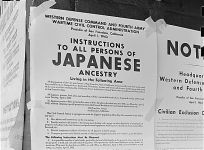
Official notice of exclusion and removal.

Friends say good-bye as family of Japanese ancestry await evacuation bus. Hayward, California, 8 May 1942.
Heart Mountain Relocation Center, January 10, 1943.

The baggage of Japanese Americans from the west coast, at a makeshift reception center located at a racetrack.

Dust storm at Manzanar War Relocation Center.

A monument at Manzanar, "to console the souls of the dead.

U.S. President Ronald Reagan signs the Civil Liberties Act of 1988, which granted reparations for the internment of Japanese Americans.


Synthesis of the transformations and challenges arising from the war era[modifier | modifier le wikicode]
The Second World War profoundly transformed the social and economic structure of the United States. Economically, mobilisation for war stimulated industrialisation, creating jobs and boosting growth. This helped to end the Great Depression and usher in a period of unprecedented post-war prosperity. The armaments and manufacturing industries flourished, and the technologies developed during the war laid the foundations for innovation and growth in the post-war period. The war also had a profound impact on the social structure of the United States. It exacerbated racial and ethnic tensions, as evidenced by the internment of Japanese Americans. Yet it also opened up new opportunities for minority groups and women. African Americans and women joined the workforce in unprecedented numbers, challenging traditional roles and laying the foundations for the civil rights and gender equality movements of the following decades. However, the war also left the United States with new challenges and responsibilities. As the world's superpower, the US assumed a leadership role in global affairs, helping to create the United Nations and other international institutions, and initiating the Marshall Plan to help rebuild post-war Europe. The war also ushered in the Cold War, a prolonged period of tension and rivalry with the Soviet Union that would shape American foreign policy for decades to come. Domestically, the economic and social transformation brought about by the war created new challenges. Economic expansion raised high expectations of prosperity and upward mobility, but it also revealed persistent inequalities. The tensions between economic growth and social inequality continued to manifest themselves throughout the post-war era.
The Second World War triggered substantial societal change in the United States, blurring traditional lines of gender and racial roles, and laying the groundwork for the civil rights and gender equality movements in the decades to come. For women, the war represented an unprecedented opening up of employment opportunities. With significant numbers of men at the front, women filled the gap in the workforce, taking on roles in industries and professions previously reserved for men. This change was not limited to white women, but also extended to women of colour, including African-American women. This transition led to a redefinition of women's roles in society, broadening horizons beyond traditional and domestic expectations. For African-Americans, the war served as a springboard for the civil rights movement. Despite facing segregation and discrimination, both within the military and in society at large, African-Americans served their country with distinction. The contradictions inherent in fighting for freedom abroad while being denied fundamental rights at home heightened demands for equality and justice. The "Double V Campaign", for example, symbolised the struggle for victory over fascism abroad and racism at home. The internment of Japanese Americans remains one of the most flagrant injustices of this era. It testifies to deep-seated racial prejudices and wartime fears. However, even in this context, the Nisei, or second generation Japanese Americans, served with honour in the US Army, proving their loyalty and courage.
The war environment demanded an unprecedented mobilisation of resources and coordination to support the war effort, which led to centralisation and an increase in the authority of the federal government. Economic planning and coordination were essential to maximise the efficiency of war production and ensure that troops were well equipped. In addition, financing the war led to a dramatic increase in public debt, forcing the government to play a more active role in the economy to manage this debt and minimise its long-term impact. Post-war policies, including the famous Marshall Plan and the GI Bill, also reinforced this role. The Marshall Plan illustrated the United States' desire to play a central role in the reconstruction and economic stabilisation of post-war Europe. The GI Bill provided educational and economic benefits to war veterans, contributing to unprecedented economic expansion and prosperity in the post-war era. These developments contributed to a permanent shift in expectations about the role of the federal government. They laid the foundations for the welfare state and shaped the government's involvement in areas such as education, housing and general economic well-being. Thus, the Second World War was not only a global military confrontation but also triggered a profound internal transformation in the structure and role of the US government in the economy.
The United States found itself in a unique position, having contributed significantly to the Allied victory while having its infrastructure and economy largely intact. Europe, on the other hand, was deeply affected by the war, with massive destruction and weakened economies.
The rise of the United States and the Soviet Union created a new world order characterised by bipolar rivalry. Ideological, political and military tensions characterised the Cold War, with a nuclear arms race and numerous proxy conflicts. The United States promoted capitalism, democracy and liberalism, while the USSR defended communism and an authoritarian model of governance. The US also put in place initiatives such as the Marshall Plan to help rebuild Western Europe. In return, these rebuilt countries became economic and political allies of the United States. At the same time, the USSR consolidated its influence in Eastern Europe, creating an Iron Curtain that divided the continent. The Cold War also stimulated rapid technological and scientific progress, particularly in the field of aerospace. The space race between the USA and the USSR is a striking example of how bipolar rivalry stimulated innovation. The demise of the Soviet Union in 1991 brought the Cold War to an end, leaving the United States as the world's sole superpower for a considerable period. However, the world has entered a phase of multipolarity with the emergence of new regional and global powers. The legacy of this period continues to influence world politics, economics and international relations. The United States, with its military, economic and cultural power, remains a central player in world affairs, albeit facing new challenges and competitors on the international stage.
Annexes[modifier | modifier le wikicode]
- History.com Editors. “American Women in World War II.” History.com, A&E Television Networks, 5 Mar. 2010, www.history.com/topics/world-war-ii/american-women-in-world-war-ii-1..
- Executive Order 9024 - Establishing the War Production Board (January 16, 1942)
- Herman, Arthur (2012). Freedom's Forge: How American Business Produced Victory in World War II. New York: Random House. ISBN 978-1-4000-6964-4
- Industrial Mobilization for War: History of the War Production Board and Predecessor Agencies: 1940-1945. United States Bureau of Demobilization, Civilian Production Administration. 1947. pp. 961–962.
- Hall, George J., and Thomas J. Sargent. 2011. "Interest Rate Risk and Other Determinants of Post-WWII US Government Debt/GDP Dynamics." American Economic Journal: Macroeconomics, 3 (3): 192-214.
- Hall, George J., and Thomas J. Sargent. A history of us debt limits. No. w21799. National Bureau of Economic Research, 2015
- Campbell, D'Ann. Women at War with America: Private Lives in a Patriotic Era. Cambridge, Massachusetts: Harvard University Press, 1984.
- Weatherford, Doris. American Women during World War II. United Kingdom, Routledge, 2010.
- nderson, Karen Tucker. "Last hired, first fired: Black women workers during World War II." The Journal of American History 69.1 (1982): 82-97.
- Honey, Maureen, ed. Bitter Fruit: African American Women in World War II. University of Missouri Press, 1999.
- The Soldier Voting Act of 1942 represented the first legislation guaranteeing military members a vote in presidential and congressional elections during wartime, even when away from their homes of record, Brunelli said. It extended that right regardless of registration and poll tax requirements, as long as the voter met state qualifications; Servicemembers to Follow Long Absentee Voting Tradition By Donna Miles American Forces Press Service
- Capeci, Dominic J., Jr., and Martha Wilkerson (1991). Layered Violence: The Detroit Rioters of 1943. Jackson, MS: University Press of Mississippi. ISBN 0-878-05515-0.
- Sitkoff, Harvard. "The Detroit Race Riot 1943," Michigan History, May 1969, Vol. 53 Issue 3, pp 183–206, reprinted in John Hollitz, ed. Thinking Through The Past: Volume Two: since 1865 (Houghton Mifflin Company, 2005) ch 8.
- Fred L. Koestler, "Bracero Program," in Handbook of Texas Online. Texas State Historical Association, February 22, 2010.
- Barbara Driscoll De Alvarado, The Tracks North: The Railroad Bracero Program of World War II. Austin, TX: CMAS Books/Center for Mexican American Studies, the University of Texas at Austin, 1999.
- Otey M. Scruggs, "Texas and the Bracero Program, 1942–1947," Pacific Historical Review (1963) 32#3 pp. 251–264 in JSTOR
- Michael Snodgrass, "The Bracero Program, 1942–1964," in Beyond the Border: The History of Mexican-U.S. Migration, Mark Overmyer-Velásquez, ed., New York: Oxford University Press, 2011, pp. 79–102.
- Michael Snodgrass, "Patronage and Progress: The bracero program from the Perspective of Mexico," in Workers Across the Americas: The Transnational Turn in Labor History, Leon Fink, ed., New York: Oxford University Press, 2011, pp. 245–266.
- Bracero History Archive (Archivo histórico del Bracero)
- Daniel Sabbagh, « Le statut des « Asiatiques » aux États-Unis – L’identité américaine dans un miroir », Critique internationale no 20, juillet 2003, p. 77-78, sur le site ceri-sciencespo.com, consulté le 28 octobre 2009.
- Hirasaki National Resource Center : « Resources – Frequently Asked Questions », sur le site du Japanese American National Museum, janm.org, consulté le 28 octobre 2009.
- Élise Prébin, « Mémoire des camps américains. L’exemple japonais », Ateliers, n° 30, « Ethnographies japonaises », avril 2006, p.251-282, mis en ligne le 8 juin 2007, consulté le 28 octobre 2009.
References[modifier | modifier le wikicode]
- ↑ Aline Helg - UNIGE
- ↑ Aline Helg - Academia.edu
- ↑ Aline Helg - Wikipedia
- ↑ Aline Helg - Afrocubaweb.com
- ↑ Aline Helg - Researchgate.net
- ↑ Aline Helg - Cairn.info
- ↑ Aline Helg - Google Scholar
- ↑ .Photo : Office for Emergency Management. War Production Board du fonds historique de la National Archives and Records Administration (NARA).