La búsqueda de un orden mundial
Veremos cómo Estados Unidos se posiciona frente al orden internacional y a la búsqueda de un orden mundial del que sería uno de los principales organizadores, si no el principal.
Desde el momento en que Estados Unidos emerge como una gran potencia global, la diplomacia estadounidense aspira a buscar un orden mundial. La dimensión de salvaguardia de la política de seguridad estadounidense y el mesianismo tienen dos nociones que están permanentemente articuladas en la política exterior estadounidense con diferentes grados de dificultad dependiendo del período. Las perspectivas a largo plazo son importantes. Estados Unidos ha sido un actor importante en el sistema mundial desde la Primera Guerra Mundial y más aún al final de la Segunda Guerra Mundial.
Es interesante preguntarse si se trata de un sistema autónomo que opera sobre su propia lógica o de un relevo de la política exterior estadounidense. Por lo tanto, existe una oscilación permanente entre el globalismo y el regionalismo en la política exterior estadounidense.
Las dudas del globalismo estadounidense [1890 - 1939]
El proyecto Wilsoniano y su fracaso

El proyecto Wilsoniano es fundamental, la presidencia Wilson es el momento en que Estados Unidos formula un proyecto de organización internacional. Las cosas empiezan antes que Wilson. El proyecto w Wilsoniano es sólo la culminación de un proyecto que se había formalizado y formulado antes, particularmente con toda una serie de movimientos pacifistas e internacionalistas en Estados Unidos que habían comenzado a reflexionar sobre la idea de la paz perpetua y el orden internacional. Hay todo un cuerpo de experiencia ya en su lugar. Si uno está interesado en la sociología de la toma de decisiones, a menudo se olvida que son sólo cámaras de ecos de cosas que sucedieron antes y de las cuales no son los inventores, sino que legitiman. La idea de este proyecto es impulsar a Estados Unidos en la arena de las grandes potencias internacionales. Hay un cierto pensamiento geopolítico en el pensamiento de las organizaciones de paz internacionalistas. Los gobiernos no son los únicos que razonan en términos de poder, especialmente los actores privados.
El proyecto de Estados Unidos se despliega sobre todo en la escala del territorio norteamericano con, en particular, las conferencias panamericanas de 1880 y 1890 formalizadas con la creación de la Unión Panamericana en 1910, que es un primer intento de organización internacional a escala del continente americano, es decir, en la escala de lo que los Estados Unidos prevé de su campo de intervención en 1910 es el continente americano. Cuando Wilson llegó al poder en 1912, creyó que podía transformar la Organización Panamericana en una organización regional de seguridad. La Sociedad de Naciones tiene una historia en el continente sudamericano. De hecho, la Unión Panamericana en 1910 y entre las dos guerras mundiales iba a competir con la Sociedad de Naciones si no contra el continente sudamericano. Lo importante es que las cuestiones de reflexión sobre la organización internacional y el orden internacional se desplieguen por primera vez a escala del continente americano.
Desde este punto de vista, la Primera Guerra Mundial es un momento crucial porque entre 1914 y 1918, por parte americana, un proyecto de alcance mundial cristalizará para aplicar a todo el planeta algo que al principio se pensó ampliamente a la escala del continente americano. El proyecto global formulado por Wilson cristalizará con los catorce puntos y el proyecto de la Sociedad de Naciones presentado al Senado y al mundo. Se trata de un proyecto político completamente nuevo en las relaciones internacionales que hasta finales del siglo XIX y principios del XX se caracterizó por un club de potencias que organizaba las relaciones internacionales según sus intereses cambiantes. A partir de ahora, la idea es crear un organismo político global que gestione las relaciones entre los diferentes estados dentro del modelo de democracia estadounidense. Hay un proyecto de organización formalizado con un proyecto político que respalda a la Sociedad de Naciones como parlamento de las Naciones.
La Sociedad de Naciones es un compromiso entre tres proyectos que compiten entre los proyectos franceses, americanos e ingleses. Los estadounidenses y los británicos acordaron fusionar sus proyectos. El proyecto de la Liga de las Naciones lleva la marca de Wilson, pero también es un compromiso con el inglés y el francés. Es una noción de asociación voluntaria entre naciones en el marco de una asociación de Estados en la que todos se solidarizan con los demás.
La cuestión de la ratificación en el Congreso significa que la cuestión de la organización del orden internacional no es evidente internamente, siendo fuertemente discutida desde 1919. El rechazo del Tratado de Versalles y el resultado de una profunda ruptura en la sociedad política estadounidense. Es importante considerar que la cuestión del orden internacional no es evidente. Los que votaron "a favor" y "en contra" de este proyecto fueron los que votaron "a favor" y "en contra" más. Fue un embrollo político en un debate extremadamente fuerte sobre el papel de los Estados Unidos en las relaciones internacionales y sobre si debe o no contribuir a la organización del mundo.
¿La Segunda Vida del Wilsonismo?
El momento wilsoniano es el momento en que Wilson da vida a su proyecto y desempeña un papel central en la conferencia de paz. Pero en 1919, su proyecto cayó al suelo cuando el Senado rechazó el Tratado de Versalles. La próxima elección presidencial en 1920 trajo a un republicano a la presidencia. Finalmente, a lo largo del período de entreguerras, el Wilsonismo continuó.
En la Sociedad de las Naciones hay Estados miembros y no miembros. En cuanto quedó claro que los Estados Unidos se negarían a participar en la Liga de las Naciones, la secretaría de la Liga de las Naciones elaboró una serie de estrategias para integrar a los Estados Unidos de todos modos. La secretaría de la Sociedad de las Naciones considerará que, si bien los Estados no miembros pueden participar indirectamente en la Sociedad de las Naciones, también pueden participar directamente en diversas esferas de negociación. La distinción entre Estados miembros y Estados no miembros es jurídicamente clara, pero de hecho mucho más borrosa. La participación de los Estados Unidos en la Sociedad de las Naciones se hará a través de las grandes fundaciones norteamericanas, lo que nos permitirá ver que aparte de la teoría de que los Estados Unidos no están en la Sociedad de las Naciones, están allí de todos modos.
En las secciones técnicas que hoy en día son organizaciones no políticas y antepasados de las agencias de la ONU con la sección de higiene, la organización económica y financiera, el consejo del opio y otras, encontramos a los Estados Unidos como en la sección de higiene y la sección económica y financiera financiada principalmente por capitales estadounidenses de fundaciones americanas, en particular la Fundación Rockefeller y la Fundación Ford.
Si nos fijamos en las comisiones especializadas que organizan reuniones de expertos, hay expertos estadounidenses casi en todas partes representados casi tanto como cualquier otro Estado. La Corte Permanente de Justicia Internacional fue ampliamente definida por Elihu Root y a lo largo del período de entreguerras hubo jueces estadounidenses, incluidos dos ex secretarios de Estado como Frank Kellogg y Manley Hudson. Estados Unidos se unió a la OIT en 1934.
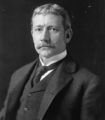
Elihu Root.

Frank Kellogg.

Manley Hudson.


A finales de la década de 1930, los Estados Unidos se acercaron mucho a la Sociedad de Naciones en las secciones técnicas, en particular la Sección de Higiene y la Sección Económica y Financiera. De hecho, Estados Unidos está en la Sociedad de Naciones. El wilsonismo no ha ratificado el Tratado de Versalles, pero el wilsonismo se refleja en la actividad de las organizaciones no gubernamentales de la Sociedad de Naciones que llevan a cabo el proyecto internacional estadounidense con la Sociedad de Naciones.
Las fundaciones Rockefeller y Carnegie operan tanto dentro como fuera de la Sociedad de Naciones. Estas fundaciones organizan campañas de salud en casi todo el mundo, elaborando una política sanitaria internacional en complementariedad y competencia con la Sociedad de Naciones. Cabe señalar que no se trata sólo de salud. Estas organizaciones también tienen implicaciones políticas, como la difusión del derecho internacional con un corpus que corresponde a la política exterior estadounidense a través de la dotación Carnegie para la paz internacional.
Diplomacia Bancaria [1919 - 1929]: Una Variante de la Diplomacia del Dólar
La acción del gobierno norteamericano siguió siendo importante en el periodo de entreguerras. Los Estados Unidos no eran aislacionistas entre las dos guerras mundiales, en particular a través de organizaciones privadas. El gobierno está ahí con ideas. Durante el período de entreguerras, durante la década de 1930, los republicanos en el poder no tenían los mismos planes que Wilson, pero no tenían ninguna idea de reconfiguración internacional. La reconfiguración del orden internacional requiere la reorganización de la economía mundial para reconfigurar las relaciones entre los países. La idea de presidentes norteamericanos y considerar la posibilidad de establecer un orden económico internacional gestionado por Estados Unidos en el que intervenga Estados Unidos.
Existe la cuestión de la deuda aliada, que fue el problema número uno en la década de 1920. Fueron los préstamos otorgados por los aliados de Estados Unidos quienes tuvieron que devolverlos después de 1918. En las mentes de los europeos, sobre todo en las mentes de los franceses, la cuestión de las deudas e íntimamente ligada a la cuestión de las indemnizaciones que se planteó en los años veinte; el pago de sus deudas en los Estados Unidos si Alemania paga las indemnizaciones con 132.000 millones de marcos -o más. No es la opinión de los Estados Unidos que la deuda aliada debe ser pagada por los ingleses y franceses a toda costa. Las apuestas financieras son enormes y también hay una cuestión geopolítica.
Al final de la Segunda Guerra Mundial, Estados Unidos fue la primera potencia económica, pero la segunda potencia financiera detrás de Inglaterra. Si Estados Unidos borra las deudas, restaurará de facto el poder financiero británico como antes de 1914. El objetivo es obtener un reembolso, pero también ocupar el lugar del centro financiero más importante del mundo por delante de Inglaterra. La cuestión que está en juego en la deuda interna es el paso del centro financiero del mundo de Londres a Nueva York. Los estadounidenses no intervienen en asuntos europeos, sino en asuntos financieros.
La deuda interna es un elemento fundamental de la diplomacia bancaria, como se manifestó en la década de 1920. Vemos cómo los Estados Unidos influyen en el curso de la historia política en Europa. Con la operación francesa del Ruhr en Alemania, Francia se está poniendo en contra de sus aliados, incluyendo Inglaterra y los Estados Unidos, que presionarán por su retirada. Los años 1924 y 1929 son un ejemplo de la diplomacia bancaria estadounidense, desde el día después de que Francia se retiró del Ruhr, la conferencia de Londres fue convocada, donde los estadounidenses fueron muy poderosos en encontrar una solución a la cuestión de las reparaciones y la deuda aliada. Las reparaciones son demasiado elevadas y Alemania no puede pagarlas y el objetivo americano es conseguir una reducción de la cantidad de reparaciones y que Francia las acepte. Francia quiere debilitar al máximo a Alemania en el marco de la venganza, mientras que los Estados Unidos quieren reintegrar a Alemania en el comercio internacional con el fin de reintegrar a Alemania en el comercio mundial. Estados Unidos está obteniendo una disminución en la cantidad de reparaciones. Al final de la conferencia, se puso en marcha el plan Dawes para aligerar las reparaciones alemanas y establecer un sistema tripartito con, por una parte, préstamos estadounidenses a Alemania que permitieron a este país reembolsar a Francia y que permitió a Francia reembolsar a Estados Unidos. La idea era restablecer un circuito comercial internacional, una circulación de dinero y productos. El objetivo norteamericano en esta conferencia de 1924 fue intervenir en la geopolítica europea y en el circuito comercial europeo.
El plan Dawes se caracteriza por la diplomacia de los años 20 votada durante 5 años, cuando se renegoció un nuevo plan: el plan Young, que facilitó las reparaciones. La historia económica de los años veinte no se puede imaginar sin la intervención de los Estados Unidos. La diplomacia bancaria y una variante de la diplomacia en dólares, donde los préstamos del Banco de Estados Unidos están condicionados a una serie de cambios estructurales. Este es el contexto de la intervención estadounidense apoyada por el poder político porque son préstamos arriesgados. Es una sinergia entre los banqueros de un lado y los políticos del otro.
Todo este edificio se derrumbó en 1929, ya que a partir de 1929, los bancos estadounidenses ya no podían prestar a Alemania, que ya no podía reembolsar a Francia, que ya no podía reembolsar a los Estados Unidos. En el período de entreguerras, no hay aislacionismo norteamericano, hay una presencia que tiene lugar de diferentes maneras, con una fuerte presencia en la organización de las relaciones internacionales en el período de entreguerras directamente y con la presencia de organizaciones no gubernamentales.
La construcción de un nuevo sistema internacional: 1939 - 1947
At the time of the declaration of war, the political discredit of the League of Nations should be noted. This political discredit adds to the idea that once the war is over, it will be necessary to rebuild a new organization on what the League of Nations failed to organize. As early as 1940, the United States played a major role through a series of reflections.
During the conflict, the League of Nations did not die, but a series of its branches were transferred to the United States. The United States played an important role in post-war construction as early as 1940, but this reflection was also led by a series of European experts who moved to the United States during the war. It is not only the federal administration that has unilateral plans at the beginning of the war, and European experts, especially economists, draw the attention of State Department officials to a whole series of points, and in particular to the economic recovery of Europe. The reflection of Europe, which is developing in the United States on the organisation of the post-war international system, is not only the work of the American administration, but also of European experts.
.jpg)
The founding act of this reorganization was the Atlantic Charter in 1941 and the declaration of the United Nations Charter in 1942, which established a whole series of organizations between 1942 and 1945. The new organization that was set up after 1945 has the genealogy of Wilsonism and New Deal. Roosevelt was to widely spread the Wilsonian conception and the New Deal in order to organize an international order and create an interventionist system within the framework of a liberal planning policy. Many of the New Dealers are experiencing a serious domestic defeat, but they will have a win on the outside, as many of them will be applying their plans internationally. The system of international organization as set up by the UN system is a projection of the New Deal on a global scale.
The United States will encourage the participation of non-governmental organizations created by section 71 of the Charter to create non-governmental status. The U.S. government is among those who have been most supportive of the integration of non-governmental organizations. It is clear that in the mindset of American politicians and NGO actors, the fact that the future international organization welcomes non-governmental actors will be a means of involving civil society in the international order, because the state is only one part of American politics. It also points to a geopolitical reality that since civil society is extremely active, that there are many private actors who project themselves internationally, it is also a way to increase the United States' influence at the United Nations.

Finally, it is questionable whether section 71 of the Charter is a projection of American political culture into the international political system by helping to establish a system in which governments are represented, but also private actors, certainly with an advisory role. The official entry of private actors into the United Nations organization chart is, among other things, the mark of American influence.
La Orden Internacional en la Guerra Fría: 1947 - 1970
La ONU: ¿organización multilateral o relevo de la diplomacia estadounidense?
The two competing logics are that of the two superpowers, but there is also the logic of a supranational organization to enforce an international order in different fields. We can ask ourselves the question of what is the status of the UN, its role and place, but also whether the UN is a true multilateral organization with a project or whether it is the relay of American power.
The United Nations is a universal organization, but it is a universal organization where the weight of the United States is decisive. In 1945, half of the UN budget came from the United States, decreasing in the 1970s to 25% of the UN budget. The impact of the weight of the United States on the United Nations and its political system is questionable. It is clear that during the Cold War, from the outset, the United Nations became a place of confrontation between the United States and the USSR. This is an arena where the two superpowers oppose each other.
With the example of Korea, there is a strong opposition between the United States and the USSR and a very clear and stronger influence on the United States' UN than the USSR. With the intervention in Korea between 1949 and 1950, the Soviet delegate was absent from the Security Council to protest that despite the Communist victory in China, the Chinese delegate's chair was still owned by Taiwan. At the time of the intervention in Korea, the United States is easily voting for an intervention in Korea. As a result of this vote, the Soviets are returning to vote on the Ashton resolution, which stipulates that when the Security Council is prevented from taking a certain number of decisions, the UN General Assembly can substitute for it. That is why the following resolutions on Korea were passed in the General Assembly.
The United Nations is an international organization being an arena between the USSR and the United States, but this does not prevent the dominant power in the United Nations from remaining the United States, especially with the intervention in Korea conducted under the aegis of the United Nations. In those years, the UN was a driving force behind American foreign policy. Between 1945 and 1960, the importance of the United States' influence on the United Nations and UNESCO should be noted.
Estados Unidos y las instituciones de Bretton Woods
We need to look at the relationship between the United States and the Bretton Woods institutions, particularly with the IMF and IBRD, which are theoretically part of the UN system, but in practice not part of it. At the UN, the rule is a country equals one vote, at the IMF the rule is a dollar equals one vote knowing that the United States represents 32% of the capital in 1945. The United States therefore had a blocking capacity until the 1970s. It is understood from the outset that the IBRD President will be American. The IMF is the World Bank are structurally more closely linked to the US political sphere than the UN sphere. From there, there is the question of the influence of the United States and the role that these institutions should play.
The IMF and the World Bank played a minor role until the 1970s. From the outset, the question of their role has been very complicated to define as a compromise between Wall Street's banking circles, which are opposed to any form of monetary regulation of the international system, and new-dealers are in favour of liberal planning with the intervention of public authorities in the economic field.
There is a rivalry within the American arena that does not allow consensus to be reached on the role of the IMF and the World Bank. The IMF and the World Bank will be marginalized fairly quickly because when the Cold War breaks out, the United States will consider that it is easier to carry out development assistance on its own than through an international organization. The Marshall Plan bypasses the IMF and the World Bank, which is a sign of the nationalisation of development aid. The Cold War led to a marginalization of the Bretton Woods institutions over which the United States had influence, but which took less place in the international sphere.
Regionalización del sistema internacional
At the heart of American reflections on the organization of the world in 1945 and thereafter, there is always the question of whether to create a single unified global system or a series of regional systems under the aegis of a global organization. This debate existed before 1945, but was accelerated by the Cold War, since the United Nations was soon paralyzed by the Cold War logic. This system of collective security is largely paralyzed by the Cold War logic, and the United States will create a series of initiatives to regionalize the international system in order to control things better rather than through a multilateral organization.
The United States intervenes in Latin America in order to avoid the communist contagion leading to the deepening of the integration of the Pan American Union and the transformation of the Pan American Union into organizations of the States of America. The 1947 Rio Convention established a system of collective security throughout the Americas. Until the mid-1960s, the OAS was to be a relay of American policy in Latin America and a tool that could be seen in a whole series of interventions by the United States in the context of government overthrow, particularly in Guatemala in 1954 and in the Dominican Republic in 1965. Following the intervention of the CIA, it will gradually contribute to delegitimize the OAS as a tool of American foreign policy and from the 1960s onwards, Latin American states will refuse to deepen this system, which helps to strengthen American power in the region.

ANZUZ.
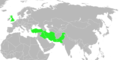
Pacte de Bagdad.

OTAN.

OTASE.


.png)

In Europe, there is a similar process. The creation of NATO as a military and collective security alliance is a small UN for Western Europe that responds to the Cold War logic. This is to fix the idea that after thinking of a universal system with a large organization, the Cold War will lead to a regionalization of the collective security system and the United States will regionalize its relations with the regions of the world. In the Middle East, it is the Baghdad Pact in 1955, ANZUS in 1951 in Asia or OTASE in 1954. The United Nations was created in 1945, but it was redoubled from the United States, reflecting a regionalization of collective security issues. This does not preclude bilateral agreements such as those with South Korea in 1951 and Taiwan in 1952. There is concomitance with global, regional and bilateral strategies with some partners. What we are seeing during this period of the Cold War is a web of regional alliances that is doubling the international system as it was created in 1945 with NATO. Between 1947 and 1954, the United States created an immense network of regional alliances.
Estados Unidos y el sistema internacional en un momento de multipolarización [1970 - 2013]
The United States' view of international organizations and international organization as a concept changes.
Retirada de las Naciones Unidas
From 1960 onwards, the situation of the UN changed with the accession of the former colonized countries, which changed the balance of power. The American magister on the UN is quickly challenged through UNCTAD, the NOEI and the NOMIC which is the counterpart of the NOEI, as well as the NOEI contests Western dominance of the world economy and the imbalance between developed and underdeveloped economies. Organizations related to NOMICs point to the means of communication in Western countries that participate in an imbalance in the construction and dissemination of information. In all three cases, it is the United States that is the first to be challenged and, more generally, the Western countries.
This will translate into a reaction that will result in the removal of the United Nations in general. The United States' contribution to the United Nations budget is decreasing, with a growing accumulation of late payments and a number of organizations leaving the ILO from 1977 to 1980 and leaving UNESCO between 1985 and 2003. We can see very clearly how far the United States is from the UN multilateral system, which it no longer controls. In the late 1970s, there was a gradual removal of the United States from the UN system. Since the election of Barack Obama, there has been a certain rapprochement without any significant rapprochement.
There is also an increase in American influence on the IMF and the World Bank, which are more or less disconnected from the UN system. The influence through these organizations will be more and more linked to the American sphere of power than the UN sphere of power. One can see an indirect influence and a rise of experts who are economists from the Chicago School within these institutions. There is a direct link between the increased presence of these economists and deregulation policies as mandated by the IMF in the late 1980s. These economists are on a line extremely close to the Reagan administration in the late 1980s. That's the Washington consensus. If we look at the relationship between the United States and the UN, we see a distancing and increasing influence on the IMF and the World Bank. These institutions only point to hypotheses due to the lack of work on this topic.
La posguerra fría: ¿con o sin la ONU?
There is a very strong difference between what is happening in the immediate post-Cold War period with the First Gulf War and the deterioration of relations between the United States and the UN system in the 1990s. George Bush's arrival represents the pinnacle of American unilateralism. Barack Obama's arrival is marked by more multilateralism in words, but in fact, he continues to practise unilateralism.
Reforma del sistema internacional
The United States is one of those who are strongly opposed to Security Council reform, but also to the inclusion of certain institutions in the UN system, such as the IMF, the IBRD or the WTO, which would mean a loss of influence within these organizations. If we look at the international agreements of late 1990, we can see that the United States is abstracted from them, as with the Kyoto Protocol in 1997 and its opposition to the International Criminal Court in 1998. The United States is behind the international order today. The United States was a pioneer in thinking about the international order, but today on the defensive.